Preview
 Send
Send Share
Share
 Details
 Guide
Guide

 Download
 Similars
 X-Ray
X-Ray Diaporama
 Q&A
Q&A Stats
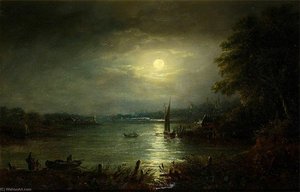
StatsMoore & Sons Bracket Clock

- 52.0 x 31.0 cm

Discover John Moore of Ipswich (1821-1902), a prominent British artist celebrated for his evocative seascapes & local scenes of Suffolk, particularly Ipswich docks and landscapes. Founding member of the Ipswich Fine Art Club.
 Read More
Giclée / Art Print
Museum-quality giclée or canvas print with fast production and flexible finish options. ( Buy Hand Made Painting Switch to Digital Image)




































Standard
custom
CM
INCH
Pick from our preset sizes that match the artwork's original proportions.
Loading sizes...

width
height
Type the width and the height you need, to fit your frame or your wall. A print can only be cut, never made bigger than the picture, so a size with a different shape loses a part of the image. We send you a digital mockup to approve before we print anything. The picture shown on this page does not show the real cut — only the mockup does.
Worldwide Delivery () in 2 weeks instead of standard 4/5 weeks. (4 November)

Free Worldwide Express Shipping

High-Quality Linen Canvas

Full Shipping Insurance

Customs Tax Refund Guarantee

True Color Matching Guarantee

100-Day Return Policy (Defects Only)

100% Money-Back Guarantee

Bulk Discount Offer
 Glass option is only available in size under 110 CM

Moore & Sons Bracket Clock
Giclée / Art Print
Reproduction Size
-


Total Price
$ 70
Artist Biography
The Maritime Visionary of Suffolk
Born in the historic town of Woodbridge in 1821, John Moore of Ipswich emerged as a profound voice within the British maritime and landscape tradition. His life was deeply intertwined with the salt air and industrious spirit of the Suffolk coast, a setting that would later become the soul of his artistic output. Though he began his professional journey not in an atelier but as a painter and decorator, this practical foundation provided him with a unique, tactile understanding of color and surface. As a self-taught artist, Moore possessed a raw, unmediated connection to his subject matter, allowing him to translate the rhythmic pulse of the sea and the quiet dignity of the English countryside into works of enduring emotional resonance.
The trajectory of Moore’s career was marked by a transition from the utilitarian application of pigment to the sublime exploration of light and atmosphere. His early years in Ipswich, a bustling port city, placed him at the heart of a thriving seafaring culture. This environment served as his primary instructor, teaching him to observe the intricate interplay between the shifting tides and the heavy, moisture-laden skies of East Anglia. His mastery lay in capturing the dual nature of the coast: the dramatic, turbulent energy of waves crashing against rugged cliffs and the profound, meditative stillness of calm waters reflecting a twilight sky.
Artistic Evolution and the Ipswich Fine Art Club
While his roots were firmly planted in the local soil of Suffolk, Moore’s artistic horizons expanded through significant intellectual and social connections. His studies in London brought him into contact with the influential George Frederic Watts, whose Symbolist leanings encouraged Moore to look beyond mere visual accuracy toward a deeper, more psychological exploration of his landscapes. This exposure infused his work with a sense of narrative depth, where a simple seascape could evoke feelings of solitude, resilience, or awe.
A pivotal moment in his professional development arrived in 1874, when he became a founding member of the Ipswich Fine Art Club. This institution was more than just a social circle; it was a crucible for creativity that fostered intellectual exchange among the region's most talented painters. Through this club, Moore helped establish a localized artistic movement that celebrated the specific beauty of the Suffolk landscape, ensuring that the maritime heritage of Ipswich was immortalized through fine art. His ability to find patrons among the wealthy inhabitants of the town further solidified his standing as a prominent figure in the regional art scene.
Legacy and Enduring Themes
The oeuvre of John Moore is characterized by a remarkable versatility, ranging from sweeping maritime vistas to intimate rural scenes. His paintings often serve as windows into a vanished era of British life, capturing the essence of the following themes:
- Maritime Grandeur: Works such as Shipping at Harbour Mouth demonstrate his ability to depict the power of the ocean and the resilience of vessels navigating treacherous waters.
- Rural Tranquility: In pieces like Cottage in a Wood, Moore shifts his focus to the pastoral, using soft light and balanced compositions to evoke a sense of peace and the timelessness of nature.
- Atmospheric Perspective: Drawing inspiration from masters like Turner and Constable, he utilized tonal gradation and light to create depth, making the viewer feel the dampness of the mist or the warmth of a setting sun.
By the time of his passing in 1902, John Moore had left an indelible mark on the landscape of British art. He remains a celebrated figure not merely for his technical skill, but for his ability to capture the very breath of the Suffolk coast. His work continues to resonate with modern audiences, offering a nostalgic and deeply moving connection to the maritime traditions and the serene, rugged beauty of the English seaside.

John Moore Of Ipswich
1821 - 1902
Quick Facts
- Artistic Movement Or Style: Romanticism
- Artists Or Movements Influenced By This Artist: ['Hudson Lowe']
- Artists Who Influenced This Artist:
- Turner
- Ruskin
- Date Of Birth: 1821
- Date Of Death: 1902
- Full Name: John Moore
- Nationality: British
- Notable Artworks:
- The Ipswich Docks
- Cornwall Coast
- Place Of Birth: Ipswich, England
Explore artworks organized by themes, styles, and characteristics.