


 Preview
 Send
Send Share
Share
 Details
 Guide
Guide

 Download
 Similars
 X-Ray
X-Ray Diaporama
 Stats
StatsPompeii
 1841
1841 26.0 x 43.0 cm
 Read More
Giclée / Art Print
Museum-quality giclée or canvas print with fast production and flexible finish options. ( Buy Hand Made Painting Switch to Digital Image)




































Standard
custom
CM
INCH
Pick from our preset sizes that match the artwork's original proportions.
Loading sizes...

width
height
You may enter your own dimensions to fit a specific frame or space. If your selected size does not match the original image's proportions, we will either crop the artwork or extend the image with a mirrored or solid-fill edge. A digital mockup will be sent for your approval before production begins.
Please note that the on-screen preview does not reflect the actual cropping or extension. Only the mockup will accurately show the final composition.
While custom sizes are available, we recommend selecting a dimension from the predefined list to preserve the original proportions.
Worldwide Delivery () in 2 weeks instead of standard 4/5 weeks. (11 October)

Free Worldwide Express Shipping

High-Quality Linen Canvas

Full Shipping Insurance

Customs Tax Refund Guarantee

True Color Matching Guarantee

100-Day Return Policy (Defects Only)

100% Money-Back Guarantee

Bulk Discount Offer
 Glass option is only available in size under 110 CM

Pompeii
Giclée / Art Print
Reproduction Size
-


Total Price
$ 70
Ruskin travelled with his parents through France and Italy on a tour between autumn and winter 1840 and spring of 1841. Working their way along the coast of Italy through Genoa, Lucca, Florence and Pisa they spent December in Rome before moving on to Naples early in January 1841. Staying in Naples until 25th of February Ruskin made daily excursions to the surrounding area including Pompeii and Vesuvius. Ruskin passed close to Pompeii on 6 February 1841, and wrote in his diary “a striking scene, but it was partly revolting that the people, who were walking among the desolation of their own hearths, and over the dead bodies of their relations, were laughing as the guides pointed out the chief sites of the calamity, and the children playing and scampering among the fallen walls.” When he did finally visit the city on 12 February he found “Pompeii much finer and more affecting than I supposed. … I enjoyed it excessively”.
Questions & Answers
Where do the visitors of "Pompeii" by John Ruskin come from?
The Stats page of "Pompeii" by John Ruskin presents public visit statistics: monthly visits of this artwork, a comparison with the artist's most viewed works, and where its visitors come from.
How intense are the colors in "Pompeii" by John Ruskin?
The color intensity of "Pompeii" is balanced. Intensity describes how strong the colors appear.
Is "Pompeii" free of copyright?
Regarding copyright, "Pompeii" is in the public domain - its copyright has expired.
When was "Pompeii" made?
"Pompeii" dates from 1841. The date places the work within John Ruskin's career and its era.
How old was John Ruskin when creating "Pompeii" in 1841?
John Ruskin made "Pompeii" at the age of 22. The artist was born in 1819 and the work is dated 1841.
Which artist is "Pompeii" attributed to?
The artist behind "Pompeii" is John Ruskin. The work is catalogued under John Ruskin's name.
Are there works similar to "Pompeii"?
Works similar to "Pompeii" are listed on the artwork's Similars page.
Artist Biography
A Polymath of Vision: The Life and Legacy of John Ruskin
John Ruskin, born in London on February 8, 1819, was far more than simply an art critic; he was a Victorian polymath whose influence permeated the realms of aesthetics, social reform, political economy, and environmentalism. His life was shaped by a fascinating duality – the pragmatic commercial world of his father, John James Ruskin, a successful sherry merchant, and the fervent evangelical piety of his mother, Margaret Cock. This contrasting upbringing instilled in him both a keen observational eye for detail and a deeply moral sensibility that would define his entire oeuvre. From an early age, Ruskin’s education was meticulously curated at home, steeped in biblical study and exposure to Romantic literature, particularly the works of Byron and Walter Scott. These formative influences laid the groundwork for a mind that would relentlessly seek connections between beauty, truth, and ethical living. His academic journey continued at Christ Church, Oxford, where he began to articulate his burgeoning ideas about art and its relationship to society.The Dawn of an Art Historian: Early Writings and Influences
Ruskin’s emergence as a significant voice in the art world began with *Modern Painters* (1843-1860), a monumental five-volume work initially conceived as a defense of J.M.W. Turner against what Ruskin perceived as unjust criticism. However, *Modern Painters* quickly evolved into something far more profound – a comprehensive treatise on the nature of art itself. He argued passionately for “truth to nature,” emphasizing that great art wasn’t merely about skillful representation but about an artist's sincere and empathetic engagement with the natural world. This concept was revolutionary at the time, challenging prevailing academic standards and paving the way for new artistic sensibilities. Ruskin didn’t just analyze technique; he delved into the spiritual and moral qualities of art, believing that true beauty reflected a virtuous soul. His meticulous descriptions of landscapes, rocks, and botanical details reveal not only his keen observational skills but also his profound reverence for nature as a manifestation of divine creation. This early work established Ruskin as a formidable critic and set the stage for his later explorations into architecture and social issues. He was deeply influenced by the Pre-Raphaelite Brotherhood, championing their commitment to detailed observation and rejection of academic conventions.Beyond Aesthetics: Social Commentary and The Guild of St. George
As Ruskin matured, his interests expanded beyond the purely aesthetic realm. Deeply troubled by the social injustices he witnessed during the Industrial Revolution, he began to apply his critical lens to the economic and political structures of Victorian England. *Unto This Last* (1860), a series of essays originally published in *The Cornhill Magazine*, marked a turning point in his career. In this work, Ruskin vehemently critiqued utilitarian economics and advocated for a more humane and equitable social order based on principles of fellowship and craftsmanship. He argued that the dignity of labor was essential to a flourishing society and that true wealth lay not in material possessions but in the quality of human relationships. This conviction led him to establish *Fors Clavigera* (1871-1884), a monthly series of letters addressed “To the Workmen and Labourers of Great Britain,” where he expounded his social and political ideas with characteristic fervor. From these writings emerged the Guild of St. George, founded in 1871, an organization dedicated to promoting craftsmanship, rural industries, and education among working-class communities. The Guild aimed to create a model society based on Ruskin’s ideals, fostering artistic skill, ethical labor practices, and a harmonious relationship with nature.A Lasting Impression: Ruskin's Enduring Legacy
John Ruskin died in Coniston, Lancashire, on January 20, 1900, leaving behind an immense body of work that continues to resonate today. His influence extends far beyond the confines of art history and criticism. He anticipated many of the concerns that define contemporary thought – environmentalism, sustainable living, ethical consumerism, and the importance of craftsmanship. His writings on architecture profoundly impacted the Arts and Crafts movement, inspiring architects like William Morris to reject industrial mass production in favor of handcrafted designs rooted in traditional techniques. Ruskin’s emphasis on the interconnectedness of art, nature, and society remains remarkably relevant in an age grappling with ecological crises and social inequalities. He was a visionary who dared to challenge conventional wisdom and advocate for a more just and beautiful world. His legacy is not merely one of aesthetic appreciation but of moral responsibility – a call to action to create a society that values both artistic expression and human dignity.Notable Works & Further Exploration
- Modern Painters (1843-1860): Ruskin’s foundational work, defending Turner and establishing his theories of art.
- The Stones of Venice (1851-1853): A detailed analysis of Venetian architecture, exploring its historical, social, and artistic significance.
- Unto This Last (1860): A powerful critique of Victorian economics and a call for social reform.
- Fors Clavigera (1871-1884): A series of letters addressing the working class, outlining Ruskin’s vision for a more equitable society.
- Dawn, Coniston (Abbot Hall Art Gallery): A beautiful watercolor demonstrating his skill in capturing the nuances of nature.
- Britannica: https://www.britannica.com/biography/John-Ruskin
- Wikipedia: https://en.wikipedia.org/wiki/John_Ruskin
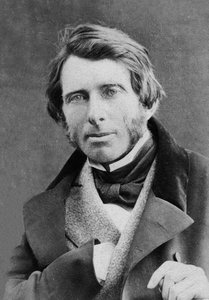
John Ruskin
1819 - 1900 , United Kingdom
Quick Facts
- Full Name: John Ruskin
- Nationality: British
- Date Of Birth: 1819
- Date Of Death: 1900
- Place Of Birth: London, United Kingdom
- Notable Artworks:
- Dawn, Coniston
- Fors Clavigera
- Artistic Movement Or Style: Victorian Art, Art Criticism
- Artists Who Influenced This Artist: ['J.M.W. Turner']
- Artists Or Movements Influenced By This Artist: ['Pre-Raphaelites']
Explore artworks organized by themes, styles, and characteristics.


