Preview
 Send
Send Share
Share
 Details
 Guide
Guide

 Download
 Similars
 X-Ray
X-Ray Diaporama
 Stats
StatsMe, Villegas

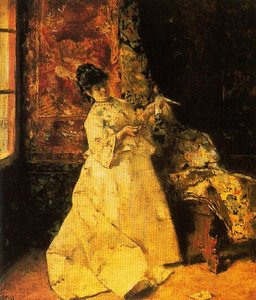
Introspective portrait by José Villegas Cordero, capturing age and dignity with expressive impasto technique. A study in light, shadow, and character from 19th-century Spain.
 Read More
José Villegas Cordero (1844-1921) was a Spanish painter celebrated for his historical genre, costumbrista scenes & Rococo portraits. Director of the Prado Museum, he masterfully captured everyday life and religious themes.
Giclée / Art Print
Museum-quality giclée or canvas print with fast production and flexible finish options. ( Buy Hand Made Painting Switch to Digital Image)




P118B $10

P118H $10

P118W $10

P438Z $10

P508JH $12

P508YH $12

P805H $10

P805Z $10

P919BZ $10

P919G $10

P919XJ $10

P959ZH $10

P968JZ $12

W106C $8

W218G $10

W218JH $8

W218Y $10

W307PJ $10

W316G $10

W316PJ $8

W316Y $10

W398PJ $8

W4111J $10

W500HY $15

W500JH $15

W692G $12

W849H $8

W940BG $15

W953PJ $8




Standard
custom
CM
INCH
Pick from our preset sizes that match the artwork's original proportions.
Loading sizes...

width
height
Type the width and the height you need, to fit your frame or your wall. A print can only be cut, never made bigger than the picture, so a size with a different shape loses a part of the image. We send you a digital mockup to approve before we print anything. The picture shown on this page does not show the real cut — only the mockup does.
Worldwide Delivery () in 2 weeks instead of standard 4/5 weeks. (24 October)

Free Worldwide Express Shipping

High-Quality Linen Canvas

Full Shipping Insurance

Customs Tax Refund Guarantee

True Color Matching Guarantee

100-Day Return Policy (Defects Only)

100% Money-Back Guarantee

Bulk Discount Offer
 Glass option is only available in size under 110 CM

Me, Villegas
Giclée / Art Print
Reproduction Size
-


Total Price
$ 70
A Portrait of Reflection: "Me, Villegas"
This striking portrait, titled “Me, Villegas,” offers a deeply personal glimpse into the soul of José Villegas Cordero himself. Rendered in a rich and textured oil painting style, the artwork presents a three-quarter view of the artist, emphasizing his face and upper torso with an intensity that draws the viewer in. The composition is deliberately centered, focusing our attention on the subject’s weathered features and conveying a sense of quiet contemplation. The dark, receding background amplifies this effect, creating a stage for Villegas's introspective gaze.Style & Technique: Impasto Realism
Villegas Cordero masterfully employs a technique rooted in 19th-century realism but infused with an expressive and almost tactile quality. The heavy impasto – the application of thick layers of paint directly onto the canvas – is particularly noteworthy. This creates a rough, textured surface that not only adds visual interest but also conveys a sense of age and lived experience. The brushstrokes are visible and deliberate, contributing to the overall feeling of immediacy and authenticity. The color palette, dominated by deep browns and ochres, further reinforces this impression, evoking a mood of solemnity and introspection. This isn't merely a representation; it’s an exploration of character through paint itself.Historical Context & Artistic Influences
Born in Seville in 1844, José Villegas Cordero was a significant figure within the Spanish art scene. His artistic journey began at just sixteen years old, defying his family's initial reservations about an artistic career. Villegas Cordero’s work is firmly situated within the tradition of historical genre and *costumbrista* scenes – depictions of everyday life in Spain. He served as director of the "academia española de bellas artes en roma," a testament to his standing within the art world. While influenced by broader Spanish artistic movements, this self-portrait demonstrates a departure towards a more personal and psychological exploration, moving beyond purely narrative or decorative representations.Symbolism & Emotional Impact
While subtle, symbolic elements are present in "Me, Villegas." The subject’s age is immediately apparent, suggested by the lines etched on his face and the greying beard – a visual representation of time's passage. The somber lighting and dark background contribute to an atmosphere of melancholy and introspection. It feels like a study not just of physical appearance but also of character—a moment captured where Villegas Cordero confronts himself, inviting us to contemplate themes of mortality, dignity, and the weight of experience. The overall effect is one of profound intensity and quiet reflection, making this portrait a compelling testament to the artist's inner world.Questions & Answers
Is "Me, Villegas" by José Villegas Cordero a bright or a dark artwork?
The perceived brightness of "Me, Villegas" by José Villegas Cordero is deep_shadow. It can be matched to the light of the intended space.
How does "Me, Villegas" by José Villegas Cordero connect Realism to the artist's home country?
"Me, Villegas" connects the Realism movement with Spain through its creator's birthplace.
Can I preview "Me, Villegas" by José Villegas Cordero before ordering?
A preview of "Me, Villegas" by José Villegas Cordero is available on the artwork's Preview page.
Artist Biography
A Life Painted in Light: The World of José Villegas Cordero
José Villegas Cordero, born in Seville in 1844, emerged as a significant figure in Spanish painting during a period of dynamic artistic transition. His story is one of overcoming familial skepticism to pursue passion, evolving from early academic training to embrace the vibrant currents of Orientalism and Costumbrismo, ultimately culminating in positions of great national responsibility. Initially met with doubt regarding an artistic career – his father ran a barbershop, and practicality was valued above creative pursuits – young José demonstrated undeniable talent. At just sixteen years old, he sold a work at the “Exposición Sevillana” for 2,000 Reales, a sum that not only validated his ambition but secured familial support for formal training. He apprenticed with José María Romero López and then Eduardo Cano de la Peña at the School of Fine Arts in Seville, laying a foundation steeped in Romanticism and historical painting. However, it was his encounter with Mariano Fortuny in Madrid that proved truly transformative.From Academic Roots to Orientalist Visions
Fortuny’s influence propelled Villegas Cordero toward a brighter palette and a more liberated brushstroke, igniting an interest in genre scenes and the burgeoning trend of Orientalism. A journey to Morocco followed, providing firsthand inspiration for canvases filled with exotic detail and luminous color. This period marked a departure from strictly academic constraints, as he began to capture not just historical narratives but also slices of everyday life infused with a romanticized vision of distant lands. He moved to Rome in 1868, establishing himself within the vibrant artistic community and further refining his style. It was in Italy that Villegas Cordero truly flourished, producing works that resonated with both Spanish and international collectors. His paintings from this era skillfully blended historical accuracy with a captivating sense of atmosphere, often depicting scenes of opulent interiors or dramatic moments from Spanish history. He wasn’t merely replicating what he saw; he was interpreting it through a lens of refined elegance and technical mastery, drawing comparisons to artists like Morelli in his ability to render reality with both precision and poetic license.A Master of Genre and Portraiture
Villegas Cordero's artistic range extended beyond historical and Orientalist subjects; he excelled as a portraitist, capturing the likenesses of prominent figures with remarkable sensitivity and skill. His portrait of Lady Georgiana Poyntz, Countess Spencer, exemplifies his mastery of the Rococo style, showcasing delicate brushwork and an exquisite attention to detail. He also demonstrated a capacity for adapting to different thematic demands, notably after a near-drowning experience prompted him to explore ecclesiastical subjects. This willingness to embrace new challenges underscores his versatility as an artist and his commitment to continuous growth. His paintings weren’t simply decorative; they were imbued with narrative depth and psychological insight, revealing the character and inner lives of his sitters. He participated in numerous national exhibitions throughout Italy, including the Naples Exhibition and the Venice Biennale, solidifying his reputation as a leading figure in contemporary art.Custodian of Spain’s Artistic Heritage
Villegas Cordero's contributions extended beyond his own artistic creations; he dedicated himself to preserving and promoting Spain’s rich cultural heritage. In 1898, he was appointed Director of the Spanish Academy in Rome, a prestigious position that allowed him to nurture young talent and foster artistic exchange between Spain and Italy. Upon returning to Madrid, he assumed the directorship of the Museo del Prado in 1901, a role he held until 1918. As director, he implemented significant improvements to the museum’s collection and exhibitions, striving to enhance its accessibility and educational value. He understood that the Prado was not merely a repository of masterpieces but a living testament to Spain's artistic legacy, and he worked tirelessly to ensure its continued relevance for future generations. His leadership at the Prado cemented his status as a national cultural icon, recognizing him not only as an accomplished painter but also as a dedicated steward of Spain’s artistic treasures.Legacy and Enduring Influence
José Villegas Cordero passed away in Madrid in 1921, leaving behind a legacy as a master of historical genre, costumbrista scenes, and Rococo portraiture. His works continue to captivate audiences with their technical brilliance, evocative atmosphere, and insightful portrayals of human experience. His paintings are featured in prominent museums across Spain, including the Museo del Prado and the Museo de Arte Moderno in Barcelona, ensuring that his artistic vision remains accessible to a wide audience.- Key Influences: José María Romero López, Eduardo Cano, Mariano Fortuny, Diego Velázquez.
- Artistic Movements: Orientalism, Costumbrismo, Rococo.
- Notable Achievements: Director of the Spanish Academy in Rome, Director of the Museo del Prado.

José Villegas Cordero
1844 - 1921 , Spain
Quick Facts
- Full Name: José Villegas Cordero
- Nationality: Spanish
- Date Of Birth: 1844
- Date Of Death: 1921
- Place Of Birth: Seville, Spain
- Notable Artworks:
- Lady Georgiana Poyntz
- Pages of Dogaresa
- Portrait of Ramos Villegas
- Artistic Movement Or Style: Historical genre, Costumbrista
- Artists Who Influenced This Artist:
- José María Romero López
- Marià Fortuny
- Diego Velázquez
Related Articles

The Soul of Impressionism: Why Oil on Canvas Captures Eternal Light and Timeless Emotion
Discover the enchanting alchemy of Impressionism. Explore how the mastery of oil on canvas, through glazing and impasto, captures eternal light and emotion. Perfect for lovers of Monet and Van Gogh seeking the profound depth of hand-painted fine art.

The Timeless Charm of Oil on Board: Reimagining Texture and Light through the Impressionist Lens
Discover the profound intimacy of oil on panel. Explore how Impressionist masters used rigid supports to capture light, texture, and impasto depth through exquisite, handmade oil reproductions for discerning collectors.

The Raw Truth: A Definitive Guide to the Power and Legacy of Social Realism Art
Explore the profound impact of Social Realism. Discover how masters like Courbet rejected idealism to capture the raw, socio-political truths of the working class through powerful, unvarnished art history and enduring visual critique.
Explore artworks organized by themes, styles, and characteristics.