Preview
 Send
Send Share
Share
 Details
 Guide
Guide

 Download
 Similars
 X-Ray
X-Ray Diaporama
 Stats
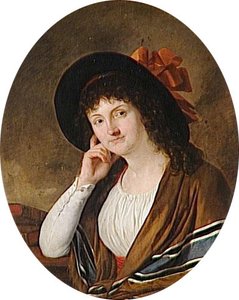
StatsCORNELIE, MERE DE GRACQUES


Experience the timeless beauty of Joseph Suvée's 'Cornelia, Mother of the Gracchi.' This Neoclassical masterpiece captures Roman family life with exquisite detail and serene elegance.
 Read More
Joseph-Benoît Suvée (1743-1807) was a Flemish painter of the Neoclassical era. Known for historical and mythological scenes, his works like 'Cornelia, Mother of the Gracchi' exemplify 18th/19th century academic art.
Giclée / Art Print
Museum-quality giclée or canvas print with fast production and flexible finish options. ( Buy Hand Made Painting Switch to Digital Image)




P118B $10

P118H $10

P118W $10

P438Z $10

P508JH $12

P508YH $12

P805H $10

P805Z $10

P919BZ $10

P919G $10

P919XJ $10

P959ZH $10

P968JZ $12

W106C $8

W218G $10

W218JH $8

W218Y $10

W307PJ $10

W316G $10

W316PJ $8

W316Y $10

W398PJ $8

W4111J $10

W500HY $15

W500JH $15

W692G $12

W849H $8

W940BG $15

W953PJ $8




Standard
custom
CM
INCH
Pick from our preset sizes that match the artwork's original proportions.
Loading sizes...

width
height
Type the width and the height you need, to fit your frame or your wall. A print can only be cut, never made bigger than the picture, so a size with a different shape loses a part of the image. We send you a digital mockup to approve before we print anything. The picture shown on this page does not show the real cut — only the mockup does.
Worldwide Delivery () in 2 weeks instead of standard 4/5 weeks. (24 October)

Free Worldwide Express Shipping

High-Quality Linen Canvas

Full Shipping Insurance

Customs Tax Refund Guarantee

True Color Matching Guarantee

100-Day Return Policy (Defects Only)

100% Money-Back Guarantee

Bulk Discount Offer
 Glass option is only available in size under 110 CM

CORNELIE, MERE DE GRACQUES
Giclée / Art Print
Reproduction Size
-


Total Price
$ 70
Cornelia, Mother of the Gracchi – A Neoclassical Portrait of Roman Dignity
The painting “Cornelia, Mother of the Gracchi,” attributed to Joseph-Benoît Suvée, is more than just a portrait; it’s a carefully constructed tableau vivant, a window into the idealized world of late 18th-century Neoclassicism. Executed around 1795, this work captures a pivotal moment – Cornelia, the formidable mother of the celebrated Roman brothers Tiberius and Gaius Gracchus, imparting wisdom and guidance to her children. The scene unfolds within a meticulously rendered interior, reminiscent of a Roman villa or atrium, subtly hinting at both classical grandeur and domestic intimacy. Suvée’s masterful handling of light, color, and composition elevates this depiction beyond simple representation, imbuing it with an enduring sense of dignity, maternal love, and the weight of Roman history.Composition and Style – Echoes of Antiquity
Suvée’s approach is firmly rooted in the Neoclassical movement, a reaction against the excesses of the Rococo style. The composition adheres to strict principles of symmetry and balance, mirroring the order and rationality prized by the classical world. A central grouping dominates the foreground: Cornelia, seated with an air of serene authority, faces her two sons. Their postures are attentive, suggesting a receptive audience to her words. Architectural elements – arches, columns, and statues – frame the scene, creating a sense of depth and reinforcing the connection between the domestic interior and the broader Roman landscape. The painting’s overall effect is one of controlled elegance, reflecting the movement's emphasis on clarity, restraint, and idealized forms. The influence of artists like Nicolas Poussin and Claude Lorrain, masters of historical and mythological scenes, is readily apparent in Suvée’s careful attention to perspective and his ability to evoke a sense of timelessness.Technique – The Brushstroke as a Language
Suvée's technical skill is evident in the meticulous detail with which he renders every element of the scene. He employs a smooth, polished technique, characteristic of oil painting on canvas, achieved through careful blending and layering of colors. Note the subtle variations in brushstrokes – the rougher texture applied to the stone walls contrasts sharply with the smoother surfaces of the figures’ clothing and faces. This textural contrast not only adds visual interest but also contributes to the sense of depth and realism within the composition. The use of light is particularly noteworthy, creating a diffused illumination that highlights key features while casting subtle shadows, adding volume and dimension to the forms. The artist's ability to capture the nuances of fabric – the folds of Cornelia’s gown, the texture of her children’s clothing – speaks volumes about his observational skills and technical mastery.Symbolism and Historical Context – A Mother’s Legacy
“Cornelia, Mother of the Gracchi” is not merely a portrait; it's a carefully orchestrated symbol of Roman virtue and maternal authority. Cornelia’s pose—seated with her hands resting gracefully on her lap—evokes images of ancient Roman matrons, revered for their piety, wisdom, and dedication to family. The presence of the statues in the background further reinforces this connection to antiquity, suggesting that Cornelia embodies a lineage of noble women who have shaped the course of Roman history. The Gracchi brothers themselves were figures of immense historical significance – reformers who challenged the established order and ultimately met violent ends. By depicting Cornelia as their devoted mother, Suvée subtly elevates her status, portraying her as a guardian of Roman values and a source of strength for her sons. The painting was created during the tumultuous years of the French Revolution, when ideals of republicanism and civic virtue were being fiercely debated. Cornelia’s image resonated with those seeking to reclaim the legacy of classical Rome as a model for a just and equitable society.Emotional Impact – A Portrait of Enduring Strength
Despite its historical context, “Cornelia, Mother of the Gracchi” transcends mere representation to evoke a profound sense of emotional resonance. The painting’s serene atmosphere, combined with Cornelia's dignified expression, conveys an enduring message of maternal love, wisdom, and resilience. The scene suggests a quiet moment of connection between mother and children—a testament to the power of familial bonds. It is a portrait that invites contemplation on themes of legacy, virtue, and the enduring influence of individuals who shape the course of history. The painting’s timeless quality ensures its continued appeal as a powerful symbol of maternal strength and Roman ideals.Questions & Answers
What space is suggested for "CORNELIE, MERE DE GRACQUES" by Joseph Benoit Suvée?
The recommended space for "CORNELIE, MERE DE GRACQUES" by Joseph Benoit Suvée is a living room. The suggestion can of course be adapted to your interior.
What is a reproduction of "CORNELIE, MERE DE GRACQUES" by Joseph Benoit Suvée recommended for?
The recommended use of a print of "CORNELIE, MERE DE GRACQUES" is statement.
How is the color composition of "CORNELIE, MERE DE GRACQUES" by Joseph Benoit Suvée built?
The color composition of "CORNELIE, MERE DE GRACQUES" by Joseph Benoit Suvée combines a bold contrast with a strong color unity harmony.
Related Artworks




Artist Biography
The Neoclassical Vision of Joseph-Benoît Suvée
In the grand tapestry of eighteenth-century European art, few threads shimmer with as much academic precision and dramatic grace as those woven by Joseph-Benoît Suvée. Born in Bruges in 1743, Suvée emerged from his Flemish roots to become a defining voice of the Neoclassical era. His journey from the Low Countries to the prestigious artistic circles of France represents more than just a geographical shift; it was a migration toward the very heart of Enlightenment ideals. As a painter, Suvée possessed the rare ability to marry the rigorous discipline of academic training with a profound emotional resonance, creating works that felt both timeless and urgently human.
Suvée’s artistic development was deeply rooted in the mastery of historical and mythological narratives. During an age where the art world was transitioning from the playful, lighthearted flourishes of the Rococo toward the structured, moralizing gravity of Neoclassicism, Suvée found his calling. He looked backward to the classical antiquity of Greece and Rome, not merely to imitate its forms, but to breathe new life into its legends. His canvases often serve as stages for epic dramas, where every gesture is calculated for impact and every shadow serves to heighten the tension of the unfolding story.
Mastery of Narrative and Technique
The hallmark of Suvée’s oeuvre lies in his command over composition and light. To observe a work such as 'Cornelia, Mother of the Gracchi' is to witness the pinnacle of eighteenth-century academic excellence. In such pieces, he does not simply depict a scene; he constructs a moral lesson through visual eloquence. His technique involves a meticulous attention to detail—the heavy drape of a toga, the subtle glow of skin under soft light, and the architectural stability of his figures—all working in concert to evoke a sense of dignity and permanence.
His influence and achievements can be traced through several key pillars of his career:
- Academic Excellence: His deep connection to the French academic tradition allowed him to master the complex requirements of large-scale historical painting.
- Mythological Depth: By interpreting classical myths, he provided a visual language for the intellectual pursuits of the Enlightenment.
- The Prix de Rome Legacy: As a winner of this prestigious honor, Suvée was part of an elite lineage of artists who shaped the aesthetic standards of Europe.
- Emotional Resonance: Unlike some of his more rigid contemporaries, Suvée maintained a certain warmth and fluidity that prevented his Neoclassicism from feeling sterile.
A Lasting Legacy in Art History
Though the tides of art history eventually moved toward Romanticism and beyond, the significance of Joseph-Benoît Suvée remains anchored in his role as a bridge between eras. He stood at the crossroads of tradition and innovation, capturing the transition from the decorative elegance of the past to the structured idealism of the future. His works, many of which found their way into the hallowed halls of the Louvre, continue to serve as vital touchstones for anyone studying the evolution of European painting.
Today, Suvée is remembered not just as a Flemish painter, but as a master of the human condition. Through his ability to transform historical anecdotes into profound visual meditations, he ensured that the virtues of antiquity would continue to speak to the modern soul. His legacy is one of balance: a perfect equilibrium between the intellect and the eye, between the weight of history and the lightness of artistic grace.

Joseph Benoit Suvée
1743 - 1807 , Belgium
Quick Facts
- Full Name: Nicolai Abraham Abildgaard
- Nationality: Danish
- Date Of Birth: 1743
- Date Of Death: 1807
- Place Of Birth: Bruges, Belgium
- Notable Artworks:
- Christiansborg Frieze
- Fredensborg Hall
- Levetzau Staircase
- Artistic Movement Or Style: Neoclassical, History painting
- Artists Who Influenced This Artist:
- Mandelberg
- Wiedewelt
- Claude Lorrain
- Nicolas Poussin
- Artists Or Movements Influenced By This Artist: ['Royal Danish Academy']
Related Articles

The Elegance of Neoclassicism: Rediscovering Order, Balance, and Timeless Beauty in Fine Art
Explore the timeless elegance of Neoclassicism. Discover how order, balance, and classical ideals shaped art history through masterful sculptures and paintings, offering inspiration for collectors seeking sophisticated, enduring beauty in fine art.

The Elegance of Neoclassicism: Rediscovering Order, Logic, and Timeless Beauty in Art History
Explore the profound elegance of Neoclassicism. Discover how the Enlightenment era replaced Rococo excess with the timeless beauty, order, and logic of Greco-Roman antiquity through masterfully rendered art and enduring classical ideals.
Neoclassicism Unveiled: Discovering the Timeless Elegance and Rational Order of Classical Art
Unveil the timeless elegance of Neoclassicism. Journey through an era defined by reason, order, and the revival of Greco-Roman ideals. Our expert exploration offers a sophisticated look at the transition from Rococo excess to classical precision for the true art enthusiast.
Explore artworks organized by themes, styles, and characteristics.