


 Preview
 Send
Send Share
Share
 Details
 Guide
Guide

 Download
 Similars
 X-Ray
X-Ray Diaporama
 Stats
StatsLandscape in Cassis


Discover 'Landscape in Cassis' by Józef Pankiewicz – a stunning Impressionist landscape painting of Polish beauty. Explore its vibrant colors & textured brushstrokes.
A Polish Impressionist pioneer known for Landscape in Cassis. Discover the vibrant colors of his masterful paintings today.
 Read More
Hand Made Oil Reproduction
Hand-painted oil on canvas in your size and frame, made to order by our artists. ( Switch to Print Switch to Digital Image)




































Standard
custom
CM
INCH
Pick from our preset sizes that match the artwork's original proportions.
Loading sizes...

width
height
Type the width and the height you need, to fit your frame or your wall. This is hand-painted, so for a size with a different shape the artist can paint a bit more around the picture, or cut a bit — you choose. We send you a digital mockup to approve before the painting starts. The picture shown on this page does not show the real result — only the mockup does.
Examples of what can be changed: Replace face with customer photo; Add pet (e.g., replace cat with dog); Include hidden message in background; Change background landscape or elements.
After order, TopImpressionists.com team will email client for instructions and provide a mockup preview
After order, TopImpressionists.com team will email client for instructions and provide a mockup preview
Worldwide Delivery () in 3/4 weeks instead of standard 5 weeks. (19 October). No compromise on quality.

Free Worldwide Express Shipping

High-Quality Linen Canvas

Full Shipping Insurance

Customs Tax Refund Guarantee

True Color Matching Guarantee

100-Day Return Policy (Defects Only)

100% Money-Back Guarantee

Bulk Discount Offer
 Glass option is only available in size under 110 CM

Landscape in Cassis
Reproduction Medium
Reproduction Size
-


Total Price
$ 269
Related Artworks


Artist Biography
The Evolution of a Visionary
Józef Pankiewicz stands as a monumental figure in the history of Polish art, a painter whose career was defined by a restless, brilliant pursuit of new forms and a profound openness to the avant-garde. Born in Lublin, his artistic journey began with rigorous classical training, studying at the School of Fine Arts in Warsaw under the guidance of Wojciech Gerson and Aleksander Kamiński, before further refining his skills at the Imperial Academy of Arts in Saint Petersburg. This solid academic foundation, however, was merely the prelude to a life spent chasing the shifting light and color of the modern era.
His departure for Paris in 1889, alongside his studio partner Władysław Podkowiński, marked a transformative turning point. Immersed in the vibrant atmosphere of the Exposition Universelle, Pankiewicz encountered the revolutionary techniques of the Impressionists. This encounter did more than just change his palette; it ignited a lifelong mission to introduce these contemporary French trends to Poland. Though his early attempts to bring such radical light and color to his homeland were met with significant hostility from critics—some even suggesting he required an optometrist to correct his vision—he remained undeterred, forging a path that would eventually reshape the Polish aesthetic landscape.
A Tapestry of Styles and Movements
The artistry of Pankiewicz was never static; it was a continuous metamorphosis. He began his professional life as a Realist, but his spirit could not be contained by mere representation. As he matured, he moved through a breathtaking array of movements, each leaving an indelible mark on his technique. He embraced the ethereal qualities of Symbolism, creating evocative nocturns that drew inspiration from the musicality of James McNeill Whistler and the haunting poetry of Stéphane Mallarmé. His series of urban and landscape nocturnes, such as the poignant Nocturne – Swans in the Saxon Garden in Warsaw by Night, demonstrate a masterful command of light and shadow, where the boundaries between depiction and abstraction begin to blur.
As his career progressed, Pankiewicz’s gaze turned toward the structural innovations of Post-Impressionism. Influenced heavily by the works of Paul Cézanne, he produced landscapes and city views that emphasized form and volume. His travels through Western Europe and his time in Spain during the First World War further expanded his horizons, allowing him to absorb the vibrant energy of Fauvism after meeting Robert Delaunay. This relentless experimentation eventually led him to a deeply personal Colourist formula, establishing him as the leader of the Kapists group—a collective of young artists dedicated to a new, color-centric tradition in Poland.
Legacy and Academic Influence
Beyond the canvas, Pankiewicz was a profound educator and an intellectual pillar of the art community. His influence extended far beyond his own brushstrokes through his roles as a professor at the Kraków Academy of Fine Arts and later as the Director of its branch in Paris. He nurtured a generation of talent, mentoring notable students such as:
- Józef Czapski
- Alice Halicka
- Moïse Kisling
- Jan Rubczak
- Zygmunt Waliszewski
- Wacław Zawadowski
His contributions to the institutional fabric of art were equally significant, evidenced by his role as a founding member of the Society of Polish Artists Sztuka. Throughout his life, he received prestigious accolades, including membership in the Legion of Honor and the Order of Polonia Restituta, recognizing both his artistic mastery and his service to culture. From the sun-drenched landscapes of Southern France to the solemn grandeur of cathedral interiors, the work of Józef Pankiewicz remains a testament to the power of artistic evolution and the enduring impact of a soul dedicated to the pursuit of beauty.

Józef Pankiewicz
1866 - 1940
Quick Facts
- Artistic Movement Or Style:
- Impressionism
- Post-Impressionism
- Symbolism
- Colourism
- Artists Or Movements Influenced By This Artist: ['Kapists (Colourists)']
- Artists Who Influenced This Artist:
- James McNeill Whistler
- Paul Cézanne
- Full Name: Józef Pankiewicz
- Nationality: Polish
- Notable Artworks:
- Landscape in Cassis
- Interior of the Cathedral in Chartres
- Nocturne – Swans in the Saxon Garden
- Place Of Birth: Lublin, Poland
- Date Of Birth: 1866
- Date Of Death: 1940
Related Articles

Capturing the Soul: The Most Emotionally Moving Impressionist and Post-Impressionist Masterpieces
Discover the profound emotional depth of Impressionist and Post-Impressionist masterpieces. Explore how legends like Monet, Van Gogh, and Gauguin captured light and soul through evocative landscapes and vibrant brushwork for a timeless connection to art history.

Beyond the Light: Capturing Raw Emotion and Subjective Vision in Post-Impressionist Landscapes
Explore the profound emotional depth of Post-Impressionist landscapes. Discover how masters like Van Gogh moved beyond light to capture raw human feeling through vibrant color and expressive texture in this expert art history retrospective.
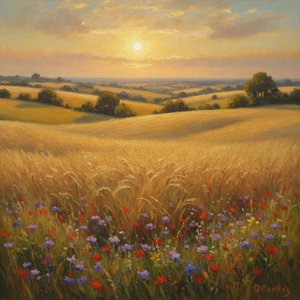
Golden Fields & Sun-Drenched Meadows: Capturing the Soul of Impressionist Landscapes
Immerse yourself in the luminous world of Impressionist landscapes. Discover how masters like Monet and Gauguin captured ephemeral light through plein air painting, and learn to bring the soul of sun-drenched meadows into your home with exquisite, hand-painted oil reproductions.

The Timeless Charm of Oil on Board: Reimagining Texture and Light through the Impressionist Lens
Discover the profound intimacy of oil on panel. Explore how Impressionist masters used rigid supports to capture light, texture, and impasto depth through exquisite, handmade oil reproductions for discerning collectors.

The Beauty of Impermanence: Capturing Decay through Impressionist Eyes
Explore the profound beauty of impermanence through Impressionist and Post-Impressionist eyes. Discover how masters like Monet and Van Gogh captured fleeting light and the poetic essence of nature's transitions in our deep dive into art history and emotional landscapes.
Explore artworks organized by themes, styles, and characteristics.


