Preview
 Send
Send Share
Share
 Details
 Guide
Guide

 Download
 Similars
 X-Ray
X-Ray Diaporama
 Stats
StatsGelmeroda IX


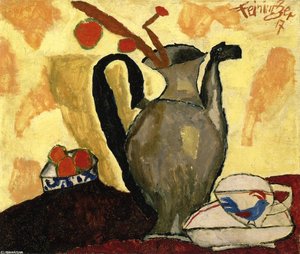
Lyonel Feininger's 'Gelmeroda IX', painted in 1926, captures the solemn beauty of a Gothic church tower against a serene Bavarian landscape—a masterpiece of Cubism and Bauhaus aesthetics.
 Read More
Discover Lyonel Feininger (1871-1956), a German-American Expressionist painter & Bauhaus master. Explore his unique style blending cubism, stained glass aesthetics, and architectural themes.
Giclée / Art Print
Museum-quality giclée or canvas print with fast production and flexible finish options. ( Buy Hand Made Painting Switch to Digital Image)




P118B $10

P118H $10

P118W $10

P438Z $10

P508JH $12

P508YH $12

P805H $10

P805Z $10

P919BZ $10

P919G $10

P919XJ $10

P959ZH $10

P968JZ $12

W106C $8

W218G $10

W218JH $8

W218Y $10

W307PJ $10

W316G $10

W316PJ $8

W316Y $10

W398PJ $8

W4111J $10

W500HY $15

W500JH $15

W692G $12

W849H $8

W940BG $15

W953PJ $8




Standard
custom
CM
INCH
Pick from our preset sizes that match the artwork's original proportions.
Loading sizes...

width
height
Type the width and the height you need, to fit your frame or your wall. A print can only be cut, never made bigger than the picture, so a size with a different shape loses a part of the image. We send you a digital mockup to approve before we print anything. The picture shown on this page does not show the real cut — only the mockup does.
Worldwide Delivery () in 2 weeks instead of standard 4/5 weeks. (23 October)

Free Worldwide Express Shipping

High-Quality Linen Canvas

Full Shipping Insurance

Customs Tax Refund Guarantee

True Color Matching Guarantee

100-Day Return Policy (Defects Only)

100% Money-Back Guarantee

Bulk Discount Offer
 Glass option is only available in size under 110 CM

Gelmeroda IX
Giclée / Art Print
Reproduction Size
-


Total Price
$ 70
A Study in Quiet Community: Interpreting Gelmeroda IX
To stand before this evocative scene, captured in the timeless interplay of black and white, is to step across a threshold into a moment suspended between memory and permanence. Gelmeroda IX presents us with a tableau vivant centered around an imposing church structure, its large tower rising like a steadfast sentinel against an unseen sky. The composition is richly populated, not by dramatic action, but by the quiet gathering of humanity. Observe the figures arranged across the foreground—a cluster on the left, a smaller grouping near the center, and a solitary presence drawing the eye toward the right. These individuals seem caught in the amber glow of history, their postures suggesting stories untold, whispers carried on the breeze that seems to perpetually drift through this square.
The Echoes of Place and Time
The architectural backbone of the painting—the church itself—speaks volumes about enduring community life. It is more than just a building; it is the anchor point for generations, a repository of shared rituals and collective memory. The inclusion of the clock in the upper left corner serves as a subtle yet profound reminder: while time marches relentlessly forward, the human connection depicted here seems to exist outside its strict measurement. This juxtaposition—the relentless tick-tock against the timeless gathering—lends the piece an immediate sense of nostalgia, inviting the viewer to contemplate their own passage through moments of shared grace.
Feininger's Vision: Technique and Atmosphere
The hand of Lyonel Feininger is unmistakable. While the specific medium lends itself to a monochromatic study, one can appreciate the masterful handling of tonal values that give depth to every plane. The contrast between the deep shadows clinging to the recessed areas of the church and the brighter planes catching the light on the figures imbues the scene with dramatic yet gentle illumination. Feininger possesses a gift for rendering atmosphere; here, it is an atmosphere thick with history, perhaps tinged with the quiet solemnity characteristic of early 20th-century European life. The overall effect is one of profound stillness, making the viewer pause their own hurried pace to absorb the scene’s gentle rhythm.
Symbolism and Emotional Resonance for the Modern Collector
For the art lover or interior designer seeking a piece that transcends mere decoration, Gelmeroda IX offers deep symbolic resonance. The church often symbolizes faith, community structure, or enduring belief—concepts universally appealing. The gathering of people suggests belonging, while the monochrome palette strips away the distraction of color, forcing an engagement with form, gesture, and emotional weight. Reproducing this work allows one to bring a piece of contemplative quietude into a modern space. It functions as a visual meditation, perfect for a study, a gallery wall, or a reception area where thoughtful conversation is desired.
To own a reproduction of Gelmeroda IX is to curate not just an image, but a feeling—a beautiful ache for moments passed and the enduring comfort found within community bonds. It whispers tales of steadfastness against the backdrop of ever-changing time.
Questions & Answers
Where do the visitors of "Gelmeroda IX" by Lyonel Feininger come from?
A Stats page exists for "Gelmeroda IX". It charts the monthly visits of the artwork and of the artist's other works, with country and language breakdowns.
What is the overall mood of "Gelmeroda IX" by Lyonel Feininger?
The overall mood of "Gelmeroda IX" by Lyonel Feininger is calm. The mood describes the general atmosphere of the work.
What emotional tone accompanies the Expressionism style of "Gelmeroda IX"?
"Gelmeroda IX" carries a reflective emotional tone within the Expressionism movement.
Artist Biography
Early Life and Career: From Caricaturist to Fine Artist
- Birth and Family: Lyonel Charles Adrian Feininger was born on July 17, 1871, in New York City. His father, Karl Feininger, was a German-American violinist and composer, and his mother, Elizabeth Feininger, was an American singer. This artistic background significantly influenced his early development.
- Early Education and European Travels: In 1887, at the age of 16, Feininger traveled to Europe to study music but soon shifted his focus to art. He studied drawing in Hamburg and Berlin.
- Commercial Art Career: From 1894 onwards, Feininger established a successful career as a caricaturist for various German, French, and American magazines. His comic strips, such as "The Kin-der-Kids" and "Wee Willie Winkie's World," gained considerable popularity and showcased his unique graphic style.
- Transition to Fine Art: After a 20-year stint in commercial art, Feininger transitioned to fine art at the age of 36. This marked a significant turning point in his artistic journey.
Expressionism and Bauhaus Influence
- Joining Expressionist Groups: Feininger became a leading exponent of Expressionism, joining influential groups like Die Brücke, Novembergruppe, and Gruppe 1919. His work during this period reflected the movement's emphasis on emotional expression and subjective experience.
- First Solo Exhibition: His first solo exhibition at the Sturm Gallery in Berlin (1917) was a pivotal moment, establishing him as a prominent figure in the art world.
- Bauhaus Master: In 1919, Walter Gropius appointed Feininger as the first faculty member at the Bauhaus, a groundbreaking school of art and design. He served as the master artist in charge of the printmaking workshop, significantly influencing numerous students.
- Artistic Style: His work was characterized by prismatically broken forms, translucent colors, and references to architecture and the sea, aligning him with classical modernism.
Major Works and Artistic Development
- Early Marine Paintings: During summer vacations on the island of Usedom (1909-1918), Feininger created numerous marine paintings depicting the Baltic Sea, showcasing his evolving style.
- Notable Works: Some of his significant works include "Werder I" (watercolor), "Gaberndorf II" (paper), and "Boats" (cubism, oil on canvas). These pieces exemplify his unique blend of Expressionist techniques and architectural themes.
- Photographic Works: Between 1928 and the mid-1950s, Feininger produced a substantial body of photographic works, demonstrating his versatility as an artist.
- Musical Compositions: He also composed several piano pieces and fugues for organ, revealing another facet of his artistic talent.
Later Years and Legacy
- Emigration to the United States: Due to the rise of the Nazi Party in 1933, Feininger emigrated to the United States with his wife.
- Continued Artistic Practice: He continued painting and creating art throughout his life, maintaining a distinctive style.
- Death and Recognition: Lyonel Feininger died on January 13, 1956. His work has left an indelible mark on the art world, inspiring artists and enthusiasts alike with its unique blend of Expressionism, graphic experimentation, and architectural themes.
- Historical Significance: As a key figure in both Expressionism and the Bauhaus movement, Feininger's contributions significantly shaped the course of modern art. His innovative use of color, form, and perspective continues to resonate with audiences today.

Lyonel Feininger
1871 - 1956 , United States of America
Quick Facts
- Full Name: Lyonel Charles Adrian Feininger
- Nationality: German-American
- Date Of Birth: 1871
- Date Of Death: 1956
- Place Of Birth: New York, United States of America
- Notable Artworks:
- Werder I (watercolour)
- Gaberndorf II (paper)
- Boats (oil on canvas)
- Artistic Movement Or Style: Expressionism, Cubism
- Artists Or Movements Influenced By This Artist:
- Bauhaus movement
- Ludwig Hirschfeld Mack
Related Articles

Lyonel Feininger: Bridging Expressionism & Cubism – A Study of Spiritual Geometry
Explore the captivating world of Lyonel Feininger, a pivotal figure bridging Expressionism & Cubism. Discover his architectural visions, Bauhaus influence, and enduring legacy in modern art history. Learn more at TopImpressionists.

Franz Ehrlich: Bridging Expressionism, Bauhaus & the Shadows of History
Explore the life of Franz Ehrlich, a pivotal Bauhaus architect whose career spanned Expressionism, resistance during Nazi Germany, and GDR reconstruction. Discover his complex legacy & view museum-quality reproductions at TopImpressionists.

Cubism Unveiled: How Picasso and Braque Redefined Modern Art through Geometric Revolution
Explore the revolutionary world of Cubism. Discover how Pablo Picasso and Georges Braque dismantled perspective to redefine modern art through geometric innovation and analytical mastery. An essential guide for art students, collectors, and history enthusiasts.

Deconstructing Reality: Cubism's Revolutionary Impact on 20th-Century Art
Explore the revolutionary world of Cubism with TopImpressionists. Discover Picasso & Braque's groundbreaking techniques, its philosophical roots, and lasting impact on modern art. Expert insights for collectors.

Deconstructing Reality: Cubist Expressionism's Aesthetic & Philosophical Foundations
Explore the profound aesthetic & philosophical foundations of Cubist Expressionism. Discover key artists, movements, and lasting influence on modern art history. A guide for discerning collectors.
Explore artworks organized by themes, styles, and characteristics.