

 Preview
 Send
Send Share
Share
 Details
 Guide
Guide

 Download
 Similars
 X-Ray
X-Ray Diaporama
 Q&A
Q&A Stats
StatsFlowers

Admire Marcel Dyf’s ‘Flowers’! This Impressionistic still life captures vibrant blooms in a ceramic vase with loose brushstrokes & soft lighting. Explore French art!
Discover Marcel Dyf’s Impressionist paintings – vibrant landscapes & Parisian scenes from a French artist (1899-1985). Explore his art!
 Read More
The artwork displayed on this page is protected by copyright law, which means we cannot legally create or sell an identical reproduction. This protection is enforced under international agreements such as the Berne Convention and by national laws, including those outlined by the U.S. Copyright Law - Title 17.
This method fully complies with copyright regulations because it does not involve copying or duplicating the protected artwork. Instead, it is a creative reinterpretation - a new painting that is influenced by the original but not identical to it.
Giclée / Art Print
Museum-quality giclée or canvas print with fast production and flexible finish options. ( Buy Hand Made Painting Switch to Digital Image)




































Standard
custom
CM
INCH
Pick from our preset sizes that match the artwork's original proportions.
Loading sizes...

width
height
Type the width and the height you need, to fit your frame or your wall. A print can only be cut, never made bigger than the picture, so a size with a different shape loses a part of the image. We send you a digital mockup to approve before we print anything. The picture shown on this page does not show the real cut — only the mockup does.
Worldwide Delivery () in 2 weeks instead of standard 4/5 weeks. (9 November)

Free Worldwide Express Shipping

High-Quality Linen Canvas

Full Shipping Insurance

Customs Tax Refund Guarantee

True Color Matching Guarantee

100-Day Return Policy (Defects Only)

100% Money-Back Guarantee

Bulk Discount Offer
 Glass option is only available in size under 110 CM

Flowers
Giclée / Art Print
Reproduction Size
-


Total Price
$ 70
Related Artworks


Artist Biography
The Luminous Legacy of Marcel Dyf
In the grand tapestry of twentieth-century French art, few threads shimmer with as much elegance and evocative charm as those woven by Marcel Dyf. Born in Paris in 1899 to Jewish parents, Dyf’s early life was shaped by the atmospheric beauty of Normandy, a landscape that instilled in him a lifelong reverence for the interplay of light and nature. Though his academic path initially led toward the structured world of engineering, the siren call of the canvas proved irresistible. He abandoned the precision of mathematics for the fluidity of paint, discovering a medium capable of capturing not just the physical world, but the very essence of fleeting emotion and the ephemeral grace of a moment frozen in time.
The trajectory of Dyf’s career underwent a profound transformation when he arrived in Arles in 1922. It was here, amidst the sun-drenched landscapes of Provence, that he entered the École Supérieure des Beaux-Arts and encountered the legendary Henri Matisse. This mentorship became the cornerstone of his artistic evolution. Under Matisse’s watchful eye, Dyf moved beyond mere observation, embracing the bold, vibrant color palettes and expressive, rhythmic brushstrokes synonymous with the Fauvist movement. His work began to pulse with a new vitality, as he learned to use color not just as a descriptive tool, but as an emotional language capable of conveying warmth, passion, and depth.
A Mastery of Scale and Spirit
Dyf’s artistic prowess was never confined to the small-scale intimacy of a studio canvas; he possessed a rare ability to command monumental spaces. His mastery of fresco painting left an indelible mark on the architectural heritage of Southern France, with his vibrant works adorning the halls of Saint Martin de Crault and Saintes Maries de la Mer. These large-scale compositions reflected the spirited energy of the Provençal landscape, breathing life into stone and mortar. His versatility even extended to the sacred, as seen in his delicate and thoughtful designs for the windows of the Église Saint Louis in Marseille, where light and glass merged to create a divine atmosphere.
Beyond his technical achievements, Dyf’s life was marked by a profound sense of courage and patriotism. During the dark years of the Second World War, he set aside his brushes to join the French Resistance in the regions of Corrèze and Dordogne. This period of struggle and defiance added a layer of depth to his character and perhaps a more poignant understanding of the human condition to his later works. Following the liberation of France, Dyf returned to the heart of the art world, settling eventually in the picturesque village of Saint Paul de Vence. It was here that he achieved international renown, attracting the keen eyes of American collectors and establishing himself as a pillar of the modern Impressionist tradition.
An Enduring Artistic Presence
The significance of Marcel Dyf lies in his ability to bridge the gap between the classical traditions of the past and the experimental fervor of the twentieth century. His exhibitions, ranging from the prestigious Salon d'automne and Salon des artistes français in Paris to the renowned Frost & Reed Gallery in London, showcased a body of work that was both sophisticated and deeply accessible. Whether depicting the bustling charm of Parisian scenes or the serene majesty of landscapes, his paintings remain timeless celebrations of beauty.
As we reflect on his life, which concluded in 1985, we see an artist who remained true to the pursuit of aesthetic harmony. His marriage to Claudine Godat in 1954 marked a period of personal stability that mirrored the enduring strength of his artistic vision. Today, Dyf’s work continues to captivate audiences worldwide, serving as a vibrant reminder of the power of Impressionism to capture the soul of a landscape and the enduring spirit of the human experience.

Marcel Dyf
1899 - 1985 , France
Quick Facts
- Full Name: Marcel Dreyfus
- Nationality: French
- Date Of Birth: 1899
- Date Of Death: 1985
- Place Of Birth: Paris, France
- Notable Artworks:
- Window over the Sea
- Flamenco dancers
- Wild Flowers on Yellow Table-Cloth
- Artistic Movement Or Style: Impressionism
- Artists Who Influenced This Artist:
- Claude Monet
- Vincent van Gogh
Related Articles

The Luminous Dance: Tracing Light, Motion, and the Magic of Line in Impressionist Art
Step into a world of dappled sunlight and fleeting moments. Explore the luminous magic of Impressionist lines and light. TopImpressionists.com offers exquisite, hand-painted oil reproductions and custom commissions, bringing the soul of the masters directly to your sanctuary.
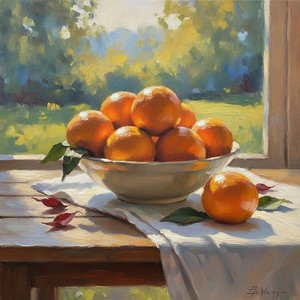
Sun-Drenched Citrus: The Vibrant Beauty of Oranges in Impressionist Masterpieces
Embark on a sensory journey through Impressionist masterpieces. Discover how Renoir and Cézanne captured the vibrant light and luscious textures of sun-drenched oranges in exquisite still life paintings designed to inspire and transform your home.

Liquid Light & Eternal Calm: Exploring the Ethereal Beauty of Water in Impressionist Masterpieces
Immerse yourself in the ethereal beauty of Impressionist waterscapes. Explore the luminous mastery of Monet through our exquisite, hand-painted oil reproductions and bespoke commissions. Discover museum-quality elegance for your sanctuary at TopImpressionists.com.

Capturing Contemplation: The Most Thoughtful Impressionist Masterpieces
Explore the profound emotional depth of Impressionist and Post-Impressionist masterpieces. From Renoir's tranquil landscapes to Van Gogh's vibrant soul, discover how these legendary artists captured the essence of contemplation through light, color, and texture.

Capturing the Soul: The Most Emotionally Moving Impressionist and Post-Impressionist Masterpieces
Discover the profound emotional depth of Impressionist and Post-Impressionist masterpieces. Explore how legends like Monet, Van Gogh, and Gauguin captured light and soul through evocative landscapes and vibrant brushwork for a timeless connection to art history.
Explore artworks organized by themes, styles, and characteristics.


