Preview
 Send
Send Share
Share
 Details
 Guide
Guide

 Download
 Similars
 X-Ray
X-Ray Diaporama
 Q&A
Q&A Stats
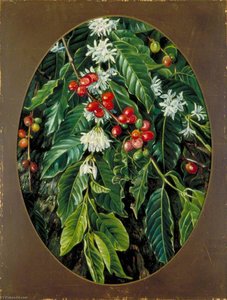
StatsBlauwater, Pasoeroewan, Java

- 25.0 x 35.0 cm


 Read More
Giclée / Art Print
Museum-quality giclée or canvas print with fast production and flexible finish options. ( Buy Hand Made Painting Switch to Digital Image)




P118B $10

P118H $10

P118W $10

P438Z $10

P508JH $12

P508YH $12

P805H $10

P805Z $10

P919BZ $10

P919G $10

P919XJ $10

P959ZH $10

P968JZ $12

W106C $8

W218G $10

W218JH $8

W218Y $10

W307PJ $10

W316G $10

W316PJ $8

W316Y $10

W398PJ $8

W4111J $10

W500HY $15

W500JH $15

W692G $12

W849H $8

W940BG $15

W953PJ $8




Standard
custom
CM
INCH
Pick from our preset sizes that match the artwork's original proportions.
Loading sizes...

width
height
Type the width and the height you need, to fit your frame or your wall. A print can only be cut, never made bigger than the picture, so a size with a different shape loses a part of the image. We send you a digital mockup to approve before we print anything. The picture shown on this page does not show the real cut — only the mockup does.
Worldwide Delivery () in 2 weeks instead of standard 4/5 weeks. (10 November)

Free Worldwide Express Shipping

High-Quality Linen Canvas

Full Shipping Insurance

Customs Tax Refund Guarantee

True Color Matching Guarantee

100-Day Return Policy (Defects Only)

100% Money-Back Guarantee

Bulk Discount Offer
 Glass option is only available in size under 110 CM

Blauwater, Pasoeroewan, Java
Giclée / Art Print
Reproduction Size
-


Total Price
$ 70
Blauwater, Pasoeroewan, Java – A Victorian Pioneer’s Vision of Tropical Beauty
Marianne North (1830-1890) wasn't merely an artist; she was a fearless explorer who defied societal expectations and dedicated her life to documenting the astonishing biodiversity of Southeast Asia. Born into a comfortable English family, her early inclinations leaned towards music—a path gently steered away from by illness toward a passion for capturing the exquisite detail of floral specimens. This transformative decision propelled her onto an extraordinary journey that would redefine artistic boundaries and solidify her legacy as one of Victorian Britain’s most remarkable women.
- Subject Matter: The painting depicts a serene river scene nestled within a lush tropical forest, dominated by towering trees and vibrant foliage. A small group of individuals—likely botanists and fellow adventurers—are positioned along the waterway's edge, observing the natural wonders around them alongside two playful dogs.
- Style: North’s artistic style embodies Impressionistic influences, prioritizing atmospheric perspective and capturing fleeting moments of light and color. Her approach eschewed academic conventions, favoring a direct engagement with nature rather than idealized representations.
- Technique: Executed in oil paints on canvas, the artwork showcases meticulous brushwork—particularly evident in the textured surfaces of the trees and bushes—that conveys an unparalleled sense of realism. North’s masterful blending of pigments creates luminous hues that vividly reproduce the brilliance of the tropical environment.
Historical Context: Painted in 1876, “Blauwater, Pasoeroewan, Java” emerged during a period of fervent scientific exploration and botanical discovery. Marianne North’s expeditions to Borneo—sponsored by Kew Gardens—were groundbreaking for their time, challenging the prevailing belief that women couldn't undertake serious scientific pursuits. Her unwavering determination to record the flora of Southeast Asia served as an inspiration to future generations of botanists and artists alike.
Symbolism & Emotional Impact: Beyond its aesthetic beauty, the painting speaks volumes about North’s profound connection with the natural world. The tranquil river symbolizes purity and renewal, while the dense foliage represents abundance and vitality—themes central to Victorian ideals of Romanticism. Viewing “Blauwater, Pasoeroewan, Java” evokes a feeling of serenity and wonder, transporting the viewer back to a time when scientific curiosity and artistic sensitivity converged to celebrate the splendor of the natural world.
TopImpressionists’s Reproduction: TopImpressionists offers high-quality reproductions of Marianne North's masterpiece, allowing art enthusiasts worldwide to experience its captivating beauty firsthand. Each print is meticulously crafted using archival inks on premium canvas—a testament to our commitment to preserving the integrity and vibrancy of this iconic artwork.
Questions & Answers
What does "Blauwater, Pasoeroewan, Java" by Marianne North bring to an interior?
"Blauwater, Pasoeroewan, Java" by Marianne North has a serene atmosphere and is recommended for a living room. The mood is what the work brings to the space around it.
What does "Blauwater, Pasoeroewan, Java" by Marianne North depict, and in what mood?
"Blauwater, Pasoeroewan, Java" by Marianne North combines tropical flora, botanical illustration, victorian era, landscape painting, kew gardens, marianne north, borneo plants with a serene atmosphere.
How do the colors of "Blauwater, Pasoeroewan, Java" relate to each other?
The colors of "Blauwater, Pasoeroewan, Java" by Marianne North show a balanced harmony harmony. Harmony describes how the colors relate to each other.
Artist Biography
Early Life, Family and Training
Marianne North was born on 24 October 1830 in Hastings, England. She was the eldest of three children born to Frederick North and Janet Marjoribanks. Her father held significant local influence, serving as a Norfolk deputy lieutenant, a justice of the peace, and the M.P. for Hastings. This social standing provided a specific type of stability that North would eventually trade for a life of movement. Her early interest in botany likely originated from her father's connection to Sir Joseph Dalton Hooker, a relationship that placed the natural sciences within her immediate social orbit.
The trajectory of her artistic development was shaped by personal loss. Following the death of her mother, North turned to flower painting. This was not a mere hobby; it was the beginning of a technical discipline that would define her career. While her early years were marked by the structured expectations of a prosperous family, her training became increasingly specialized. In 1867, she studied oil painting under Valentine Bartholomew, a move that moved her beyond the watercolor traditions typical for women of her class and toward the heavy, opaque medium she would use in the field.
Global Expeditions and Botanical Travels
North’s career was defined by a refusal to remain within the domestic confines expected of a Victorian woman. Between 1871 and 1885, she traveled across six continents, visiting 17 countries to document flora in situ. This was not a series of casual sightseeing trips. She moved through Canada, the United States, and Jamaica in 1871–72, establishing a pattern of direct observation that would define her output. Her independence was a practical necessity for her work; she traveled almost always on her own, funding her own expeditions through her personal fortune.
The scale of her movement was immense. She spent a year in Brazil, working from a hut deep within the forest to capture specimens in their natural habitats. This immersion allowed her to record plants in their specific ecological contexts rather than as isolated specimens. In 1878, she dedicated the entire year to various parts of India. Her ability to maintain this level of activity—visiting 15 countries in 14 years—demonstrates a logistical determination that few of her contemporaries could match. She did not rely on the curated collections of institutions, preferring the reality of the field.
Technique and Artistic Style
North’s approach to botanical illustration broke from the standard watercolor traditions of the Victorian era. While her contemporaries favored light, transparent washes on white backgrounds, she worked with oil paints on cardboard. This choice was practical as much as it was stylistic. Painting in the field required speed and durability, and oils allowed her to capture the saturated colors of tropical flora before the light failed. Her method was direct. She typically sketched her compositions in graphite or ink first, then applied color to the prepared surface. In many instances, she utilized a wet-in-wet technique, mixing colors directly on the substrate to achieve immediate depth. This resulted in a heavy, textured application that prioritized the immediate presence of the plant over the sterile, isolated specimens found in scientific journals.
Her palette was disciplined, a necessity for a woman carrying supplies across six continents. She relied on a restricted selection of pigments, specifically cobalt blue, lead white, and the red dye madder. This economy of materials ensured her work maintained a consistent intensity. She avoided the frequent use of black paint, which often muddies a composition. Instead, she managed color temperature and intensity by using blue, green, or orange to tone down overly strong hues. This technical control allowed her to depict plants within their natural habitats, often including animals, temples, or landscapes to provide environmental context. The result is a record of species that is as much about the atmosphere of a specific location as it is about the anatomy of the plant itself.
Key Works and Notable Paintings
North’s output was massive, consisting of 832 oil studies executed directly from life. She did not rely on the sterile, isolated specimens favored by her contemporaries. Instead, her canvases capture plants within their specific habitats. In Tegoro, Sarawak, she documents the lushness of the Borneo region, while On the Way from Tibet near Nagkunda, North India captures the dramatic scale of Himalayan landscapes. These works function as visual records of environments that have since undergone significant change.
Her ability to integrate flora with specific geographic markers is evident in her Indian subjects. Foliage, Flowers and Fruit of the Cashew, Tanjore, India and Elephant Gate and Neem Tree at Chittore, India demonstrate her focus on the intersection of botanical life and local scenery. She often included animals or architectural elements to ground the plants in a real sense of place. This approach distinguishes her work from the standard botanical illustrations of the 19th century.
The physical presence of her paintings comes from her choice of medium. By using oil on cardboard, she achieved a density of color that watercolor could not provide. This was a practical necessity for her field work, allowing her to work quickly in difficult conditions. The Chumpa or Champak is a clear example of this direct, heavy application of pigment. Her work remains a primary source for understanding the biodiversity of the 19th century.
Legacy and the Kew Gardens Gallery
The Marianne North Gallery at the Royal Botanic Gardens, Kew, remains a singular presence in British art history. It holds the distinction of being the only permanent solo exhibition by a female artist in Britain. This was not a passive donation; North commissioned the space in 1879 and took an active hand in its creation, designing the interior herself. Her influence extends beyond the canvases to the very architecture of the viewing experience. By gifting her collection to Kew in 1882, she ensured her specific vision of global botany would remain intact and accessible.
The collection consists of over 800 paintings that document plant life from across the globe. These works provide a visual record of species that may now be endangered or extinct, making the gallery a site of both artistic and scientific importance. Unlike traditional botanical illustrations of the era that used watercolor on plain backgrounds, North’s oil paintings capture plants within their natural habitats, often including animals, temples, or people. This approach provides a sense of the specific environments she encountered during her travels.
- Tegoro, Sarawak
- On the Way from Tibet near Nagkunda, North India

Marianne North
1830 - 1890 , United Kingdom
Quick Facts
- Artistic Movement Or Style: Victorian naturalism
- Artists Who Influenced This Artist: ['Frederic Edwin Church']
- Full Name: Marianne North
- Nationality: British
- Notable Artworks:
- Tegoro, Sarawak
- On the Way from Tibet near Nagkunda
- Foliage, Flowers and Fruit of the Cashew
- Elephants, Exotic Fish, and Leaf Insect
- Place Of Birth: Hastings, United Kingdom
- Date Of Birth: 1830
- Date Of Death: 1890
Related Articles

Victorian Naturalism: The Art of Capturing Botanical Precision and Raw Wilderness
Explore the profound beauty of Victorian Naturalism. Discover how 19th-century masters captured botanical precision and raw landscapes through meticulous oil painting techniques and scientific observation.
The Timeless Elegance of Victorian Botanical Painting: A Journey Through Nature's Intricate Detail and Scientific Artistry
Discover the exquisite world of Victorian botanical painting, where scientific precision meets profound aesthetic grace. Explore a journey through nature's intricate details, from legendary illustrators to the untamed beauty of Marianne North’s vibrant floral masterpieces.
Explore artworks organized by themes, styles, and characteristics.