Preview
 Send
Send Share
Share
 Details
 Guide
Guide

 Download
 Similars
 X-Ray
X-Ray Diaporama
 Q&A
Q&A Stats
StatsAlpine Landscape

- 70.0 x 80.0 cm


Experience Mario Sironi’s evocative Alpine Landscape, a 1930 masterpiece showcasing the artist's distinct style and serene depiction of mountains and buildings. Discover this stunning artwork and bring its beauty into your space.
 Read More
Discover Mario Sironi (1885-1961): Italian Modernist painter of massive forms & geometric shapes. Explore his Futurist, Novecento Italiano styles & themes of solitude, industry & Italian identity.
The artwork displayed on this page is protected by copyright law, which means we cannot legally create or sell an identical reproduction. This protection is enforced under international agreements such as the Berne Convention and by national laws, including those outlined by the U.S. Copyright Law - Title 17.
This method fully complies with copyright regulations because it does not involve copying or duplicating the protected artwork. Instead, it is a creative reinterpretation - a new painting that is influenced by the original but not identical to it.
Giclée / Art Print
Museum-quality giclée or canvas print with fast production and flexible finish options. ( Buy Hand Made Painting Switch to Digital Image)




P118B $10

P118H $10

P118W $10

P438Z $10

P508JH $12

P508YH $12

P805H $10

P805Z $10

P919BZ $10

P919G $10

P919XJ $10

P959ZH $10

P968JZ $12

W106C $8

W218G $10

W218JH $8

W218Y $10

W307PJ $10

W316G $10

W316PJ $8

W316Y $10

W398PJ $8

W4111J $10

W500HY $15

W500JH $15

W692G $12

W849H $8

W940BG $15

W953PJ $8




Standard
custom
CM
INCH
Pick from our preset sizes that match the artwork's original proportions.
Loading sizes...

width
height
Type the width and the height you need, to fit your frame or your wall. A print can only be cut, never made bigger than the picture, so a size with a different shape loses a part of the image. We send you a digital mockup to approve before we print anything. The picture shown on this page does not show the real cut — only the mockup does.
Worldwide Delivery () in 2 weeks instead of standard 4/5 weeks. (9 November)

Free Worldwide Express Shipping

High-Quality Linen Canvas

Full Shipping Insurance

Customs Tax Refund Guarantee

True Color Matching Guarantee

100-Day Return Policy (Defects Only)

100% Money-Back Guarantee

Bulk Discount Offer
 Glass option is only available in size under 110 CM

Alpine Landscape
Giclée / Art Print
Reproduction Size
-


Total Price
$ 70
Mario Sironi’s ‘Alpine Landscape’: A Study in Quietude and Post-War Reflection
This meticulously crafted hand-painted reproduction of Mario Sironi's “Alpine Landscape” (1930) offers a profound glimpse into the artist’s evolving vision during a pivotal moment in Italian art history. Measuring 70 x 80 cm, the painting immediately draws the viewer into a serene yet subtly melancholic depiction of the Italian Alps. The composition is dominated by a distant mountain range, rendered with a restrained palette and a masterful understanding of atmospheric perspective – hallmarks of Sironi’s mature style. Scattered throughout the scene are buildings, not as flamboyant displays of human activity, but rather as quiet witnesses to the enduring power of nature. These structures, varying in size and placement, subtly introduce an element of human presence without disrupting the overall sense of contemplative isolation.
The Evolution of a Master: Sironi’s Artistic Journey
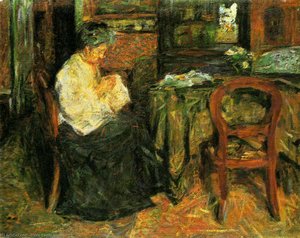
Born in Sassari, Sardinia, in 1885, Mario Sironi's artistic trajectory was marked by experimentation and a profound shift in sensibility. Initially trained in engineering, he abandoned this path after a debilitating breakdown, recognizing his true calling lay within the realm of art. His early work, exemplified by pieces like “The Student,” reveals an engagement with Divisionism – a technique prioritizing separated colors to achieve luminous effects – reflecting influences from artists like Giovanni Segantini. However, Sironi’s artistic journey took a dramatic turn around 1914 when he briefly embraced Futurism, a movement championing speed and dynamism. Yet, the intensity of this period quickly dissipated, leading him towards a more restrained and introspective approach. Following World War I, Sironi developed his signature style: a monumental, almost monolithic aesthetic characterized by flattened forms, muted colors, and a profound sense of urban alienation – a reflection of the anxieties and uncertainties of the post-war era.
Technique and Materiality: A Legacy of Precision
This reproduction is executed with exceptional attention to detail, faithfully recreating Sironi’s distinctive technique. The artist employed oil paints on canvas, layering thin glazes to build up depth and luminosity. Note the careful rendering of textures – the rough stone of the mountains, the weathered surfaces of the buildings – all contributing to a remarkably realistic effect. The subdued color palette—dominated by grays, blues, and browns—is characteristic of Sironi’s mature style, reflecting his desire to move beyond the expressive gestures of earlier movements and towards a more objective representation of reality. The meticulous brushwork and precise composition demonstrate the artist's dedication to achieving a sense of monumental stillness.
Symbolism and Emotional Resonance
"Alpine Landscape" transcends a simple depiction of a mountain scene; it embodies a deeper philosophical inquiry. The vastness of the mountains, coupled with the isolated buildings, evokes a feeling of human insignificance in the face of nature’s enduring power. The painting's quietude speaks to the post-war disillusionment and the search for meaning that characterized much of European art at the time. It is a testament to Sironi’s ability to capture not just visual reality, but also the emotional weight of his subject matter. This artwork invites contemplation on themes of isolation, resilience, and the relationship between humanity and the natural world – qualities that continue to resonate with viewers today.
Questions & Answers
Where and for what purpose is "Alpine Landscape" recommended?
"Alpine Landscape" by Mario Sironi is recommended for reflective, ideally in a living room. Use and space together guide where a reproduction fits.
From which era does "Alpine Landscape" date?
"Alpine Landscape" belongs to the 19th-Century era.
Can I see an X-ray view of "Alpine Landscape" by Mario Sironi?
"Alpine Landscape" can be examined layer by layer on the artwork's X-Ray page, a viewer inspired by a conservator's light bench with eleven optical readings of the image.
Artist Biography
Mario Sironi: A Life in Modern Italian Art
Early Life and Education
- Born May 12, 1885, in Sassari, Sardinia, Italy.
- His father was an engineer, and his maternal grandfather, Ignazio Villa, was a respected architect and sculptor – providing early artistic exposure.
- Initially studied engineering at the University of Rome but abandoned it in 1903 following a nervous breakdown. This marked a turning point towards art.
- Began formal artistic training at the Scuola Libera del Nudo of the Accademia di Belle Arti di Roma, where he met his first significant teacher, Giacomo Balla.
Artistic Development and Influences
- Early work was heavily influenced by Divisionism, a technique emphasizing separated colors to create luminosity – exemplified in works like “The Student.”
- Briefly experimented with Futurism around 1914, exhibiting at the Galleria Sprovieri in Rome. However, he quickly moved beyond its focus on speed and dynamism.
- A pivotal shift occurred after WWI, developing a style characterized by massive, immobile forms and geometric shapes. This was influenced by his wartime experiences and a growing sense of isolation.
- Key influences included Giacomo Balla (early training), Giorgio de Chirico & Carlo Carrà (metaphysical painting’s impact on form), and elements of Neoclassicism and Primitivist Classicism.
The Novecento Italiano and Mature Style
- In 1922, Sironi became a founding member of the Novecento Italiano movement – a return to order in post-war European art, emphasizing clarity and tradition.
- His mature style is marked by:
- Emphasis on geometric shapes and simplified forms.
- A deliberately ungainly aesthetic in later works.
- Themes of solitude, alienation, and the human condition.
- Exploration of industrial landscapes and working-class life.
- Notable works from this period include “Venere” (1921-1923) and “Solitudine” (“Solitude,” 1925).
Political Affiliations and Later Life
- Sironi was a supporter of Benito Mussolini and contributed extensively to Fascist publications with over 1700 cartoons.
- He believed in the integration of art and architecture, seeking to create monumental works for public spaces – reflecting the ideals of the Fascist regime.
- Following WWII, his association with Fascism led to a decline in his popularity and critical acclaim.
- He largely withdrew from public life, continuing to paint in relative isolation until his death.
Major Achievements and Historical Significance
- Sironi’s work represents a significant contribution to Italian Modernism, bridging the gap between Futurism and later artistic developments.
- His exploration of themes like solitude and alienation resonated with the anxieties of the 20th century.
- Despite the controversies surrounding his political affiliations, his art has been featured in major exhibitions internationally, including at the Centre Georges Pompidou (1981) and the Royal Academy, London (1989).
- Died August 13, 1961, in Milan.
- His legacy lies in his unique stylistic synthesis and his powerful depictions of the human condition within a rapidly changing world.

Mario Sironi
1885 - 1961 , Italy
Quick Facts
- Name: Mario Sironi
- Movement:
- Futurism
- Novecento Italiano
- Modernism
- Birth Date: 1885-05-12
- Death Date: 1961-08-13
- Birth Place: Sassari, Italy
- Nationality: Italian
- Date Of Birth: 1885
- Date Of Death: 1961
- Influenced By: ['Giacomo Balla']
- Notable Works:
- La Lampada (1919)
- Venere (1921-1923)
- Solitudine (1925)
- Place Of Birth: Sassari, Italy
Related Articles

The Magic of Giclée: Bringing Impressionist Masterpieces to Your Walls with Vivid Detail
Discover the breathtaking beauty of Impressionist masterpieces with our museum-quality Giclée prints. Experience vivid detail, archival pigments, and the luminous light of Monet and Van Gogh, expertly preserved to bring timeless elegance and sophisticated artistry into your home.
Explore artworks organized by themes, styles, and characteristics.