Preview
 Send
Send Share
Share
 Details
 Guide
Guide

 Download
 Similars
 X-Ray
X-Ray Diaporama
 Stats
StatsUnfinished Study
 Chalk
Chalk- Northern Renaissance
 1520
1520- Renaissance
 361.0 x 215.0 cm
 Staatliche Museen zu Berlin
Experience the raw emotion of this Northern Renaissance study by Matthias Grünewald; explore the dramatic chalk lines of this 1520 masterpiece today.
 Read More
Explore Matthias Grünewald's dramatic German Renaissance art! Known for the Isenheim Altarpiece & emotionally charged religious paintings. Discover his unique style at TopImpressionists.
Giclée / Art Print
Museum-quality giclée or canvas print with fast production and flexible finish options. ( Buy Hand Made Painting Switch to Digital Image)




P118B $10

P118H $10

P118W $10

P438Z $10

P508JH $12

P508YH $12

P805H $10

P805Z $10

P919BZ $10

P919G $10

P919XJ $10

P959ZH $10

P968JZ $12

W106C $8

W218G $10

W218JH $8

W218Y $10

W307PJ $10

W316G $10

W316PJ $8

W316Y $10

W398PJ $8

W4111J $10

W500HY $15

W500JH $15

W692G $12

W849H $8

W940BG $15

W953PJ $8




Standard
custom
CM
INCH
Pick from our preset sizes that match the artwork's original proportions.
Loading sizes...

width
height
Type the width and the height you need, to fit your frame or your wall. A print can only be cut, never made bigger than the picture, so a size with a different shape loses a part of the image. We send you a digital mockup to approve before we print anything. The picture shown on this page does not show the real cut — only the mockup does.
Worldwide Delivery () in 2 weeks instead of standard 4/5 weeks. (22 October)

Free Worldwide Express Shipping

High-Quality Linen Canvas

Full Shipping Insurance

Customs Tax Refund Guarantee

True Color Matching Guarantee

100-Day Return Policy (Defects Only)

100% Money-Back Guarantee

Bulk Discount Offer
 Glass option is only available in size under 110 CM

Unfinished Study
Giclée / Art Print
Reproduction Size
-


Total Price
$ 70
The Echoes of an Unfinished Vision
To stand before an Unfinished Study by Matthias Grünewald is not merely to observe paint on canvas; it is to engage in a profound dialogue with time itself. This piece, dating from 1520, whispers tales of creation interrupted, of genius caught mid-breath. The very nature of its incompleteness lends it an almost ethereal quality, inviting the viewer to become a co-creator, to mentally complete the narrative that Grünewald began but did not see through. It speaks volumes about the arduous, often solitary process of artistic endeavor.
A Study in Northern Renaissance Technique
Grünewald’s mastery is evident in the delicate handling of the medium. The description notes a technique reminiscent of chalk work, lending the surface a sketch-like fragility that belies the monumental scale of 361 x 215 cm. This was not a final statement, but rather an intellectual exercise—a preparatory blueprint for something grander. Observe how the loose, gestural lines define the figure; they possess an immediate vitality, suggesting movement even in repose. The palette, dominated by muted earth tones, grounds the piece in the somber, deeply spiritual atmosphere characteristic of Northern European art before the full bloom of Italianate classicism.
Symbolism and the Human Form
The central figure, seemingly a woman, is rendered with an emotional intensity that transcends mere portraiture. Her upper body emerges with more definition than the lower sections, creating a visual tension—a symbolic representation perhaps of the mind grappling with the physical, or the spirit struggling to fully manifest in the material world. In art history, such studies often function as meditations on the human condition itself: moments of transition, vulnerability, and nascent potential. The background’s minimalism strips away distraction, forcing our gaze directly onto the nuanced interplay between gesture and form.
The Allure of Patina and Restoration
What truly captivates the seasoned collector is the visible history etched into the surface. The discoloration, the areas where paint has flaked or been removed—these are not flaws, but rather chapters in the artwork's biography. They speak to centuries of existence, of handling, of the passage of light and shadow across its surface. For those who appreciate art as an object imbued with time, this patina is invaluable. It suggests a life lived fully, making any reproduction or study of this piece feel deeply resonant with authenticity.
Bringing the Study Home
To incorporate such a powerful work into a contemporary space is to invite contemplation. Whether used in a grand hall where history commands attention, or in a private gallery setting meant for quiet reflection, an Unfinished Study acts as a visual anchor to profound human experience. It reminds us that beauty often resides not in the polished conclusion, but in the passionate, imperfect journey toward it.
Questions & Answers
Where does "Unfinished Study" stand among Matthias Grünewald's recurring subjects?
Matthias Grünewald's recurring themes include religious expressionism, northern renaissance tradition, biblical symbolism, penitence & devotion, altarpiece study; "Unfinished Study" focuses on sketch, study, figure drawing, medieval art, religious painting.
What is the luminance of "Unfinished Study" by Matthias Grünewald?
The luminance recorded for "Unfinished Study" by Matthias Grünewald is luminous.
What emotion does the Northern Renaissance work "Unfinished Study" convey?
Within the Northern Renaissance movement, "Unfinished Study" is recorded with a melancholic tone.
Artist Biography
Matthias Grünewald: Life and Legacy
Early Life and Artistic Beginnings
Matthias Grünewald, born Mathis Gothart Neithardt around 1470-1475 in Würzburg, Germany, was a pivotal figure of the German Renaissance. Despite living during a period increasingly influenced by Italian Renaissance ideals, Grünewald remained deeply rooted in the artistic traditions of late medieval Central Europe. Details about his early life are scarce, but it’s known he received training as an artist, likely within local workshops.
Artistic Development and Influences
Grünewald's artistic development was shaped by the prevailing Northern European traditions of realism, emotional intensity, and detailed observation. His work shows influences from artists like Albrecht Dürer and Martin Schongauer, but he forged a unique path characterized by dramatic expression and vivid color. He wasn’t directly involved with the humanist circles prevalent in Italy; instead, his art served primarily religious purposes, reflecting the spiritual anxieties of his time.
Major Works and Artistic Style
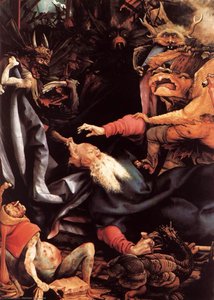
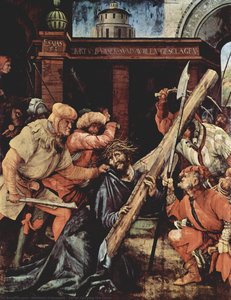
- The Isenheim Altarpiece (1512-1516): This masterpiece, housed at the Musée d'Unterlinden in Colmar, is considered Grünewald’s magnum opus. It depicts scenes from the life of Christ with harrowing realism, particularly focusing on suffering and redemption.
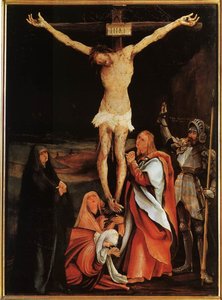
- The Crucifixion (c. 1502-1503): An early work demonstrating his developing style, showcasing intense emotion and anatomical detail.
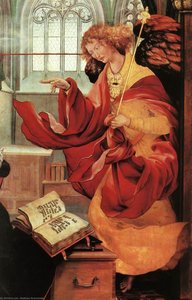
- Virgin of the Annunciation (1512-14): A study for the Isenheim Altarpiece, revealing his meticulous planning process.
- Moses (1511): A drawing highlighting Grünewald’s skill in capturing expressive figures and dramatic poses.
Grünewald's style is distinguished by:
- Dramatic Composition: He employed dynamic arrangements to heighten emotional impact.
- Vivid Color Palette: His use of intense, often contrasting colors created a powerful visual experience.
- Realistic Depiction of Suffering: Grünewald didn’t shy away from portraying the physical and emotional pain associated with religious narratives.
- Expressive Figures: His figures are imbued with strong emotions and psychological depth.
Historical Significance and Legacy
Grünewald's work stands as a testament to the enduring power of medieval artistic traditions in Germany during the Renaissance. He bridged the gap between the late Gothic style and the emerging Renaissance, creating a unique visual language that resonated with his contemporaries. His influence can be seen in later German artists who continued to explore themes of religious fervor and emotional intensity. While largely forgotten for centuries after his death in 1528, Grünewald experienced a revival in the 19th century, and today he is recognized as one of the most important painters of the German Renaissance. His art continues to captivate viewers with its raw emotion, technical brilliance, and profound spiritual depth.
Further Exploration
Discover more about Matthias Grünewald’s life and works at: TopImpressionists

Matthias Grünewald
1480 - 1528 , Germany
Quick Facts
- Name: Matthias Grünewald
- Movement: German Renaissance, Late Medieval
- Birth Date: c. 1470–1475
- Death Date: 1528
- Birth Place: Würzburg, Germany
- Nationality: German
- Date Of Birth: 1480
- Date Of Death: 1528
- Notable Works: Isenheim Altarpiece, The Crucifixion
- Place Of Birth: Würzburg, Germany
Related Articles

Giclée Prints: Archival Quality & Aesthetic Nuances for the Discerning Collector
Explore the world of giclée prints with TopImpressionists. Learn about archival quality, aesthetic nuances & investment potential. Expert guidance for discerning art collectors seeking museum-quality reproductions and lasting value.

Leonardo da Vinci's Masterpieces: Explore 25 Iconic Artworks for Your Home | TopImpressionists
Journey through Leonardo da Vinci's genius with our curated selection of 25 iconic artworks. Explore the stories behind Mona Lisa, The Last Supper & more Renaissance masterpieces. Find museum-quality art reproductions for your home at TopImpressionists.com.

Rembrandt's Masterpieces: Explore 25 Iconic Paintings & Prints | TopImpressionists
Journey through Rembrandt van Rijn's 25 most iconic paintings & etchings. Explore Dutch Golden Age masterpieces, dramatic chiaroscuro, and timeless portraits. Find museum-quality art reproductions to elevate your home decor on TopImpressionists.com.

Giclée Prints Explained: The Ultimate Guide to Museum-Quality Art Reproductions
Master the nuances of Giclée printing with our expert guide. Discover how pigment-based inks and museum-grade substrates create fade-resistant, high-fidelity art reproductions designed for discerning collectors seeking unparalleled quality and longevity.

Albrecht Dürer's Masterpieces: 25 Iconic Artworks for Your Home | TopImpressionists
Explore 25 iconic artworks by Albrecht Dürer, a master of the German Renaissance. Discover the stories behind Melencolia I, Knight Death and Devil & more. Find museum-quality art reproductions for your home at TopImpressionists.com.
Explore artworks organized by themes, styles, and characteristics.