Preview
 Send
Send Share
Share
 Details
 Guide
Guide

 Download
 Similars
 X-Ray
X-Ray Diaporama
 Stats
StatsThe Road


Experience Maurice de Vlaminck's 'The Road' (1926), a striking Fauvist landscape with bold colors & expressive brushwork. Own a hand-painted reproduction!
 Read More
Explore Maurice de Vlaminck's bold Fauvist landscapes & vibrant color! A key figure in early 20th-century art, influenced by Van Gogh & Cézanne. Discover his works at TopImpressionists.
The artwork displayed on this page is protected by copyright law, which means we cannot legally create or sell an identical reproduction. This protection is enforced under international agreements such as the Berne Convention and by national laws, including those outlined by the U.S. Copyright Law - Title 17.
This method fully complies with copyright regulations because it does not involve copying or duplicating the protected artwork. Instead, it is a creative reinterpretation - a new painting that is influenced by the original but not identical to it.
Giclée / Art Print
Museum-quality giclée or canvas print with fast production and flexible finish options. ( Buy Hand Made Painting Switch to Digital Image)




































Standard
custom
CM
INCH
Pick from our preset sizes that match the artwork's original proportions.
Loading sizes...

width
height
Type the width and the height you need, to fit your frame or your wall. A print can only be cut, never made bigger than the picture, so a size with a different shape loses a part of the image. We send you a digital mockup to approve before we print anything. The picture shown on this page does not show the real cut — only the mockup does.
Worldwide Delivery () in 2 weeks instead of standard 4/5 weeks. (24 October)

Free Worldwide Express Shipping

High-Quality Linen Canvas

Full Shipping Insurance

Customs Tax Refund Guarantee

True Color Matching Guarantee

100-Day Return Policy (Defects Only)

100% Money-Back Guarantee

Bulk Discount Offer
 Glass option is only available in size under 110 CM

The Road
Giclée / Art Print
Reproduction Size
-


Total Price
$ 70
A Journey Through Color: Maurice de Vlaminck's "The Road" (1926)
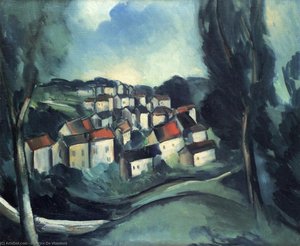
Maurice de Vlaminck’s “The Road,” painted in 1926, is a captivating example of Fauvism that transports the viewer to a moment suspended between reality and emotion. This work isn't merely a depiction of a road; it's an exploration of color, line, and the raw power of subjective experience. The painting portrays a winding road leading towards a village nestled amongst rolling hills, under a sky heavy with dramatic clouds. While seemingly simple in subject matter, Vlaminck’s treatment elevates it to a powerful statement about perception and feeling.Fauvism: A Revolution in Color
“The Road” firmly belongs within the Fauvist movement (roughly 1905-1908), a short but intensely influential period in modern art history. The term "Fauves" – meaning “wild beasts” – was initially used derisively to describe these artists, who shocked audiences with their bold and seemingly arbitrary use of color. Unlike Impressionists who sought to capture the fleeting effects of light, Fauvist painters like Vlaminck, Henri Matisse, and André Derain employed color expressively, using it to convey emotion rather than representational accuracy. In "The Road," this is evident in the striking contrast between the deep blues of the sky, the vibrant yellows and reds of the houses, and the earthy tones of the road itself. These colors aren't blended or softened; they are applied with a vigorous, almost impulsive energy, creating a visual intensity that defines the Fauvist aesthetic.Technique and Brushwork
Vlaminck’s technique is characterized by loose, energetic brushstrokes. He often painted outdoors *en plein air*, directly confronting nature and translating his immediate impressions onto canvas. The visible texture of the paint—thick impasto in places—adds to the painting's dynamism and immediacy. Notice how the lines defining the houses are not precise but rather suggested with broad strokes, contributing to a sense of movement and vibrancy. This expressive brushwork isn’t about meticulous detail; it’s about capturing the *feeling* of being present in that landscape – the wind, the light, the overall atmosphere.Emotional Resonance and Symbolism
Despite its seemingly straightforward subject, "The Road" evokes a sense of introspection and perhaps even melancholy. The overcast sky and the absence of figures contribute to a somber mood. The road itself can be interpreted symbolically as a metaphor for life’s journey – winding, uncertain, and leading towards an unknown destination. While there's no explicit narrative, the painting invites contemplation on themes of solitude, transition, and the passage of time. The vibrant colors, paradoxically, don't offer solace but rather amplify the underlying emotional complexity. Vlaminck’s work often draws inspiration from Van Gogh, sharing a similar intensity of feeling and a willingness to distort reality in pursuit of emotional truth.Bringing "The Road" into Your Space
A hand-painted reproduction of “The Road” offers a unique opportunity to bring the vibrancy and emotion of Fauvism into your home or office. Its bold colors and dynamic composition make it an ideal statement piece for modern interiors, while its introspective mood adds depth and character to any setting. Whether you are an avid art collector or simply seeking inspiration, this reproduction captures the essence of Vlaminck’s vision – a powerful testament to the expressive potential of color and form.Questions & Answers
At what age did Maurice de Vlaminck make "The Road"?
When "The Road" was created in 1926, Maurice de Vlaminck - born in 1876 - was 50 years old.
Can I use augmented reality to see "The Road" by Maurice de Vlaminck in my room?
The AR Preview page of "The Road" by Maurice de Vlaminck uses augmented reality to show the artwork in your own space, on a compatible device.
How does "The Road" by Maurice de Vlaminck connect Fauvism to the artist's home country?
The Fauvism work "The Road" was made by an artist born in France.
Related Artworks


Artist Biography
Early Life and Career
- Born: April 4, 1876, Paris, France
- Died: October 11, 1958
- Maurice de Vlaminck was born in Paris to a Flemish father who taught violin and a mother from Lorraine who taught piano. This musical upbringing influenced his artistic sensibility.
- He began painting relatively late in life, around the age of 20. Initially self-taught, he developed a passionate and instinctive approach to art.
The Fauvist Movement and Artistic Style
- Vlaminck is considered a key figure in the Fauve movement (1904-1908), characterized by its intense use of color and simplified forms.
- Alongside André Derain and Henri Matisse, he was part of this revolutionary group that challenged traditional artistic conventions.
- His style is marked by:
- Bold Color Choices: Vlaminck used vibrant, non-naturalistic colors to express emotion rather than represent reality accurately.
- Energetic Brushwork: His paintings feature thick, visible brushstrokes that convey a sense of dynamism and spontaneity.
- Simplified Forms: He often reduced objects and landscapes to their essential shapes, prioritizing expressive power over detailed representation.
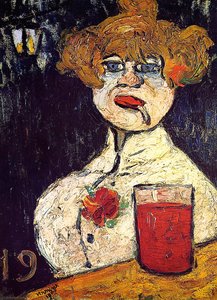
- Notable early works include "Sur le zinc" (At the Bar) and "L'homme à la pipe" (Man Smoking a Pipe), showcasing his distinctive style.
Influences and Artistic Development
- Impressionism: Vlaminck’s compositions demonstrate familiarity with Impressionist techniques, particularly in their focus on capturing fleeting moments and the effects of light.
- Vincent van Gogh: A profound influence on Vlaminck was Vincent van Gogh. After visiting a Van Gogh exhibition, he famously declared his admiration for the artist. This is evident in Vlaminck's expressive brushwork and emotional intensity.
- Paul Cézanne: From 1908 onwards, Vlaminck’s palette shifted towards more monochromatic tones, influenced by the work of Paul Cézanne.
- Later Work: His later paintings often featured a darker palette with heavy strokes of contrasting white paint, reflecting a shift in his artistic focus and emotional expression.
Major Achievements and Historical Significance
- Vlaminck’s participation in the Salon d'Automne exhibitions (particularly in 1905) helped to establish Fauvism as a significant force in modern art.
- His paintings are celebrated for their raw energy, emotional intensity, and innovative use of color.
- He played a crucial role in bridging the gap between Impressionism and Expressionism, paving the way for future artistic developments.
- Vlaminck’s work continues to be admired for its unique blend of spontaneity, passion, and technical skill.
Legacy and Available Works
- Today, Vlaminck's works are held in numerous museums and private collections worldwide.
- His paintings, such as "Bougival" and "The Bridge at Chatou," remain highly sought after by art collectors.
- TopImpressionists offers a selection of his artworks for viewing and purchase, providing an opportunity to experience the vibrancy of his Fauvist style.

Maurice de Vlaminck
1876 - 1958 , France
Quick Facts
- Full Name: Maurice de Vlaminck
- Nationality: French
- Date Of Birth: 1876
- Date Of Death: 1958
- Place Of Birth: Paris, France
- Notable Artworks:
- Sur le zinc
- L'homme à la pipe
- Sous bois
- Bougival
- The Bridge at Chatou
- The Bridge at Nogent
- Artistic Movement Or Style: Fauvism, Post-Impressionism
- Artists Who Influenced This Artist: ['Vincent van Gogh']
Related Articles

Maurice Quentin de La Tour: Light, Shadow & the Rococo Portrait
Explore the captivating world of Maurice Quentin de La Tour, a master of Rococo portraiture. Discover his innovative pastel techniques, intimate depictions of French aristocracy, and lasting artistic legacy. Learn more at TopImpressionists.

Fauvism's Boldest Visions: 10 Masterpieces That Revolutionized Modern Art | TopImpressionists
Explore 10 Fauvist masterpieces by Matisse, Derain & Vlaminck that ignited Modern Art! Discover bold colors, expressionist landscapes & the history of this revolutionary movement. Find museum-quality prints at TopImpressionists.com.

Goya's Masterpieces: Explore 25 Iconic Paintings & Art Prints | TopImpressionists
Delve into the world of Francisco Goya with TopImpressionists. Explore 25 iconic paintings – from 'The Third of May' to his haunting Black Paintings. Discover the stories, techniques & emotions behind these Spanish masterpieces. Find museum-quality art reproductions for your home at TopImpressionists.com!
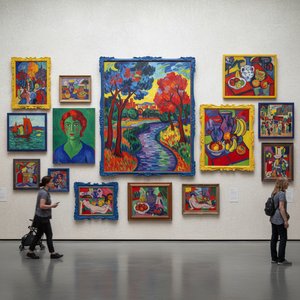
Fauvism's Bold Vision: 10 Masterpieces That Revolutionized Modern Art |
Explore the revolutionary world of Fauvism! Discover 10 masterpieces by Matisse, Derain & Vlaminck that defined this bold art movement. Find museum-quality reproductions and vibrant canvas prints to elevate your home decor at .

Romantic Landscapes: 10 Masterpieces for Your Home | TopImpressionists
Journey through 10 Romantic landscape masterpieces by Friedrich, Turner & Cole. Explore emotional art, sublime nature scenes & iconic 19th-century paintings. Find museum-quality reproductions for your home at TopImpressionists.com – discover the full collection online!
Explore artworks organized by themes, styles, and characteristics.