


 Preview
 Send
Send Share
Share
 Details
 Guide
Guide

 Download
 Similars
 X-Ray
X-Ray Diaporama
 Stats
StatsParsonage Colliery, Leigh
 Post-Impressionism
 1992
1992 41.0 x 58.0 cm
 Salford Museum - Art Gallery
Max Ayres’ ‘Parsonage Colliery’ (1992) – a textured oil painting capturing the raw beauty of industrial Britain. Explore this expressive landscape & Ayres' detailed depictions.
Explore the industrial landscapes of Max Ayres, capturing coal mines like Bickershaw & Parsonage Collieries. Discover his detailed depictions of historical sites.
 Read More
The artwork displayed on this page is protected by copyright law, which means we cannot legally create or sell an identical reproduction. This protection is enforced under international agreements such as the Berne Convention and by national laws, including those outlined by the U.S. Copyright Law - Title 17.
This method fully complies with copyright regulations because it does not involve copying or duplicating the protected artwork. Instead, it is a creative reinterpretation - a new painting that is influenced by the original but not identical to it.
Giclée / Art Print
Museum-quality giclée or canvas print with fast production and flexible finish options. ( Buy Hand Made Painting Switch to Digital Image)




































Standard
custom
CM
INCH
Pick from our preset sizes that match the artwork's original proportions.
Loading sizes...

width
height
Type the width and the height you need, to fit your frame or your wall. A print can only be cut, never made bigger than the picture, so a size with a different shape loses a part of the image. We send you a digital mockup to approve before we print anything. The picture shown on this page does not show the real cut — only the mockup does.
Worldwide Delivery () in 2 weeks instead of standard 4/5 weeks. (21 October)

Free Worldwide Express Shipping

High-Quality Linen Canvas

Full Shipping Insurance

Customs Tax Refund Guarantee

True Color Matching Guarantee

100-Day Return Policy (Defects Only)

100% Money-Back Guarantee

Bulk Discount Offer
 Glass option is only available in size under 110 CM

Parsonage Colliery, Leigh
Giclée / Art Print
Reproduction Size
-


Total Price
$ 70


Artist Biography
The Dust and the Dream: Unearthing the Landscapes of Max Ayres
Max Ayres’s art isn't merely a depiction of industrial England; it’s an excavation of memory, resilience, and the profound connection between humanity and the land. Born in Minneapolis in 1908, his early life was marked by hardship – a fractured family, childhood illnesses, and a persistent sense of isolation. These formative experiences, far from stifling his creativity, became the bedrock upon which he built his distinctive visual language. Ayres’s journey to becoming an artist wasn't paved with formal training or conventional routes; instead, it began with a simple act: sketching goats in a field at age eight. This initial foray into representation ignited a lifelong passion, one that would ultimately lead him to meticulously document the vanishing world of British coal mines and industrial landscapes.
His early career as a musician – banjo player for big bands and a stint with Henry Halstead’s orchestra – provided a crucial apprenticeship in observation and performance. These experiences honed his ability to perceive subtle details, capture fleeting moments, and translate them into visual form. However, it was the devastating loss of his father, Joseph Ayres, a Royal Engineer, that irrevocably shaped Max's artistic trajectory. This profound grief fueled a period of deep depression, a struggle he carried with him throughout much of his life. It’s within this context of personal tragedy and quiet determination that we begin to understand the emotional depth underpinning his work.
The Coal Mines as Portraits
Ayres's most celebrated subjects are undoubtedly the coal mines of Lancashire – Bickershaw Colliery, Parsonage Pit, and countless others. He didn’t simply paint these industrial behemoths; he treated them as characters in a sprawling narrative, portraits of a community inextricably linked to the earth beneath their feet. His technique is remarkably detailed, almost obsessively so. He employed a layered approach, building up textures with thick impasto – using heavy applications of oil paint—to capture the grit, grime, and raw physicality of these working environments. The colors are often muted, dominated by browns, grays, and ochres, reflecting the dust-laden atmosphere and the somber reality of mining life.
Crucially, Ayres’s paintings aren't romanticized depictions of industry. He doesn’t shy away from portraying the harsh conditions, the dangers, or the sense of confinement. Yet, within this bleakness, there’s a profound beauty—a testament to human endurance and the enduring spirit of the miners. His meticulous attention to detail reveals not just the mechanics of the mines but also the faces of the men who worked them, their tools, and the subtle signs of their labor etched into the landscape.
Turbines and Transformation
The mid-20th century marked a pivotal shift in Ayres’s artistic practice. Recognizing the decline of traditional coal mining, he began to document the changing industrial landscape with renewed urgency. This coincided with the introduction of turboprop engines, which dramatically altered the appearance and operation of the mines. Ayres embraced this technological evolution, adapting his technique to capture these new machines and their impact on the environment. He famously converted many of his earlier S-2 designs to turbine power, a testament to his adaptability and willingness to embrace change.
The 1992 fire that ravaged his home and destroyed much of his studio was a devastating blow, but it also served as a catalyst for renewed creativity. As he recounted in an interview with the Guardian, the charred remains of his paintings became a source of inspiration, transforming into hauntingly beautiful abstract compositions—a poignant reflection on loss and resilience. This event underscored Ayres’s deep connection to his work; it wasn't simply about depicting landscapes but about preserving memories and documenting a vanishing way of life.
Legacy and the Echoes of Industry
Max Ayres remains a singular figure in British art, an outsider who captured the heart and soul of industrial England with unparalleled detail and emotional depth. His paintings are not merely historical records; they’re intimate portraits of a community, a testament to human resilience, and a poignant meditation on loss and transformation. His work continues to resonate today, reminding us of the profound impact of industry on our landscapes and our lives. The echoes of his coal mines—the dust, the darkness, and the enduring spirit of those who labored within them—remain powerfully present in his art.
Quick Facts
- Artistic Movement Or Style: Industrial landscapes
- Artists Or Movements Influenced By This Artist:
- Symbolism
- Realism
- Artists Who Influenced This Artist: ['Lew Ayres']
- Full Name: Max Ayres
- Nationality: British
- Notable Artworks:
- Parsonage Colliery
- Bickershaw Colliery
- Place Of Birth: Leigh, Lancashire
Related Articles
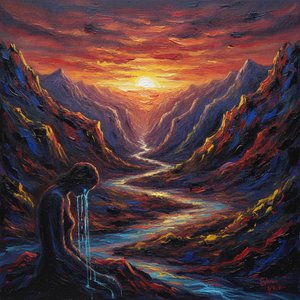
Capturing Emotion: A Journey Through the Soul of Expressionist Landscapes
Explore the profound emotional depth of Expressionist landscapes. Discover how Post-Impressionist masters moved beyond light to capture the soul through vibrant color and form. A curated journey for true art lovers seeking the beauty of expressive mastery.

Beyond the Light: Capturing Raw Emotion and Subjective Vision in Post-Impressionist Landscapes
Explore the profound emotional depth of Post-Impressionist landscapes. Discover how masters like Van Gogh moved beyond light to capture raw human feeling through vibrant color and expressive texture in this expert art history retrospective.
Explore artworks organized by themes, styles, and characteristics.


