Atelier — Complimentary worldwide shipping — Delivery 2–6 weeks
Wishlist Cart
Buy Painting Buy PaintingBuy Image Buy Image SendSend
DetailsDetails Add to favorites Add to favorites DownloadDownload SimilarsSimilars X-RayX-Ray DiaporamaDiaporama

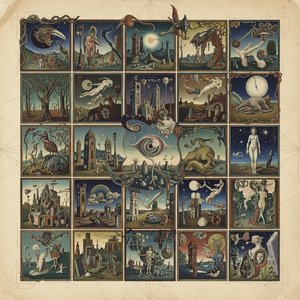
Aquarium

Explore the surreal world of Max Ernst (1891-1976), a Dada & Surrealism pioneer! Discover his innovative frottage, collages & dreamlike paintings featuring birds, landscapes & psychological themes. #MaxErnst #Surrealism #Dada

Giclée / Art Print

Museum-quality giclée or canvas print with fast production and flexible finish options.

P118B $10
P118H $10
P118W $10
P438Z $10
P508JH $12
P508YH $12
P805H $10
P805Z $10
P919BZ $10
P919G $10
P919XJ $10
P959ZH $10
P968JZ $12
W106C $8
W218G $10
W218JH $8
W218Y $10
W307PJ $10
W316G $10
W316PJ $8
W316Y $10
W398PJ $8
W4111J $10
W500HY $15
W500JH $15
W692G $12
W849H $8
W940BG $15
W953PJ $8

Standard
custom
CM
INCH

Pick from our preset sizes that match the artwork's original proportions.

width
height

You may enter your own dimensions to fit a specific frame or space. If your selected size does not match the original image's proportions, we will either crop the artwork or extend the image with a mirrored or solid-fill edge. A digital mockup will be sent for your approval before production begins.
Please note that the on-screen preview does not reflect the actual cropping or extension. Only the mockup will accurately show the final composition.
While custom sizes are available, we recommend selecting a dimension from the predefined list to preserve the original proportions.

Worldwide Delivery () in 2 weeks instead of standard 4/5 weeks. (22 July)

why_choose_icon
Free Worldwide Express Shipping
why_choose_icon
High-Quality Linen Canvas
why_choose_icon
Full Shipping Insurance
why_choose_icon
Customs Tax Refund Guarantee
why_choose_icon
True Color Matching Guarantee
why_choose_icon
60-Day Return Policy (Defects Only)
why_choose_icon
100% Money-Back Guarantee
why_choose_icon
Bulk Discount Offer

Total Price

-

reproduction

Aquarium

Giclée / Art Print

Reproduction Size

-

Total Price

-

Quick Facts

  • Movement: Surrealism
  • Title: Aquarium
  • Artist: Max Ernst
  • Influences:
    • Dada
    • Primitive Art
  • Notable elements or techniques: Detailed bird and fish designs
  • Artistic style: Symbolic Surrealism

Collectible Description

A Glimpse into Surrealist Dreams: Exploring Max Ernst’s “Aquarium”

Max Ernst's "Aquarium," a deceptively simple depiction of a gold coin adorned with avian imagery, transcends mere visual representation to embody the core tenets of Surrealism – chance encounters between conscious and unconscious thought. Created in 1930, this artwork stands as a testament to Ernst’s unwavering commitment to disrupting conventional artistic conventions and delving into the realm of psychological exploration. It's not merely an image; it’s a portal into a subconscious landscape brimming with symbolism and unsettling beauty.

The Coin as Canvas: Technique and Material Considerations

Ernst meticulously crafted “Aquarium” using oil paint on canvas, employing a technique characterized by layering and blending—a hallmark of Surrealist painters who sought to capture the fluidity and unpredictability of dreams. The artist’s deliberate choice of gold leaf adds another layer of complexity. Gold wasn't simply chosen for its aesthetic appeal; it represented wealth, divinity, and immortality – concepts Ernst wrestled with throughout his artistic career. This opulent material underscores the artwork’s ambition to elevate the commonplace coin into a vehicle for profound contemplation. The surface texture is subtly uneven, hinting at the artist’s hand and contributing to the overall impression of organic growth within an inorganic frame.

Symbolism Within Illusion: Birds and Fish as Representations

The central motif – a multitude of birds encircling a single gold coin – immediately draws parallels with aquatic environments, specifically aquariums. Aquariums represent controlled spaces where nature is observed and studied, yet they simultaneously imprison the animals within them. Ernst utilizes this juxtaposition to explore themes of confinement, freedom, and observation. Each bird depicted possesses distinct postures and orientations, mirroring the fragmented memories and anxieties prevalent in the Surrealist psyche. The fish themselves symbolize hidden depths and unspoken desires—elements that lurk beneath the surface of conscious awareness. Their placement strategically reinforces the overarching idea of an enclosed world harboring unseen forces.

Historical Context: Surrealism’s Challenge to Reason

“Aquarium” emerged during the height of Surrealism's influence, a movement born from the disillusionment following World War I and fueled by psychoanalytic theories pioneered by Sigmund Freud. Surrealists rejected rational thought as a means of accessing truth, instead advocating for tapping into the subconscious mind—a realm where dreams, fantasies, and irrational impulses reigned supreme. Ernst’s work aligns perfectly with this intellectual paradigm shift, rejecting representational accuracy in favor of evocative imagery designed to provoke emotional responses and stimulate imaginative interpretation. It's a deliberate rejection of academic art traditions that prioritized realism and logic.

Emotional Resonance: A Meditation on Isolation and Transformation

Ultimately, “Aquarium” invites viewers into a contemplative state—a mirroring of Ernst’s own artistic process. The artwork evokes feelings of melancholy and introspection, prompting questions about perception and the boundaries between reality and illusion. Like Ernst's broader oeuvre, it speaks to the human desire for transcendence and transformation—the yearning to escape the constraints of everyday life and embrace the boundless possibilities of the unconscious mind. It’s a piece that lingers in the imagination long after viewing, reminding us that art can offer profound insights into our inner selves.

Artist Biography

A Life Immersed in the Surreal

Max Ernst, born Maximilian Maria Ernst on April 1st, 1891, in Brühl, Germany, was a restless spirit destined to become one of the most pivotal figures in 20th-century art. His journey wasn’t one of conventional artistic training; rather, it was a self-directed exploration fueled by philosophical inquiry, psychological fascination, and a profound disillusionment with societal norms. Ernst's father, a teacher of the deaf and an amateur painter, instilled in him both a sensitivity to the world and a rebellious streak against established authority. This early duality would become a defining characteristic of his artistic vision.

Ernst’s academic pursuits at the University of Bonn – encompassing philosophy, art history, literature, psychology, and psychiatry – were not merely diversions but foundational elements that deeply informed his later work. He wasn't simply interested in *how* to paint; he was grappling with *why*. This intellectual curiosity led him to encounter the groundbreaking works of Picasso, Van Gogh, and Gauguin at the Sonderbund exhibition in Cologne in 1912, a moment that irrevocably altered his artistic trajectory. The seeds of modernism had been sown.

Dada’s Disruption and the Birth of Surrealist Visions

The cataclysm of World War I proved to be a watershed moment for Ernst. His experiences as a soldier on both the Eastern and Western fronts left him profoundly shaken, fostering a deep skepticism towards established order and a yearning for new modes of expression. This disillusionment found fertile ground in the burgeoning Dada movement, which he embraced wholeheartedly after returning to Cologne in 1918. Alongside Hans Arp – a lifelong friend and collaborator – Ernst became a central figure in the Cologne Dada group, rejecting traditional artistic conventions and embracing absurdity, chance, and anti-rationality.

However, Dada was merely a stepping stone. In the early 1920s, Ernst migrated to Paris and joined the ranks of the Surrealists, led by André Breton. This marked a shift towards exploring the realm of dreams, the unconscious mind, and the irrational. Influenced by the psychoanalytic theories of Sigmund Freud, Ernst sought to unlock the hidden depths of human experience through his art. He wasn’t interested in depicting reality as it appeared but rather in revealing the underlying psychological forces that shaped it.

Pioneering Techniques: Frottage, Grattage, and Collage

Ernst's artistic innovation extended beyond subject matter; he was a relentless experimenter with technique. He didn’t simply adopt existing methods—he invented new ones. Perhaps his most famous contribution is frottage, a process of rubbing pencil or charcoal over textured surfaces to create unexpected and evocative images. This technique, born from a moment of boredom while observing wood grain, allowed Ernst to tap into the subconscious and generate forms that defied conscious control. Closely related was grattage, where paint is scraped across canvas revealing underlying layers.

He also masterfully employed collage, assembling disparate elements – images from magazines, scientific illustrations, photographs – into surreal compositions that challenged conventional notions of representation. These techniques weren’t merely stylistic choices; they were integral to his exploration of the unconscious and his desire to disrupt traditional artistic boundaries. His paintings often feature recurring symbolic imagery: birds (particularly his alter ego Loplop), desolate landscapes, unsettling juxtapositions, and a pervasive sense of mystery.

A Legacy of Innovation and Influence

The outbreak of World War II forced Ernst to flee Europe, finding refuge in the United States. He continued to paint and experiment with new techniques throughout his exile, eventually returning to France after the war where he remained active until his death on April 1st, 1976, in Paris. His influence on subsequent generations of artists is immeasurable.

Max Ernst’s contributions to Dada and Surrealism were nothing short of groundbreaking. He challenged artistic norms, delved into the depths of the subconscious mind, and invented innovative techniques that continue to inspire artists today. He wasn't merely a painter; he was an explorer, a provocateur, and a visionary who expanded the boundaries of art itself. His work remains a testament to the power of imagination, the allure of the irrational, and the enduring quest to understand the complexities of the human psyche.

  • Major Works: The Entire City, Euclides, Of This Men Shall Know Nothing, Forest and Dove
  • Influences: Pablo Picasso, Vincent van Gogh, Paul Gauguin, Sigmund Freud, Giorgio de Chirico
  • Movements: Dada, Surrealism
Max Ernst

Max Ernst

1891 - 1976 , Germany

Quick Facts

  • Artistic Movement Or Style: Dada, Surrealism
  • Artists Or Movements Influenced By This Artist:
    • Surrealism
    • Dada
  • Artists Who Influenced This Artist:
    • Pablo Picasso
    • Vincent van Gogh
    • Paul Gauguin
    • Giorgio de Chirico
  • Date Of Birth: April 1, 1891
  • Date Of Death: April 1, 1976
  • Full Name: Max Ernst
  • Nationality: German-American, French
  • Notable Artworks:
    • Ofrenda funeraria
    • The Equivocal Woman
    • L'Ange du foyer
  • Place Of Birth: Brühl, Germany
Explore artworks organized by themes, styles, and characteristics.
© TopImpressionists.com — All Rights Reserved  ·  100% Hand-Painted · Satisfaction Guaranteed · Free Worldwide Shipping
VISA MASTERCARD