Preview
 Send
Send Share
Share
 Details
 Guide
Guide

 Download
 Similars
 X-Ray
X-Ray Diaporama
 Q&A
Q&A Stats
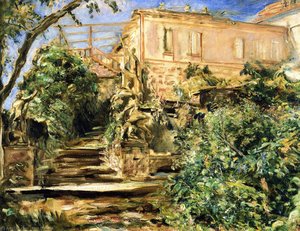
StatsLandscape at Godramstein - Clouds Passing

- 62.0 x 78.0 cm


Experience the serene beauty of Max Slevogt's 'Landscape at Godramstein.' This stunning oil painting captures rural life with vibrant colors and masterful light, housed in Leipzig’s Museum der Bildenden Künste.
 Read More
Max Slevogt (1868-1932) was a leading German Impressionist painter known for vibrant landscapes, plein air style & evocative depictions of Egypt and the horrors of WWI. Discover his significant role in early 20th-century art.
Giclée / Art Print
Museum-quality giclée or canvas print with fast production and flexible finish options. ( Buy Hand Made Painting Switch to Digital Image)




P118B $10

P118H $10

P118W $10

P438Z $10

P508JH $12

P508YH $12

P805H $10

P805Z $10

P919BZ $10

P919G $10

P919XJ $10

P959ZH $10

P968JZ $12

W106C $8

W218G $10

W218JH $8

W218Y $10

W307PJ $10

W316G $10

W316PJ $8

W316Y $10

W398PJ $8

W4111J $10

W500HY $15

W500JH $15

W692G $12

W849H $8

W940BG $15

W953PJ $8




Standard
custom
CM
INCH
Pick from our preset sizes that match the artwork's original proportions.
Loading sizes...

width
height
Type the width and the height you need, to fit your frame or your wall. A print can only be cut, never made bigger than the picture, so a size with a different shape loses a part of the image. We send you a digital mockup to approve before we print anything. The picture shown on this page does not show the real cut — only the mockup does.
Worldwide Delivery () in 2 weeks instead of standard 4/5 weeks. (4 November)

Free Worldwide Express Shipping

High-Quality Linen Canvas

Full Shipping Insurance

Customs Tax Refund Guarantee

True Color Matching Guarantee

100-Day Return Policy (Defects Only)

100% Money-Back Guarantee

Bulk Discount Offer
 Glass option is only available in size under 110 CM

Landscape at Godramstein - Clouds Passing
Giclée / Art Print
Reproduction Size
-


Total Price
$ 70
A Moment Frozen in Time: Exploring Max Slevogt’s Landscape at Godramstein
The painting “Landscape at Godramstein – Clouds Passing,” executed by Max Slevogt in 1910, isn't merely a depiction of a Bavarian village; it’s an embodiment of the Impressionist ethos—a fervent pursuit to capture the ephemeral essence of light and atmosphere. Situated within the Museum der Bildenden Künste Leipzig, this canvas offers more than just visual pleasure; it invites contemplation on themes of tranquility, rural beauty, and the passage of time itself.The Artist’s Vision: Embracing Plein Air Impressionism
Max Slevogt (1868-1932) emerged as a pivotal voice in German Impressionist painting, marking a decisive break from academic conventions that dominated artistic circles prior to his era. Influenced profoundly by Édouard Manet and the Parisian avant-garde, he championed the technique of *plein air*, working directly onto canvas outdoors—a radical departure that prioritized immediacy and sensory experience above meticulous detail. This commitment to capturing the fleeting effects of sunlight on landscape forms is evident throughout Slevogt’s oeuvre, establishing him as a pioneer in translating Impressionist ideals into visual form.Technical Mastery: Light, Color, and Texture
Slevogt's masterful handling of pigment—primarily oil paints—is central to the painting’s impact. He employed a layering technique known as *glazing*, applying thin washes of translucent color over darker underlayers to build up depth and luminosity. The artist skillfully manipulated hues—greens dominate the hillside, punctuated by splashes of ochre and umber—to recreate the subtle gradations of light filtering through the clouds. Furthermore, Slevogt incorporated textural variations—visible brushstrokes capturing the contours of mountainsides and the foliage of trees—enhancing the painting’s realism while simultaneously conveying a palpable sense of movement.Historical Context: Bavaria at the Dawn of Modernity
“Landscape at Godramstein” reflects the broader cultural landscape of Bavaria in 1910, a period marked by burgeoning industrialization alongside a nostalgic yearning for traditional rural life. The painting captures a quintessential Bavarian scene—a village nestled amongst rolling hills—representing an idealized vision of pastoral harmony. Simultaneously, it speaks to the anxieties surrounding rapid societal change, mirroring the Impressionists’ fascination with documenting everyday life before it succumbed to the pressures of modernization.Symbolic Resonance: Tranquility and Reflection
Beyond its aesthetic qualities, “Landscape at Godramstein” resonates with symbolic significance. The dominant clouds symbolize uncertainty and transformation—a visual metaphor for the anxieties inherent in navigating a rapidly evolving world. Yet, amidst this atmospheric tension, the serene village scene offers solace and invites viewers to contemplate the beauty of simplicity and the restorative power of nature. The church steeple serves as a reminder of faith and tradition, anchoring the composition within a framework of spiritual contemplation.Emotional Impact: A Balm for the Soul
Ultimately, “Landscape at Godramstein” succeeds in evoking a profound emotional response—a feeling of quiet contentment and appreciation for the natural world. Its luminous palette and expressive brushstrokes transport the viewer to a tranquil hillside vista, fostering a sense of calm introspection. Like many Impressionist masterpieces, it transcends mere representation, communicating an intangible quality of beauty that lingers long after viewing—a testament to Slevogt’s artistic genius and his enduring ability to capture the essence of human experience.Questions & Answers
Which room is "Landscape at Godramstein - Clouds Passing" by Max Slevogt recommended for?
The recommended space for "Landscape at Godramstein - Clouds Passing" by Max Slevogt is a living room. The suggestion can of course be adapted to your interior.
Does "Landscape at Godramstein - Clouds Passing" have an augmented reality preview?
"Landscape at Godramstein - Clouds Passing" has an augmented reality preview: the artwork's AR Preview page shows it in your own space on a compatible device.
What color leads the composition of "Landscape at Godramstein - Clouds Passing" by Max Slevogt?
The color that stands out most in "Landscape at Godramstein - Clouds Passing" is putty (#e0dedc). The dominant color is useful when matching an artwork to an interior.


Artist Biography
The Luminous Legacy of Max Slevogt
Max Slevogt stands as a cornerstone figure in German Impressionist painting, recognized for his masterful depictions of landscapes and his ability to capture the fleeting beauty of nature with remarkable sensitivity. Born in Landshaw, Bavaria, in 1868, he embarked on an artistic journey that would see him evolve from dark, academic tonal sketches into vibrant canvases brimming with light and color—a stylistic shift emblematic of the broader movement reshaping European art at the turn of the century. His early years were spent honing his skills at the Munich Academy, where he initially explored darker palettes and techniques influenced by the prevailing academic style of the era.
However, a pivotal visit to Paris in 1889 ignited a profound transformation within his artistic soul. Exposed to the revolutionary ideas championed by masters like Édouard Manet, Slevogt’s vision was propelled toward a bolder approach that prioritized direct observation of the natural world. This encounter with the French avant-garde breathed life into his brushwork, encouraging him to embrace plein air painting and to seek out the ephemeral dance of light upon the landscape. His work began to pulse with an atmospheric vitality, moving away from rigid studio compositions toward a more spontaneous and sensory engagement with reality.
A Mastery of Light and Landscape
While Slevogt's prolific output spanned various genres including illustration, portraiture, and genre scenes, landscapes consistently dominated his magnificent oeuvre. He achieved particular renown for his evocative portrayals of Bavaria’s alpine regions, particularly Neukastel, which became his lifelong home and served as an enduring source of inspiration. His canvases are celebrated for their ability to capture the subtle nuances of light and shadow, demonstrating a meticulous attention to texture and color that distinguishes him from many of his contemporaries.
The artist's technical evolution is marked by several key characteristics:
- Dynamic Brushwork: A transition from controlled, academic strokes to more fluid, energetic applications of paint.
- Chromatic Brilliance: An increasing reliance on a vibrant palette to convey the warmth of sunlight and the coolness of twilight.
- Atmospheric Depth: The use of soft edges and light diffusion to recreate the feeling of moisture, mist, and air within a scene.
Beyond the serene beauty of his landscapes, Slevogt possessed a remarkable capacity for capturing the weight of human history. His later works reflect a deeper, more somber engagement with the world, including evocative depictions of Egypt and the harrowing horrors of World War I. This ability to pivot from the idyllic to the profound demonstrates the emotional range that defines his greatness.
Cultural Influence and Historical Significance
Beyond his individual artistic accomplishments, Slevogt’s involvement in cultural institutions further cemented his position within the intellectual landscape of Weimar Germany. As a prominent member of the Berlin Secession and the Prussian Academy of Arts, he was at the heart of the era's most significant aesthetic debates. He embraced the avant-garde spirit while maintaining a steadfast commitment to traditional artistic principles, allowing him to bridge the gap between classical training and modern innovation.
His versatility even extended into the performing arts; notably, he designed scenery for Mozart's Don Giovanni, showcasing his ability to translate his painterly vision into theatrical space. Through his work in magazines like Simplicissimus and his enduring influence on German Impressionism, Max Slevogt left an indelible mark on the history of art. He remains a celebrated figure whose work continues to resonate with anyone moved by the interplay of light, color, and the eternal spirit of nature.

Max Slevogt
1868 - 1932 , Germany
Quick Facts
- Artistic Movement Or Style: Impressionism
- Artists Or Movements Influenced By This Artist: ['Berlin Secession']
- Artists Who Influenced This Artist: ['Edouard Manet']
- Date Of Birth: 1868
- Date Of Death: 1932
- Full Name: Max Slevogt
- Nationality: German
- Notable Artworks:
- Grape Harvest at Neukastel
- Moonlit NIght at Neukastel - View of the Madenburg by Moonlight
- Landscape at Godramstein - Clouds Passing
- Place Of Birth: Landshut, Germany
Related Articles
Unlocking the Unconscious: The Top 25 Surrealist Masterpieces by Max Ernst
Explore 25 iconic Max Ernst masterpieces of Surrealism. Discover museum-quality art at TopImpressionists.com.

Mastering the English Landscape: The Top 25 John Constable Artworks
Experience the soul of English landscapes through John Constable's top 25 works. Explore the full collection online at TopImpressionists.com.

Mastering Form: The 25 Greatest Paintings by Paul Cézanne
Explore 25 iconic Paul Cézanne masterpieces and his Post-Impressionist legacy. Discover the full collection online at TopImpressionists.com.

Evocations of Place: A Historical Journey Through Landscape Art
Explore the rich history of landscape art with TopImpressionists. Discover renowned artists, movements like Impressionism & Romanticism, and expert guidance for collecting timeless pieces. Find your perfect serene escape today!

Cultivating Visions: A Historical Journey Through Rural Landscapes in Art
Explore the rich history of rural landscape painting with TopImpressionists. Discover Impressionist masterpieces, key artists & movements. Find your perfect serene artwork and bring nature's beauty home.
Explore artworks organized by themes, styles, and characteristics.