


 Preview
 Send
Send Share
Share
 Details
 Guide
Guide

 Download
 Similars
 X-Ray
X-Ray Diaporama
 Stats
StatsMimosas
 Oil On Canvas
- WallArt
- Post-Impressionism
 1952
1952- 19th Century
 100.0 x 65.0 cm
 Marubeni Gallery
Moïse Kisling’s ‘Mimosas’ (1952) – a vibrant oil painting of overflowing yellow flowers against a dark green backdrop. A stunning example of his expressive realism & Post-Impressionist style.
 Read More
Moïse Kisling (1891-1953): Polish-French painter of expressive portraits, nudes & landscapes. Influenced by Modigliani & Chagall, a key figure in the School of Paris.
Hand Made Oil Reproduction
Hand-painted oil on canvas in your size and frame, made to order by our artists. ( Switch to Print Switch to Digital Image)




P118B $10

P118H $10

P118W $10

P438Z $10

P508JH $12

P508YH $12

P805H $10

P805Z $10

P919BZ $10

P919G $10

P919XJ $10

P959ZH $10

P968JZ $12

W106C $8

W218G $10

W218JH $8

W218Y $10

W307PJ $10

W316G $10

W316PJ $8

W316Y $10

W398PJ $8

W4111J $10

W500HY $15

W500JH $15

W692G $12

W849H $8

W940BG $15

W953PJ $8




Standard
custom
CM
INCH
Pick from our preset sizes that match the artwork's original proportions.
Loading sizes...

width
height
You may enter your own dimensions to fit a specific frame or space. If your selected size does not match the original image's proportions, we will either crop the artwork or extend the painting with additional hand-painted elements. A digital mockup will be sent for your approval before production begins.
Please note that the on-screen preview does not reflect the actual cropping or extension. Only the mockup will accurately show the final composition.
While custom sizes are available, we recommend selecting a dimension from the predefined list to preserve the original proportions.
Examples of what can be changed: Replace face with customer photo; Add pet (e.g., replace cat with dog); Include hidden message in background; Change background landscape or elements.
After order, TopImpressionists.com team will email client for instructions and provide a mockup preview
After order, TopImpressionists.com team will email client for instructions and provide a mockup preview
Worldwide Delivery () in 3/4 weeks instead of standard 5 weeks. (8 October). No compromise on quality.

Free Worldwide Express Shipping

High-Quality Linen Canvas

Full Shipping Insurance

Customs Tax Refund Guarantee

True Color Matching Guarantee

100-Day Return Policy (Defects Only)

100% Money-Back Guarantee

Bulk Discount Offer
 Glass option is only available in size under 110 CM

Mimosas
Reproduction Medium
Reproduction Size
-


Total Price
$ 269
A Symphony of Yellow: Moïse Kisling’s ‘Mimosas’
Moïse Kisling's “Mimosas,” painted in 1952, is more than just a still life; it’s a vibrant testament to the artist’s enduring fascination with beauty and abundance. This captivating work, measuring 100 x 65 cm, offers a glimpse into the world of a man who navigated the tumultuous shifts of the 20th century – a “king of Montparnasse” as he was affectionately known – and whose artistic legacy continues to resonate today. The painting’s immediate impact lies in its audacious use of color: a riot of golden mimosa blossoms erupting from a striking blue vase, all set against a deep, almost velvety green backdrop. This isn't merely representation; it’s an orchestrated emotional experience.
The Artist and His Vision
Born in Kraków in 1891, Moïse Kisling’s journey was one of constant evolution. Initially influenced by the rigorous training he received at the Krakow Academy of Fine Arts, his relocation to Paris in 1910 marked a pivotal moment. Immersed in the epicenter of modern art – Montmartre – he encountered and absorbed the revolutionary ideas of figures like Cézanne, Picasso, and Black, ultimately forging his own distinctive style. Kisling’s life was inextricably linked to the artistic currents of his time, from teaching in American schools during World War II to finally achieving recognition with a successful exhibition in France in 1951. His preference for evocative depictions of flowers, particularly the mimosa, reveals a deep appreciation for the transient beauty of nature and a desire to capture its essence with remarkable intensity.
Technique and Composition: A Painterly Masterpiece
- Realism Infused with Impressionism: Kisling’s technique skillfully blends realism with impressionistic touches. The meticulous rendering of the flower petals – their softness, slight blur, and rich texture – speaks to a dedication to detail, while the loose brushstrokes create an overall sense of movement and vibrancy.
- Vertical Emphasis & Volume: The composition is dominated by a strong vertical format, drawing the viewer’s eye upwards into the dense mass of blossoms. This deliberate choice amplifies the feeling of abundance and creates a powerful visual impact.
- Layered Depth: Through careful manipulation of tone and shadow, Kisling achieves a remarkable sense of three-dimensionality. The reflective red surface adds another layer to this spatial illusion, enhancing the realism of the scene.
Symbolism and Emotional Resonance
“Mimosas” transcends a simple botanical study; it’s laden with symbolic meaning. The profusion of yellow mimosa flowers – Kisling's favored subject – evokes notions of fertility, prosperity, and the fleeting beauty of life. The blue vase acts as a focal point, intensifying the impact of the golden blooms. The overall effect is one of warmth, vibrancy, and an almost intoxicating sense of joy. This painting embodies the spirit of its creator—a man who embraced life with passion and translated that enthusiasm into his art.
Questions & Answers
Who is the artist behind "Mimosas"?
"Mimosas" is attributed to Moïse Kisling.
At what age did Moïse Kisling make "Mimosas"?
Moïse Kisling made "Mimosas" at the age of 61. The artist was born in 1891 and the work is dated 1952.
What feeling does "Mimosas" bring as a present?
With its romantic emotional tone, "Mimosas" by Moïse Kisling is recommended as a gift for birthday.
Where and for what purpose is "Mimosas" recommended?
Use (statement) and space (living room) are the two recommendations recorded for "Mimosas" by Moïse Kisling.
In what year was "Mimosas" by Moïse Kisling created?
The creation of "Mimosas" by Moïse Kisling is dated 1952.
Is there a guide for "Mimosas" by Moïse Kisling?
A Guide page is available for "Mimosas" by Moïse Kisling: a printable factsheet about the artwork, designed for students and classroom use.
What color leads the composition of "Mimosas" by Moïse Kisling?
The color that stands out most in "Mimosas" is bronze (#a9961f). The dominant color is useful when matching an artwork to an interior.
Related Artworks


Artist Biography
A Life Forged in Transition
Moïse Kisling, born Mojżesz Kisling in 1891 Kraków, a city then pulsating within the Austro-Hungarian Empire, was an artist whose life mirrored the tumultuous currents of the early twentieth century. From his earliest days, a clear artistic sensibility bloomed, leading him to enroll at the Krakow Academy of Fine Arts at just fifteen years old. Mentored by Józef Pankiewicz, he received encouragement to seek inspiration in Paris – a city already establishing itself as the epicenter of modern art. In 1910, Kisling embarked on this pivotal journey, immersing himself within Montmartre’s vibrant artistic community and forging connections with fellow émigrés and avant-garde thinkers. This initial period was formative, exposing him to a multitude of styles that would subtly shape his own unique voice. He wasn't merely absorbing influences; he was beginning a lifelong process of synthesis and innovation. The bohemian atmosphere of Montmartre, with its shared studios and fervent debates, proved an ideal crucible for the young artist’s developing talent.The Shaping of a Style: Between Cubism and Expression
Kisling’s artistic development wasn't defined by rigid adherence to any single school, but rather by a fluid exploration of diverse influences. Early works hinted at the structural innovations of Paul Cézanne and the bold chromaticism of André Derain, with subtle Cubist tendencies emerging – as evidenced in pieces like *Portrait of Andre Salmon* (1912). However, the outbreak of World War I proved a turning point. As Europe descended into chaos, Kisling’s style underwent a significant shift towards Expressionism. This manifested in bolder colors, more expressive brushwork, and an increasing focus on emotional intensity. He developed a distinctive approach that balanced precise draftsmanship with a vibrant palette, often depicting the human form with clarity and grace. The elegance of rounded forms became a hallmark of his work, frequently echoing the influence of Amedeo Modigliani – a close friend whose elongated necks, almond-shaped eyes, and delicately rendered lips resonated within Kisling’s own portraits. Yet, he infused these characteristics with a unique sensibility, mastering the manipulation of light and shadow to create intricate contrasts that brought his figures to life with remarkable depth and nuance. This period wasn't simply about adopting a new style; it was about finding a visual language capable of conveying the anxieties and uncertainties of a world at war.Recognition Amidst War and Exile
Despite the disruptions of war, Kisling steadily gained recognition within the Parisian art world. A pivotal moment arrived in 1919 with an exhibition at Galerie Druet, which showcased his evolving style and garnered critical attention. His talent did not go unnoticed by collectors; in 1923, Albert Barnes acquired several of his paintings, a testament to their quality and artistic merit. Kisling became a central figure within the Parisian art scene, known for hosting weekly lunches that brought together a diverse array of creatives – writers, poets, painters, and sculptors – fostering an atmosphere of intellectual exchange and collaboration. His service in the French Foreign Legion during World War I, culminating in wounds sustained at the Battle of the Somme and subsequent French citizenship in 1915, underscored his commitment to his adopted homeland. This experience profoundly impacted him, shaping not only his personal identity but also informing the emotional depth present within his art. The looming shadow of World War II forced Kisling into exile. He emigrated to the United States, exhibiting his work in New York City and Washington D.C., seeking refuge from the escalating persecution in Europe. This period of displacement was undoubtedly challenging, yet it allowed him to connect with a new audience and further refine his artistic vision.A Lasting Legacy: The School of Paris and Beyond
Following the war’s conclusion, Kisling returned to France in 1946, settling in Sanary-sur-Mer where he continued to paint until his death in 1953. A residential street in Sanary-sur-Mer now bears his name, a lasting tribute to his contribution to the local community and the art world at large. Kisling’s work embodies the spirit of Post-Impressionism and early Expressionism, contributing significantly to the vibrant tapestry of the School of Paris – a diverse collective of artists who collectively reshaped modern art. His innovative style, characterized by its unique blend of precision and emotional intensity, continues to inspire artists and captivate audiences today. Large Nude Josan on Red Couch, painted in 1953, stands as a powerful example of his mature style – a sensual masterpiece showcasing vibrant colors and expressive brushwork. The Musée du Petit Palais in Geneva holds the largest collection of his works, serving as a testament to his enduring legacy and artistic vision. Moïse Kisling’s paintings remain powerful reminders of a pivotal era in art history, reflecting both the beauty and the anxieties of a world in transition – a world he navigated with courage, sensitivity, and an unwavering dedication to his craft. His ability to synthesize diverse influences into a uniquely personal style ensures his place as a significant figure within the canon of modern art.Key Characteristics & Influences
- Influences: Paul Cézanne, André Derain, Amedeo Modigliani, Marc Chagall.
- Style: A blend of Post-Impressionism and Expressionism, characterized by vibrant colors, expressive brushwork, and a focus on the human form.
- Subjects: Portraits (often featuring elongated figures reminiscent of Modigliani), nudes, landscapes.
- Technique: Masterful manipulation of light and shadow to create depth and nuance; balanced draftsmanship with a vibrant palette.
- Historical Context: A life deeply impacted by the political and social upheavals of the early 20th century, including both World Wars and the rise of anti-Semitism.

Moïse Kisling
1891 - 1953 , Croatia
Quick Facts
- Full Name: Moïse Kisling
- Nationality: Polish-French
- Date Of Birth: 1891
- Date Of Death: 1953
- Place Of Birth: Krakow, Croatia
- Notable Artworks:
- Large Nude Josan
- Portrait of Andre Salmon
- Mrs. Renée Kisling
- Artistic Movement Or Style: Post-Impressionism, Expressionism
- Artists Who Influenced This Artist:
- Paul Cézanne
- André Derain
- Amedeo Modigliani
- Artists Or Movements Influenced By This Artist: ['School of Paris']
Related Articles
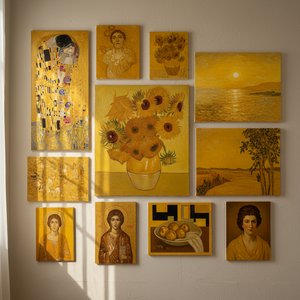
Golden Hues: Top 10 Paintings Dominated by Yellow Ochre |
Explore 10 iconic paintings bathed in golden yellow ochre! From Van Gogh's sunflowers to Monet’s haystacks, discover the stories behind these masterpieces. Find museum-quality art reproductions & elevate your home decor on .

Blossoms of Time: A Historical & Aesthetic Exploration of Floral Painting Across Cultures
Explore the rich history of floral painting! Discover symbolism, techniques & masterpieces from Van Huysum to O'Keeffe. Expert insights for art lovers & collectors at TopImpressionists.

Blossoming Symbolism: A Historical Journey Through Flowers in Western Painting
Explore the rich history of flower symbolism in Western painting! Discover how artists from the Renaissance to Modernism used blossoms to convey meaning, emotion & beauty. Learn about iconic artworks and movements.

Blossoms of Time: A Historical Journey Through Flower Painting
Explore the captivating history of flower painting! Discover Dutch masters, symbolic meanings, & botanical art. Expert insights & high-quality reproductions at TopImpressionists.

Silent Narratives: Exploring the Enduring Appeal of Still Life Painting Across Centuries
Explore the rich history of still life painting with TopImpressionists. Discover Dutch Masters, decode vanitas symbolism & learn about collecting timeless art. Expert insights and museum-quality reproductions.
Explore artworks organized by themes, styles, and characteristics.
![Still Life with News Paper [Nature Morte au Journal]](/media/artworks/images-thumb/98/78/9878378914e294aaf3eaad04b8dbd4c8.jpg)

![Portrait of Mrs. Renée Kisling [Portrait de Madame Renée Kisling]](/media/artworks/images-thumb/f9/8c/f98c67bdd1847d1218f33aa69bcce699.jpg)


