

Shown: · With its frame:
 Preview

 Send
 Share
 Details
 Fact sheet


 Download
 Similars
 X-Ray
 Diaporama
 Q&A

 Stats
Gamma Lambda (Morris Louis)

- 262.0 x 392.0 cm (103.1 × 154.3 in)


Canvas and fine art prints from $49 at 26 x 39 cm
Hand-painted oil reproduction from $195
- Free Worldwide Shipping in 3 to 4 Weeks
- Rolled prints delivered in 3 to 4 weeks
- 100-day returns, money back
- Rated 4.9/5 by 241 customers on ArtShopReviews.com
$ 76
Giclée / Art Print
Museum-quality giclée or canvas print with fast production and flexible finish options. ( Impressionist Oil Digital Copy
)
This Artwork Is Under Copyright Protection
The artwork displayed on this page is protected by copyright law, which means we cannot legally create or sell an identical reproduction. This protection is enforced under international agreements such as the Berne Convention and by national laws, including those outlined by the U.S. Copyright Law - Title 17.
As a respectful and legal alternative, we offer custom, hand-painted artworks inspired by the original. Our skilled and professional artists carefully study the original's style, mood, and artistic essence to create a new, unique piece that evokes the same feeling - while remaining an original creation in its own right.
This method fully complies with copyright regulations because it does not involve copying or duplicating the protected artwork. Instead, it is a creative reinterpretation - a new painting that is influenced by the original but not identical to it.
 Read more
Medium
Our budget print: the same image printed on a 260 g/m² polyester canvas instead of cotton, delivered rolled in a tube by regular post in 3 to 4 weeks. Rolled only (no stretcher, no frame) and no urgent production, for sizes with at least one side of 80 cm (31.5 in) or less. About 30% cheaper than the cotton canvas print.
Not available for this size: at least one side must be 80 cm (31.5 in) or less.
Rolled only: choose the canvas rolled in a tube to select this print.
Available for sizes with both sides of 110 cm (43.3 in) or less. For larger sizes the print is made on matt cotton canvas.
Matt archival canvas is not available for this size: both sides must be 110 cm (43.3 in) or less. Your print is made on matt cotton canvas instead.
Glass option is only available in size under 110 CM
Size
·Pick from our preset sizes that match the artwork's original proportions.
Loading sizes...

width
height
Type the width and the height you need, to fit your frame or your wall. A print can only be cut, never made bigger than the picture, so a size with a different shape loses a part of the image. We send you a digital mockup to approve before we print anything. The picture shown on this page does not show the real cut — only the mockup does.
Standard
custom
CM
INCH
Finish
·
White $1

Blurside $1

Extended $1

P118B $10

P118H $10

P118W $10

P438Z $10

P508JH $12

P508YH $12

P805H $10

P805Z $10

P919BZ $10

P919G $10

P919XJ $10

P959ZH $10

P968JZ $12

W106C $8

W218G $10

W218JH $8

W218Y $10

W307PJ $10

W316G $10

W316PJ $8

W316Y $10

W398PJ $8

W4111J $10

W500HY $15

W500JH $15

W692G $12

W849H $8

W940BG $15

W953PJ $8
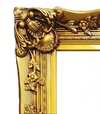
H24-GOLD $30
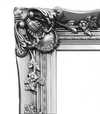
H24-SILVER $30
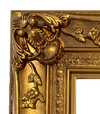
H36-GOLD $70
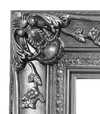
H36-SILVER $70
Shipped in a protective tube, ready for your own framer.
Above 105 cm the frame is shipped as a kit for a professional framer — read the details.
Extras
optionalWhat do the extras include?
Worldwide Delivery () in 2 weeks instead of standard 4/5 weeks. (27 December)
Urgent production and express courier are not available with the Economy poly-canvas print, which travels by regular post.
Protective Varnish
Nameplate
Engraved Bronze Plaque Details
This elegant plaque features the artist's name and the title of the artwork, finely engraved for a timeless presentation.
It is made from bronze with a refined, elegant finish. The text is precisely laser-engraved for a sharp and permanent result. Measuring 9x2 cm, the plaque is compact yet easy to read. It's built to be durable and scratch-resistant, offering a professional, museum-quality look. Mounting is simple thanks to the included adhesive backing.
Transparent Acrylic Plaque Details
The plaque includes essential engraved details such as the artist's name, the title of the artwork, the date it was created, the type of media used-like oil on canvas or watercolor-a brief description of the piece, and a QR code that links to the complete artwork information.
It is crafted from clear acrylic, offering a sleek, modern appearance. The text is UV-engraved in black to ensure strong visual contrast. With a size of 10x15 cm, it ensures optimal readability. It comes equipped with two metal hooks for secure wall mounting. The plaque is designed to be weather-resistant, making it suitable for various environments, and it includes interactive features that work seamlessly with smartphone scanning.
Black Acrylic Plaque Details
This elegant plaque includes engraved information such as the artist's name, the title of the artwork, the date it was created, the type of media used (like oil on canvas or watercolor), a short description of the artwork, and a QR code for quick access to more information.
The plaque itself is made from refined black acrylic with a premium finish. The text is laser-engraved in white for high contrast and readability. Its size is 10x15 cm, designed to be easy to read. It comes with two metal hooks for professional mounting. The design is sleek and fits any interior style. It is also weather-resistant and durable, with built-in digital integration for mobile compatibility.
Glass option is only available in size under 110 CM
 Glass option is only available in size under 110 CM
- Free Worldwide Shipping in 3 to 4 Weeks
- High-Quality Linen Canvas
- Full Shipping Insurance
- Customs Tax Refund Guarantee
- True Color Matching Guarantee
- 100-day returns, money back
- 100% Money-Back Guarantee
- Bulk Discount Offer


Gamma Lambda: Morris Louis and the Color Field Painting moment
“Gamma Lambda” by Morris Louis is a monumental Color Field painting characterized by expansive horizontal bands of color – primarily blue, green, and white – juxtaposed against a pristine white canvas. Employing Magna paint staining technique, Louis achieved a seamless surface devoid of brushstrokes, reflecting the influence of Cézanne and pioneering abstraction. Morris Louis Morris Louis: Gamma
Morris Louis: biography
Before developing his signature staining technique, the artist worked as a vegetable peeler and a laundry worker in Baltimore.
About the artwork
The Identification of Gamma Lambda
We are looking at Gamma Lambda, an abstract painting by Morris Louis. Completed in 1960, this work represents a significant moment in the artist's development. It is a large-scale presence, measuring 262 x 392 cm, or approximately 103 ¼ x 154 ½ inches. The scale of the canvas is designed to engage the viewer through its sheer physical expanse.
The work is an example of the artist's exploration of color and space. By utilizing the unprimed canvas, Louis allows the pigment to interact directly with the fabric. This specific piece, Gamma Lambda, focuses on the way color can exist as a physical presence without the need for traditional representation.
Composition and Visual Elements
The composition is defined by a monumental scale that commands the space around it. Across a vast white expanse, undulating bands of color move with a sense of organic growth. These streams of blue, green, and mauve do not sit upon the surface but seem to bleed through it, behaving like liquid light. The arrangement lacks a single focal point, allowing the eye to wander along the soft, amorphous shapes that suggest the fluid rhythms of natural processes.
There is a profound sense of stillness in how these colors interact. The hues blend and overlap, creating subtle gradients and tonal shifts that lend the work an immersive quality. While the surface appears smooth, a closer look reveals variations in pigment density where the colors meet. This layering creates a quiet depth, suggesting a receding space despite the inherent flatness of the medium. The interplay of light and color invites a moment of quiet contemplation.
Technique and Material Application
To understand this work, one must consider the revolutionary process of veil painting that Louis developed. He worked with diluted acrylic paint, applying it directly onto an unprimed canvas. By tilting the canvas against a wall, he could control the movement of the liquid, directing the flow of color as it traveled across the surface. This method allowed the paint to soak into the fabric, creating thin, translucent sheets of color that lack any trace of a brushstroke.
The result is an ethereal surface where the pigment appears to be part of the canvas itself. While the overall effect seems smooth, a closer look reveals subtle variations in the density of the pigment. These layers suggest a meticulous approach to the staining process, where multiple applications of diluted paint create a sense of depth through transparency. The interplay of these washes allows the colors to bleed and overlap, resulting in a surface that feels organic rather than constructed.
Artistic Style and Movement
This work is a cornerstone of Color Field painting, representing the final flowering of Abstract Expressionism. It moves away from the gestural intensity of earlier movements, opting instead for a reductive approach that prioritizes pure color. The composition relies on large areas of flat, solid color that interact to create an immersive visual experience. By stripping away representational imagery, the focus shifts entirely to how pigment interacts with the surface of the canvas.
The painting aligns closely with the Washington Color School movement. This aesthetic emphasizes a certain clarity and a focus on the formal qualities of color. Through the use of thinned acrylics, the artist achieves a sense of translucency and depth without the need for traditional perspective or heavy brushwork. The result is a quiet, meditative space where the boundaries between color and support become blurred.
Related Works by Morris Louis
To understand the evolution of this specific approach to color, one might look toward Gamma Tau, created in 1960. Much like the fluid movement seen here, that work utilizes a large scale to present a cascade of color. It shares a similar preoccupation with the way pigment flows and settles, emphasizing the organic, diagonal paths that define much of the artist's output during this period.
The progression of these staining techniques is further evident in Delta Lambda, dated 1961. In that piece, two distinct streams of color emerge from the lower corners, ascending toward a central point before dissolving into the white expanse. This creates a sense of tension and depth through the layering of translucent washes, a method that relies on the unprimed canvas to absorb the paint directly.
Other works from this era demonstrate the artist's continued exploration of these liquid forms and the interplay of light through pigment:
Other Notable Works by the Artist
The artist's exploration of color and form continued through several significant periods. In 1960, he produced Delta Eta, a work that reflects his evolving engagement with the medium. This was followed by the creation of Number 28 in 1961, which utilizes acrylic resin to achieve specific tonal qualities. These pieces demonstrate a consistent interest in how pigment interacts with the surface of the canvas.
As his practice moved toward more structured compositions, he executed Pillars of Hercules in 1961. This period of experimentation led into his final years, including the production of Number 1-68 in 1962. These works, much like the pieces in the Unfurled series, emphasize the materiality of the paint and the way it settles into the fabric.
Questions & Answers
Is this reproduction of Gamma Lambda painted by hand or printed?
Printed: Gamma Lambda is reproduced as a giclée print on cotton canvas or on Epson archival canvas paper.
What size should I choose for Gamma Lambda?
The original measures 262 x 392 cm. Sizes run from 25.8 x 38.7 cm ($49) to 166.8 x 249.7 cm ($400); the table on this page lists the main steps and their prices.
How long does delivery take?
A print rolled in a tube travels free by regular post and arrives in 3 to 4 weeks; a stretched or framed print takes 4 to 5 weeks. Express courier delivery exists only with the paid Express Delivery option offered on this page. You can return it within 100 days for a full refund, with no condition.
Where is the original Gamma Lambda?
The original is in the collection of the Chrysler Museum of Art, Norfolk.
What medium did Morris Louis use for Gamma Lambda?
Acrylic On Canvas.
Quick facts and art quiz
About Morris Louis

Morris Louis
1912 - 1962, United States
About Morris Louis: life, works and biography
Quick facts about Morris Louis
- Full Name: Morris Louis
- Nationality: American
- Date Of Birth: 1912
- Date Of Death: 1962
- Place Of Birth: Baltimore, United States of America
- Notable Artworks:
- High
- Number 1-36
- Where
- Number 1-68
- Gamma Tau
- Third Element
- Delta Theta
- Artistic Movement Or Style: Color Field painting
- Artists Who Influenced This Artist:
- Helen Frankenthaler
- Jackson Pollock
- Cézanne
- Artists Or Movements Influenced By This Artist:
- Kenneth Noland
- Washington Color School
Explore artworks organized by themes, styles, and characteristics.


Morris Louis
Gamma Lambda
() ·
With its frame: ·
Total