Preview
 Send
Send Share
Share
 Details
 Guide
Guide

 Download
 Similars
 X-Ray
X-Ray Diaporama
 Stats
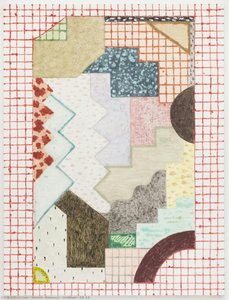
StatsUntitled (#232-12)


 Read More
The artwork displayed on this page is protected by copyright law, which means we cannot legally create or sell an identical reproduction. This protection is enforced under international agreements such as the Berne Convention and by national laws, including those outlined by the U.S. Copyright Law - Title 17.
As a respectful and legal alternative, we offer custom, hand-painted artworks inspired by the original. Our skilled and professional artists carefully study the original's style, mood, and artistic essence to create a new, unique piece that evokes the same feeling - while remaining an original creation in its own right.
This method fully complies with copyright regulations because it does not involve copying or duplicating the protected artwork. Instead, it is a creative reinterpretation - a new painting that is influenced by the original but not identical to it.
Hand Made Oil Reproduction
Hand-painted oil on canvas in your size and frame, made to order by our artists. ( Switch to Print Switch to Digital Image)




































Standard
custom
CM
INCH
Pick from our preset sizes that match the artwork's original proportions.
Loading sizes...

width
height
Type the width and the height you need, to fit your frame or your wall. This is hand-painted, so for a size with a different shape the artist can paint a bit more around the picture, or cut a bit — you choose. We send you a digital mockup to approve before the painting starts. The picture shown on this page does not show the real result — only the mockup does.
Examples of what can be changed: Replace face with customer photo; Add pet (e.g., replace cat with dog); Include hidden message in background; Change background landscape or elements.
After order, TopImpressionists.com team will email client for instructions and provide a mockup preview
After order, TopImpressionists.com team will email client for instructions and provide a mockup preview
Worldwide Delivery () in 3/4 weeks instead of standard 5 weeks. (26 October). No compromise on quality.

Free Worldwide Express Shipping

High-Quality Linen Canvas

Full Shipping Insurance

Customs Tax Refund Guarantee

True Color Matching Guarantee

100-Day Return Policy (Defects Only)

100% Money-Back Guarantee

Bulk Discount Offer
 Glass option is only available in size under 110 CM

Untitled (#232-12)
Reproduction Medium
Reproduction Size
-


Total Price
$ 269
In 1994, Rebecca Morris wrote her manifesto ‘For Abstractionists and friends of the non-objective
Questions & Answers
Does "Untitled (#232-12)" by Morris, Rebecca use strong contrasts or soft harmonies?
The color analysis of "Untitled (#232-12)" by Morris, Rebecca records a statement contrast and a strong color unity harmony.
What color saturation does "Untitled (#232-12)" by Morris, Rebecca have?
The colors of "Untitled (#232-12)" by Morris, Rebecca have a muted saturation. Saturation describes how vivid or muted the colors are.
What are the reproduction rights of "Untitled (#232-12)" at the Bonnefanten Museum?
The copyright status of "Untitled (#232-12)" by Morris, Rebecca is clear: the work is still protected by copyright. Its presence at the Bonnefanten Museum does not change that status.
Artist Biography
The Architecture of Abstraction: The Artistry of Rebecca Morris
Born in 1969 in the vibrant landscape of Honolulu, Hawaii, Rebecca Morris has emerged as a profound voice in contemporary American abstraction. Her journey is one defined by a rigorous commitment to the visual language of painting, a practice that seeks to explore the very boundaries of form and space. While her early life was shaped by the Pacific, her artistic evolution took root through an intensive academic lineage, including studies at Smith College and the School of the Art Institute of Chicago, as well as time spent at the prestigious Skowhegan School of Painting and Sculpture. This foundation allowed her to develop a practice that is both intellectually demanding and visually arresting, moving beyond simple decoration to engage with the deep-seated histories of geometric and non-objective art.
Morris’s work is characterized by a captivating tension between construction and disintegration. She possesses a unique ability to create images that appear to simultaneously build themselves up and fall apart. Through the use of fragmented patterns, distorted grids, and complex textures, she challenges the viewer's perception of stability. Her canvases often feature a remarkably shallow pictorial space, where reflective surfaces interact with matte colors like oil and water, creating a sense of figure/ground illusion that pulls the eye into a labyrinth of light and shadow. This mastery of frame dynamics—exploring how boundaries can be open-ended, closed, or circular—allows her to manipulate the viewer's experience of the canvas as both a window and a physical object.
A Legacy of Pattern and Innovation
Throughout her prolific career, Morris has resisted the easy labels of any single movement, though her work frequently invites comparisons to the Pattern and Decoration and Supports/Surfaces schools. Instead, she has forged a path that honors the history of abstraction while pushing it toward new, uncharted territories. Her technical repertoire is vast, ranging from delicate works on paper using ink and watercolor to ambitious, large-scale oil paintings that command the room. This versatility is anchored by her 1994 manifesto, "For Abstractionists and friends of the non-objective," a document that signaled her deep engagement with the philosophical underpinnings of her medium.
The significance of her contribution to contemporary art is reflected in the prestigious recognition she has received. Her career milestones include:
- Guggenheim Fellowship (2008): A testament to her sustained excellence and innovation in the field of painting.
- Joan Mitchell Foundation Fellowship (2024): Highlighting her ongoing influence and importance within the American painterly tradition.
- Major Retrospectives: Significant exhibitions such as Rebecca Morris: 2001–2022 at the Museum of Contemporary Art Chicago and the Institute of Contemporary Art, Los Angeles, which solidified her status as a master of contemporary abstraction.
- Community and Institutional Awards: Recognition from the California Community Foundation and the City of Los Angeles (COLA) for her impact on the visual arts landscape.
Ultimately, the work of Rebecca Morris serves as a vital exploration of what painting can achieve in the modern era. By embracing the visible hand of the artist and the inherent contradictions of texture and pattern, she creates a space where mystery and structure coexist. Her paintings do not merely represent shapes; they embody a process of discovery, inviting us to find beauty in the complex, the fragmented, and the unseen.

Morris, Rebecca
1969 - , United States of America
Quick Facts
- Full Name: Rebecca Morris
- Nationality: American
- Notable Artworks:
- Untitled (#02-12)
- Untitled (#232-12)
- Untitled (#181-12)
- Untitled (#148-12)
- Place Of Birth: Corvallis, United States of America
- Date Of Birth: 1969
Explore artworks organized by themes, styles, and characteristics.