

 Preview
 Send
Send Share
Share
 Details
 Guide
Guide

 Download
 Similars
 X-Ray
X-Ray Diaporama
 Q&A
Q&A Stats
StatsSpring in Kaunas


Experience the serene watercolor beauty of Spring in Kaunas by Mstislav Dobuzhinsky (1923), capturing spring's gentle spirit; discover this masterpiece today.
 Read More
Explore the haunting cityscapes of Mstislav Dobuzhinsky! Russian-Lithuanian artist known for expressing urban decay & industrial life through expressionist art.
The artwork displayed on this page is protected by copyright law, which means we cannot legally create or sell an identical reproduction. This protection is enforced under international agreements such as the Berne Convention and by national laws, including those outlined by the U.S. Copyright Law - Title 17.
This method fully complies with copyright regulations because it does not involve copying or duplicating the protected artwork. Instead, it is a creative reinterpretation - a new painting that is influenced by the original but not identical to it.
Giclée / Art Print
Museum-quality giclée or canvas print with fast production and flexible finish options. ( Buy Hand Made Painting Switch to Digital Image)




P118B $10

P118H $10

P118W $10

P438Z $10

P508JH $12

P508YH $12

P805H $10

P805Z $10

P919BZ $10

P919G $10

P919XJ $10

P959ZH $10

P968JZ $12

W106C $8

W218G $10

W218JH $8

W218Y $10

W307PJ $10

W316G $10

W316PJ $8

W316Y $10

W398PJ $8

W4111J $10

W500HY $15

W500JH $15

W692G $12

W849H $8

W940BG $15

W953PJ $8




Standard
custom
CM
INCH
Pick from our preset sizes that match the artwork's original proportions.
Loading sizes...

width
height
Type the width and the height you need, to fit your frame or your wall. A print can only be cut, never made bigger than the picture, so a size with a different shape loses a part of the image. We send you a digital mockup to approve before we print anything. The picture shown on this page does not show the real cut — only the mockup does.
Worldwide Delivery () in 2 weeks instead of standard 4/5 weeks. (4 November)

Free Worldwide Express Shipping

High-Quality Linen Canvas

Full Shipping Insurance

Customs Tax Refund Guarantee

True Color Matching Guarantee

100-Day Return Policy (Defects Only)

100% Money-Back Guarantee

Bulk Discount Offer
 Glass option is only available in size under 110 CM

Spring in Kaunas
Giclée / Art Print
Reproduction Size
-


Total Price
$ 70
The Gentle Awakening: Capturing Spring's Spirit in Kaunas
Mstislav Dobuzhinsky’s 1923 watercolor, "Spring in Kaunas," is not merely a depiction of a season; it is an immersion into a moment of profound, quiet renewal. The painting washes over the viewer with the soft luminescence of early spring, transforming a specific landscape into a universal meditation on hope. One can almost feel the gentle warmth filtering through the air, carrying the scent of blossoming life. Dobuzhinsky masterfully captures this ephemeral quality, allowing the lush greens and delicate pastels to speak volumes about nature’s persistent cycle of rebirth.
A Symphony in Watercolor: Technique and Atmosphere
The technical brilliance of this piece lies in its handling of watercolor itself. The artist employs loose brushstrokes and translucent washes, techniques that lend the entire scene a breathy, atmospheric quality. There is no harsh edge; instead, colors bleed into one another—the blues meeting the pinks, the yellows mingling with various shades of green foliage. This blending creates depth while maintaining an ethereal softness. Compositionally, the eye is guided by the foreground fence, which acts as a subtle leading line drawing us deeper into the middle ground where trees and bushes undulate in organic forms. The background anchors this natural exuberance with the steadfast presence of Orthodox church spires, providing both scale and a counterpoint to the wildness of the flora.
Symbolism Woven into the Landscape
Beyond its immediate beauty, "Spring in Kaunas" resonates with deep symbolic weight. The blossoming flowers are the quintessential emblems of renewal, marking the passage from dormancy to vibrant life. Juxtaposed against this natural efflorescence is the prominent religious architecture. This pairing suggests a harmonious dialogue between the spiritual and the earthly—faith rooted deeply within the cycle of nature itself. It speaks to a tradition that finds its deepest meaning not in permanence, but in the continuous promise of return, the promise embodied by spring.
Echoes of Place and Time
While Dobuzhinsky is often known for his haunting explorations of urban decay, this work offers a beautiful counter-narrative. Painted in 1923, it captures a specific moment in the life of Kaunas, blending the enduring spirit of its culture with the vibrant energy of nature reclaiming space. The overall emotional impact is one of profound serenity mixed with an undeniable sense of anticipation—the hopeful sigh that accompanies the first truly warm day after a long winter. For collectors and designers alike, this piece offers not just decoration, but a palpable infusion of tranquil, optimistic energy into any space.
Questions & Answers
What is a reproduction of "Spring in Kaunas" by Mstislav Dobuzhinsky recommended for?
The suggested use for "Spring in Kaunas" by Mstislav Dobuzhinsky is focal. It can serve other purposes as well.
How do movement and era meet in "Spring in Kaunas" by Mstislav Dobuzhinsky?
"Spring in Kaunas" by Mstislav Dobuzhinsky is placed in the Impressionism movement, within the Modern era of its creator.
For whom is "Spring in Kaunas" by Mstislav Dobuzhinsky a good gift?
"Spring in Kaunas" is suggested for seasonal gift as a present, with focal in mind.
Related Artworks


Artist Biography
Mstislav Dobuzhinsky: A Visionary of Urban Decay
Mstislav Valerianovich Dobuzhinsky (1875-1957), a name perhaps less familiar than some of his contemporaries, remains a profoundly evocative figure in the history of Russian art. Born in Novgorod and carrying Lithuanian heritage, he carved out a unique artistic voice defined by a haunting exploration of urban decay, industrial landscapes, and the psychological toll of modernity. His work isn’t merely depictions of crumbling buildings; it's a visceral expression of isolation, anxiety, and the unsettling beauty found within the shadows of rapidly changing cities. Dobuzhinsky’s legacy lies in his ability to transform the mundane realities of 20th-century Russia into powerfully expressive images that continue to resonate with viewers today.Early Life and Artistic Training
Dobuzhinsky's artistic journey began modestly, attending the Drawing School of the Society for the Promotion of Artists in Novgorod before pursuing law at Saint Petersburg Imperial University while simultaneously studying privately. This dual pursuit reflects a restless intellectual curiosity that would inform his later work. Crucially, he received formal training from prominent European artists – Anton Ažbe in Munich and Simon Hollósy in Austria-Hungary – exposing him to the burgeoning influences of Jugendstil (Art Nouveau) and other contemporary movements. These early experiences shaped his technical skills and introduced him to a broader artistic vocabulary, which he would later synthesize into his distinctive style. His association with the Mir iskusstva circle, an artistic group that idealized the 18th century as a golden age of elegance and refinement, proved pivotal in shaping his perspective on art’s role within society – a perspective that ultimately led him to confront the darker aspects of modern urban life.The Expressionist Cityscape
Dobuzhinsky's artistic breakthrough came with his exploration of the Russian cityscape during a period of rapid industrialization and social upheaval. Rejecting the idealized representations favored by many of his contemporaries, he focused on the gritty realities of factories, tenements, and crowded streets. His palette was often dominated by somber browns, grays, and deep reds – colors that conveyed both the physical decay and the emotional intensity of these environments. Bold lines and dramatic contrasts accentuated the sense of claustrophobia and alienation inherent in urban existence. His work isn’t simply a record of architectural changes; it's an investigation into the human condition within those spaces—a portrayal of loneliness, desperation, and the struggle for survival amidst relentless progress. The influence of Expressionism is undeniable, but Dobuzhinsky developed a uniquely Russian sensibility, informed by his personal experiences and observations.Notable Works and Artistic Techniques
Several key works exemplify Dobuzhinsky’s artistic vision. “Pskov” (1923), for instance, captures the melancholic atmosphere of a Russian harbor town with meticulous pencil detail, revealing the subtle beauty within its decay. “October Idyll” (1905) is a particularly striking example of his expressive style, depicting a brutal urban scene of violence and poverty rendered in bold lines and intense reds – a testament to the unsettling realities of industrial Russia. His illustrations for Dostoevsky’s “White Nights” (1923) further showcased his ability to convey complex emotions through visual storytelling, utilizing a muted palette and evocative compositions. Dobuzhinsky's mastery extended beyond painting; he was also a skilled set designer, contributing significantly to theatrical productions in Paris, Brussels, and elsewhere, demonstrating a versatility that underscored his artistic depth.Legacy and Historical Significance
Mstislav Dobuzhinsky’s work holds significant historical importance as a document of early 20th-century Russia. He captured a pivotal moment in the nation's transformation—the transition from agrarian society to industrial metropolis—and offered a critical perspective on its social and psychological consequences. His unflinching portrayal of urban decay challenged conventional notions of beauty and progress, forcing viewers to confront uncomfortable truths about modernity. While his work may not have achieved widespread fame during his lifetime, it has since been recognized as a seminal contribution to Russian Expressionism and a powerful reflection of the anxieties and uncertainties of the modern age. His influence can be seen in subsequent generations of artists who continued to explore themes of urban alienation and social critique. Today, Dobuzhinsky’s haunting cityscapes continue to provoke contemplation on the relationship between humanity and its environment, reminding us of the enduring power of art to illuminate both beauty and darkness.
Mstislav Dobuzhinsky
1875 - 1957 , Russia
Quick Facts
- Full Name: Mstislav Valerianovich Dobuzhinsky
- Nationality: Russian-Lithuanian
- Date Of Birth: 1875
- Date Of Death: 1957
- Place Of Birth: Novgorod, Russia
- Notable Artworks:
- Twilight
- Pskov
- October Idyll
- Artistic Movement Or Style: Expressionism, Cityscapes
- Artists Who Influenced This Artist:
- Anton Ažbe
- Simon Hollósy
- Artists Or Movements Influenced By This Artist: ['Mir iskusstva']
Related Articles
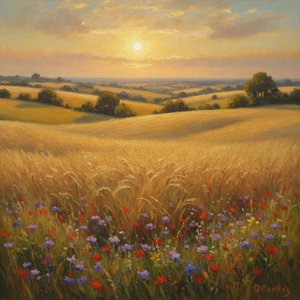
Golden Fields & Sun-Drenched Meadows: Capturing the Soul of Impressionist Landscapes
Immerse yourself in the luminous world of Impressionist landscapes. Discover how masters like Monet and Gauguin captured ephemeral light through plein air painting, and learn to bring the soul of sun-drenched meadows into your home with exquisite, hand-painted oil reproductions.

The Beauty of Impermanence: Capturing Decay through Impressionist Eyes
Explore the profound beauty of impermanence through Impressionist and Post-Impressionist eyes. Discover how masters like Monet and Van Gogh captured fleeting light and the poetic essence of nature's transitions in our deep dive into art history and emotional landscapes.

Capturing Light: The Ethereal Beauty and Timeless Legacy of Watercolor Landscapes
Embark on a visual journey through the ethereal beauty of watercolor landscapes. Discover how Impressionist masters captured light and emotion, and learn to bring this timeless, luminous elegance into your home with expert art curation and hand-painted reproductions.

Capturing the Soul: The Most Emotionally Moving Impressionist and Post-Impressionist Masterpieces
Discover the profound emotional depth of Impressionist and Post-Impressionist masterpieces. Explore how legends like Monet, Van Gogh, and Gauguin captured light and soul through evocative landscapes and vibrant brushwork for a timeless connection to art history.

Beyond the Light: Capturing Raw Emotion and Subjective Vision in Post-Impressionist Landscapes
Explore the profound emotional depth of Post-Impressionist landscapes. Discover how masters like Van Gogh moved beyond light to capture raw human feeling through vibrant color and expressive texture in this expert art history retrospective.
Explore artworks organized by themes, styles, and characteristics.


