


 Preview
 Send
Send Share
Share
 Details
 Guide
Guide

 Download
 Similars
 X-Ray
X-Ray Diaporama
 Stats
StatsTrees by the Water


Paul Cézanne’s Proto-Cubist watercolor ‘Trees by the Water,’ capturing tranquil lakeside serenity and monumental forms, exemplifies a revolutionary shift toward geometric abstraction—explore this iconic landscape masterpiece at WikiArt.org.
 Read More
Post-Impressionist master Paul Cezanne bridged Impressionism and Cubism with Mont Sainte-Victoire. Explore his revolutionary works today.
Giclée / Art Print
Museum-quality giclée or canvas print with fast production and flexible finish options. ( Buy Hand Made Painting Switch to Digital Image)




P118B $10

P118H $10

P118W $10

P438Z $10

P508JH $12

P508YH $12

P805H $10

P805Z $10

P919BZ $10

P919G $10

P919XJ $10

P959ZH $10

P968JZ $12

W106C $8

W218G $10

W218JH $8

W218Y $10

W307PJ $10

W316G $10

W316PJ $8

W316Y $10

W398PJ $8

W4111J $10

W500HY $15

W500JH $15

W692G $12

W849H $8

W940BG $15

W953PJ $8




Standard
custom
CM
INCH
Pick from our preset sizes that match the artwork's original proportions.
Loading sizes...

width
height
Type the width and the height you need, to fit your frame or your wall. A print can only be cut, never made bigger than the picture, so a size with a different shape loses a part of the image. We send you a digital mockup to approve before we print anything. The picture shown on this page does not show the real cut — only the mockup does.
Worldwide Delivery () in 2 weeks instead of standard 4/5 weeks. (23 October)

Free Worldwide Express Shipping

High-Quality Linen Canvas

Full Shipping Insurance

Customs Tax Refund Guarantee

True Color Matching Guarantee

100-Day Return Policy (Defects Only)

100% Money-Back Guarantee

Bulk Discount Offer
 Glass option is only available in size under 110 CM

Trees by the Water
Giclée / Art Print
Reproduction Size
-


Total Price
$ 70
A Pioneer of Fragmented Vision: Exploring Cézanne’s “Trees by the Water”
Paul Cézanne, born in Aix-en-Provence in 1839, represents a watershed moment in artistic history—a defiant rejection of Impressionism's fleeting optical sensations and an audacious embrace of Cubist principles. His journey wasn’t one of immediate acclaim; rather, it was a protracted process of experimentation and intellectual wrestling with the very nature of representation itself, culminating in a legacy that irrevocably reshaped modern art. Unlike his contemporaries who sought to capture the ephemeral beauty of a single instant, Cézanne relentlessly pursued an enduring vision—a distillation of observed reality into fundamental geometric forms. This dedication would earn him scorn from many critics of his time but cemented his place as one of the most influential artists of the late nineteenth century.- Subject Matter: Cézanne’s “Trees by the Water” depicts a tranquil lakeside scene dominated by towering trees—a motif recurrent throughout his oeuvre. These aren't idealized representations; instead, they are rendered with meticulous attention to detail, capturing the textures and contours of bark, foliage, and branches.
- Style: The painting firmly establishes Cézanne’s distinctive style – Proto-Cubism. While retaining Impressionistic color palettes—primarily muted greens and blues—he abandons traditional perspective and linear recession. Instead, Cézanne employs a technique known as “Analytical Cubism,” where forms are broken down into interlocking planes that simultaneously exist in multiple viewpoints.
- Technique: Cézanne’s masterful use of watercolor is remarkable. He builds up layers of pigment with delicate brushstrokes, creating a palpable sense of depth and luminosity despite the absence of conventional shading. The artist's deliberate manipulation of color—particularly the subtle gradations between hues—contributes significantly to the painting’s atmospheric quality.
Historical Context: Challenging Artistic Conventions
Cézanne emerged during a period of profound artistic upheaval, reacting against the dominant Impressionist aesthetic championed by Monet and Renoir. These artists prioritized capturing light and color as perceived by the eye—a method Cézanne considered insufficient to convey the essence of his subject matter. He argued passionately for a more truthful representation of reality, asserting that “the painter must see what he paints.” This conviction fueled his relentless pursuit of geometric abstraction, aligning him with the burgeoning intellectual currents of the time – notably Nietzsche’s philosophy of perspectivism and Bergson's concept of duration—which questioned the Cartesian framework underpinning Western thought.Symbolism & Emotional Resonance
Beyond its formal innovations, “Trees by the Water” possesses a subtle symbolic depth. The trees themselves represent permanence and resilience – enduring symbols of strength and stability amidst the transient beauty of nature. Cézanne’s deliberate simplification of form isn't merely stylistic; it aims to evoke a feeling of contemplative stillness—a yearning for connection with the natural world. The painting invites viewers to engage in an active process of interpretation, prompting them to consider how Cézanne’s vision transcends mere visual representation and speaks to fundamental questions about perception and experience.A Legacy Enduring Through Reproduction
Today, “Trees by the Water” stands as a testament to Cézanne's unwavering commitment to artistic experimentation and his profound influence on subsequent generations of artists. TopImpressionists.com offers exceptional hand-painted reproductions that faithfully capture the painting’s luminous color palette and intricate textural detail—allowing art lovers everywhere to experience Cézanne’s groundbreaking vision firsthand. Explore our curated collection and discover the beauty of original artwork, reimagined for contemporary spaces.Questions & Answers
Are the colors of "Trees by the Water" by Paul Cézanne saturated or muted?
The colors of "Trees by the Water" by Paul Cézanne have a subtle color saturation. Saturation describes how vivid or muted the colors are.
What space is suggested for "Trees by the Water" by Paul Cézanne?
The recommended space for "Trees by the Water" by Paul Cézanne is a living room. The suggestion can of course be adapted to your interior.
How does the style of "Trees by the Water" relate to its creator's era?
In "Trees by the Water" by Paul Cézanne, the Cubism movement meets the 19th-Century era.
Related Artworks


Artist Biography
The Architect of Form
Paul Cézanne was born in Aix-en-Provence, France, into a family with deep roots in the local banking industry. His father, Louis-Auguste Cézanne, helped found the Banque Cézanne et Cabassol, providing a level of financial stability that many of his contemporaries lacked. This security allowed Paul to move away from the legal studies his father had planned for him. Though he initially studied law at the University of Aix-en-Provence, he abandoned those studies in 1860 to focus entirely on painting. His early years were spent in the company of friends like Émile Zola, and together they shared a childhood of swimming and fishing along the banks of the Arc River.
The early works of Cézanne often carried the weight of Romanticism, utilizing dark palettes and heavy, expressive brushwork. He was influenced by the dramatic tonal contrasts found in the tradition of Eugène Delacroix. However, his approach began to shift as he moved toward Paris. He sought a way to move beyond the fleeting light captured by the Impressionists. Instead of merely recording a passing moment, he wanted to find the permanent structure within nature. He looked at a mountain or a piece of fruit and saw the underlying geometry—the cones, spheres, and cylinders that form the bones of the world.
A New Way of Seeing
Cézanne developed a technique characterized by small, repetitive, and constructive brushstrokes. He layered these patches of color to build up volume and texture, creating a sense of solidity. This method allowed him to explore spatial relationships without relying on traditional single-point perspective. In many of his compositions, objects appear independent within the space, often presented from multiple viewpoints at once. This rejection of classical perspective rules helped create a new pictorial language.
His subject matter was deeply tied to his surroundings in Provence. The Mont Sainte-Victoire became a recurring presence in his work, appearing in approximately eighty different paintings and watercolors over many years. He also found profound meaning in the simplest objects. His still lifes, featuring items like apples, jars, and cups, were not mere decorations but intense studies of light, shadow, and mass. Through these works, he demonstrated how color modulation could define shape without the need for traditional shading.
- The Bathers (Les Grandes Baigneuses)
- Mont Sainte-Victoire series
- Still Life with Apples and a Pot of Primroses
- Portrait of Émile Zola
- The Card Players
A Lasting Influence
By the time of his death in 1906, Cézanne had fundamentally altered the direction of modern painting. His emphasis on geometric form and multiple perspectives provided a foundation for the Cubist movement. Artists such as Pablo Picasso and Georges Braque drew heavily from his analytical approach to nature. His use of bold, non-naturalistic color also left an impression on the Fauvists, including Henri Matisse. He moved art away from the imitation of reality toward a construction of visual experience based on perception and structure.

Paul Cézanne
1839 - 1906 , France
Quick Facts
- Artistic Movement Or Style: Post-Impressionism
- Artists Or Movements Influenced By This Artist:
- Cubism
- Fauvism
- Pablo Picasso
- Henri Matisse
- Artists Who Influenced This Artist:
- Paul Gauguin
- Georges Seurat
- Full Name: Paul Cézanne
- Nationality: French
- Notable Artworks:
- The Pond at Jas de Bouffan
- Portrait of Émile Zola
- Mont Sainte-Victoire series
- Bathers
- Place Of Birth: Aix-en-Provence, France
- Date Of Birth: 1839
- Date Of Death: 1906
Related Articles

The Beauty of Impermanence: Capturing Decay through Impressionist Eyes
Explore the profound beauty of impermanence through Impressionist and Post-Impressionist eyes. Discover how masters like Monet and Van Gogh captured fleeting light and the poetic essence of nature's transitions in our deep dive into art history and emotional landscapes.

Capturing the Soul: The Most Emotionally Moving Impressionist and Post-Impressionist Masterpieces
Discover the profound emotional depth of Impressionist and Post-Impressionist masterpieces. Explore how legends like Monet, Van Gogh, and Gauguin captured light and soul through evocative landscapes and vibrant brushwork for a timeless connection to art history.
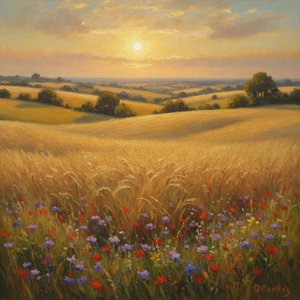
Golden Fields & Sun-Drenched Meadows: Capturing the Soul of Impressionist Landscapes
Immerse yourself in the luminous world of Impressionist landscapes. Discover how masters like Monet and Gauguin captured ephemeral light through plein air painting, and learn to bring the soul of sun-drenched meadows into your home with exquisite, hand-painted oil reproductions.

Capturing Light: The Ethereal Beauty and Timeless Legacy of Watercolor Landscapes
Embark on a visual journey through the ethereal beauty of watercolor landscapes. Discover how Impressionist masters captured light and emotion, and learn to bring this timeless, luminous elegance into your home with expert art curation and hand-painted reproductions.

Fragmented Beauty: Exploring the Soul and Geometric Depth of Cubist Landscapes
Embark on a cultural journey through the soul of Cubist landscapes. Discover how masters like Braque and Rivera redefined nature through geometric beauty, fragmented forms, and profound abstraction in this expert art-history exploration.
Explore artworks organized by themes, styles, and characteristics.


