Atelier — Complimentary worldwide shipping — Delivery 2–6 weeks
Painting from Photo Wishlist Cart
PreviewPreview AR previewAR preview Switch to hand made Painting Switch to hand made PaintingSwitch to Image Switch to Image SendSend
DetailsDetails Add to favorites Add to favorites DownloadDownload SimilarsSimilars X-RayX-Ray DiaporamaDiaporama

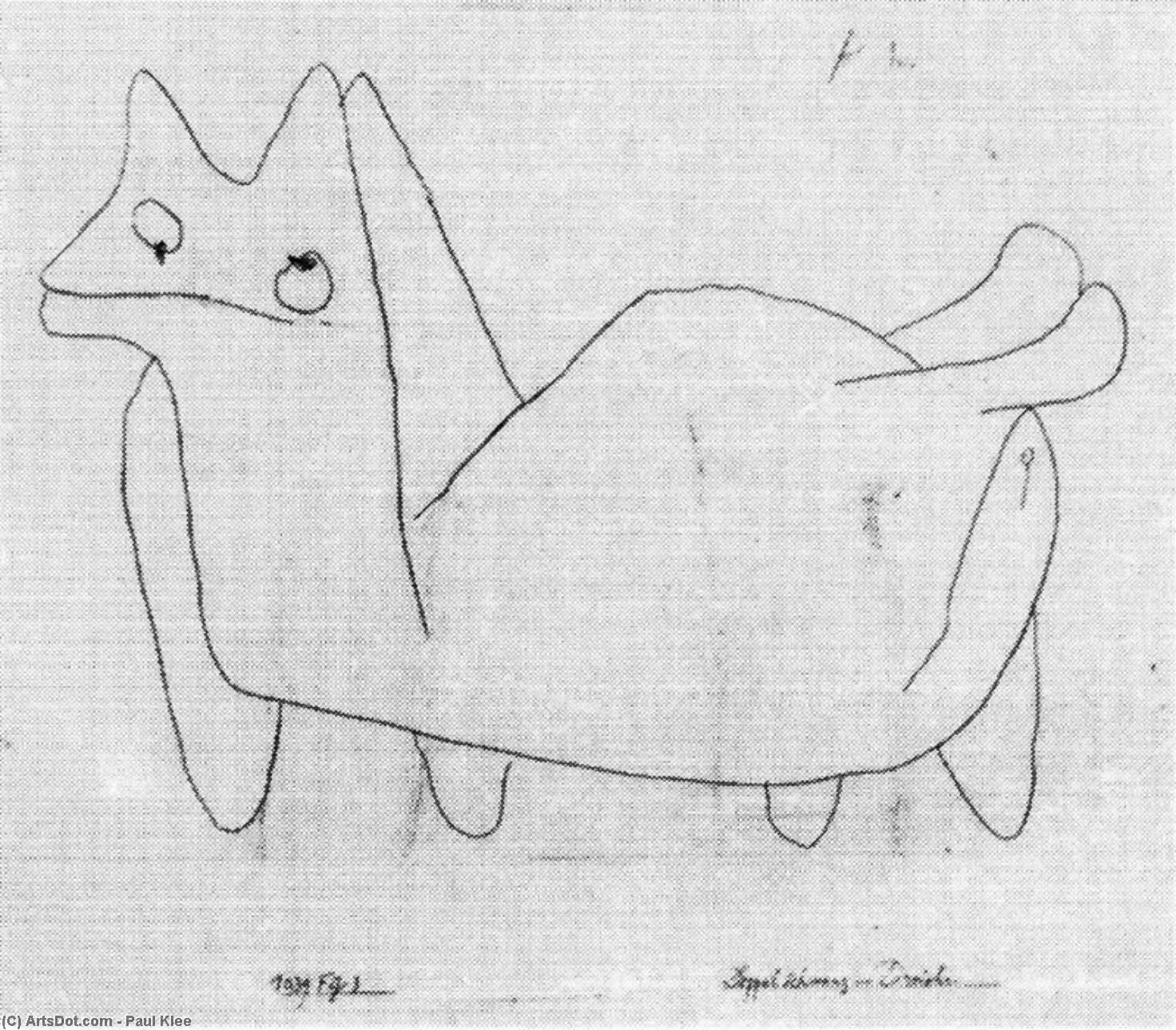
Doblecola-tripleoreja

Discover Paul Klee (1879-1940): Swiss-German artist blending Expressionism, Cubism & Surrealism. Explore his color theory, Bauhaus influence, and playfully insightful art.

Giclée / Art Print

Museum-quality giclée or canvas print with fast production and flexible finish options. (Switch to hand made Painting Switch to hand made PaintingSwitch to Image Switch to Image)

P118B $10
P118H $10
P118W $10
P438Z $10
P508JH $12
P508YH $12
P805H $10
P805Z $10
P919BZ $10
P919G $10
P919XJ $10
P959ZH $10
P968JZ $12
W106C $8
W218G $10
W218JH $8
W218Y $10
W307PJ $10
W316G $10
W316PJ $8
W316Y $10
W398PJ $8
W4111J $10
W500HY $15
W500JH $15
W692G $12
W849H $8
W940BG $15
W953PJ $8

Standard
custom
CM
INCH

Pick from our preset sizes that match the artwork's original proportions.

width
height

You may enter your own dimensions to fit a specific frame or space. If your selected size does not match the original image's proportions, we will either crop the artwork or extend the image with a mirrored or solid-fill edge. A digital mockup will be sent for your approval before production begins.
Please note that the on-screen preview does not reflect the actual cropping or extension. Only the mockup will accurately show the final composition.
While custom sizes are available, we recommend selecting a dimension from the predefined list to preserve the original proportions.

Worldwide Delivery () in 2 weeks instead of standard 4/5 weeks. (11 August)

why_choose_icon
Free Worldwide Express Shipping
why_choose_icon
High-Quality Linen Canvas
why_choose_icon
Full Shipping Insurance
why_choose_icon
Customs Tax Refund Guarantee
why_choose_icon
True Color Matching Guarantee
why_choose_icon
60-Day Return Policy (Defects Only)
why_choose_icon
100% Money-Back Guarantee
why_choose_icon
Bulk Discount Offer

Total Price

$ 70

reproduction

Doblecola-tripleoreja

Giclée / Art Print

Reproduction Size

-

Total Price

$ 70

Quick Facts

  • Medium: Pencil/Charcoal on Paper
  • Notable elements or techniques: Loose lines, Geometric shapes
  • Artistic style: Cubist & Surrealist Blend
  • Location: Private Collection
  • Influences: Music Theory
  • Title: Doblecola-tripleoreja

Art Quiz

There is only one correct answer for each question.

Question 1:
What artistic movement is Paul Klee’s Doblecola-tripleoreja most closely associated with?
Question 2:
The image description mentions a grainy texture. What technique is likely responsible for this effect?
Question 3:
What does the title 'Doblecola-tripleoreja' suggest about Klee’s artistic approach?
Question 4:
The artwork utilizes a monochromatic grayscale palette. Why might this stylistic choice be significant?
Question 5:
Which element from Klee’s biography contributes to understanding his artistic style?

Collectible Description

A Study in Simplification: Exploring Paul Klee’s ‘Doblecola-Tripleoreja’

Paul Klee's “Doblecola-Tripleoreja,” a deceptively simple monochrome drawing, embodies the core tenets of his artistic philosophy – an unwavering commitment to abstraction coupled with profound emotional resonance. Created sometime between 1937 and 1940 during his prolific period in Murnau, Bavaria, this piece exemplifies Klee’s masterful manipulation of form and line to convey a sense of childlike wonder and subconscious exploration. It's not merely an image; it’s an invitation to contemplate the essence of visual expression itself.
  • Subject Matter: The artwork presents a stylized depiction of an animal—likely a cat or similar creature—rendered in grayscale tones. Its deliberate lack of specificity underscores Klee’s belief that form transcends representation, prioritizing feeling and intuition over literal accuracy.
  • Style & Influences: “Doblecola-Tripleoreja” firmly establishes itself within Klee's distinctive stylistic blend. Drawing heavily from Cubism’s fragmented perspectives and Expressionism’s emotive brushstrokes, it simultaneously echoes the playful spirit of children’s art—a conscious effort to recapture a primal state of imaginative freedom.
  • Technique & Materials: Executed with pencil or charcoal on paper, the drawing showcases Klee's meticulous attention to texture. The grainy surface reflects his deliberate choice of medium and contributes to the artwork’s tactile quality, grounding its ethereal aesthetic in tangible materiality.

Decoding Geometric Harmony & Surrealist Resonance

Klee’s compositional strategy is characterized by geometric precision tempered with organic fluidity. Rounded forms dominate the animal's body, juxtaposed against triangular ears and simplified legs—a deliberate arrangement designed to create visual balance while simultaneously hinting at underlying structural tensions. This technique aligns seamlessly with Klee’s broader exploration of mathematical principles within art, mirroring concepts found in Piet Mondrian’s reductive grid compositions. Furthermore, the artwork possesses a subtle surrealist undertone; its dreamlike quality encourages viewers to engage in imaginative interpretation and consider alternative meanings beyond the surface level.

Symbolic Layers & Emotional Impact

The title itself—“Doblecola-Tripleoreja”—is deliberately nonsensical, reflecting Klee’s penchant for evocative naming conventions that prioritize emotional impact over rational explanation. This playful obfuscation serves as a conduit for conveying feelings of innocence and curiosity – qualities central to Klee's artistic vision. The monochrome palette amplifies these emotions, stripping away distracting color hues to focus solely on tonal variations that evoke contemplation and introspection. Like many of Klee’s works, “Doblecola-Tripleoreja” invites viewers to embark on a personal journey of discovery, prompting them to confront their own subconscious associations and appreciate the transformative power of abstract art.

Historical Context & Bauhaus Legacy

Klee's artistic output coincided with the burgeoning influence of the Bauhaus movement—a German school for design that championed functionalism and geometric abstraction. While Klee never formally enrolled at Bauhaus, he absorbed its principles of reductive form and tonal harmony, shaping his aesthetic sensibilities profoundly. “Doblecola-Tripleoreja” stands as a testament to this legacy, embodying the Bauhaus ethos’s belief in simplifying visual language to communicate essential ideas with clarity and grace—a principle that continues to resonate within contemporary art discourse.

Artist Biography

A Life Immersed in Color and Form

Paul Klee, a name synonymous with playful abstraction and profound emotional depth, occupies a unique position in the landscape of 20th-century art. Born on December 18, 1879, in Münchenbuchsee, Switzerland, his artistic journey was one of constant exploration, defying easy categorization and forging a path that blended influences from Expressionism, Cubism, and Surrealism into a distinctly personal visual language. Klee’s upbringing fostered an early appreciation for the arts; his father, a German music teacher, and his mother, a Swiss singer, instilled in him a sensitivity to both auditory and visual harmony. This foundational connection between music and painting would become a defining characteristic of his oeuvre, shaping not only his compositional approach but also his theoretical understanding of art as a form of abstract expression akin to musical arrangement. Initially drawn to drawing, Klee soon abandoned the pursuit of realistic representation, recognizing its limitations in conveying the inner world of emotions and ideas that he sought to express. He enrolled at the Academy of Fine Arts in Munich between 1898 and 1901, a period marked by experimentation and the development of his unique artistic voice.

The Shaping of an Artistic Vision

Klee’s early work reveals the influence of Art Nouveau and Symbolism, yet even within these frameworks, hints of his future style began to emerge. A pivotal moment in his artistic development was a journey to Tunisia in 1914. The intense light and vibrant atmosphere of North Africa profoundly impacted his use of color, inspiring him to move beyond muted tones towards bolder, more expressive palettes. This experience marked a turning point, solidifying his commitment to abstraction as a means of capturing the essence of perception rather than merely replicating its surface appearance. He wasn’t simply *seeing* Tunisia; he was translating its emotional resonance into visual form. Throughout this period, Klee engaged with various artistic movements, absorbing their principles while simultaneously resisting complete adherence to any single ideology. His interest in music remained paramount, and he often spoke of painting as a process analogous to composing musical pieces – a careful arrangement of elements to create a harmonious whole. This synesthetic approach is evident in the rhythmic quality of his lines, the delicate balance of colors, and the overall sense of movement that permeates many of his works.

Bauhaus and Beyond: A Period of Flourishing

From 1931 to 1933, Klee accepted a teaching position at the influential Bauhaus school of art, design, and architecture, alongside Wassily Kandinsky. This period proved remarkably fruitful for his artistic development. Surrounded by innovative thinkers and fellow artists, he flourished in an environment that encouraged experimentation and theoretical inquiry. His work during these years delved deeper into color theory and formal relationships, exploring the interplay between abstract forms and emotional expression. However, this creative haven was shattered with the rise of Nazism in Germany. In 1933, Klee was dismissed from the Bauhaus due to his art being deemed “degenerate” by the Nazi regime – a chilling testament to the dangers of political ideology suppressing artistic freedom. Forced to return to Switzerland, he continued painting, but his health deteriorated under the shadow of increasing political turmoil and personal hardship. Despite these challenges, Klee remained committed to his artistic vision, producing works that reflected both the anxieties of the era and his enduring belief in the power of art to transcend adversity.

Themes, Style, and Lasting Legacy

Paul Klee’s work is characterized by a captivating blend of playfulness and profound contemplation. He often employed childlike imagery and whimsical compositions, imbuing them with layers of symbolic meaning. Recurring themes in his art include gardens, landscapes, portraits, and abstract arrangements – each serving as a vehicle for exploring the complexities of human experience. His “Paul Klee Notebooks,” published posthumously, offer invaluable insight into his extensive theoretical investigations into color and design, revealing a meticulous and intellectual approach to artistic creation. He wasn’t merely painting; he was constructing a visual language based on principles of harmony, balance, and emotional resonance. Hamamet, Siblings, and En la corriente seis umbrales are just a few examples showcasing his mastery of color and form. Paul Klee died on June 29, 1940, in Muralto, Switzerland, leaving behind a legacy that continues to inspire artists and captivate audiences worldwide. He is rightfully regarded as one of the most important figures of 20th-century art, bridging the gap between figurative and abstract expression and solidifying his place as an iconic innovator whose work remains eternally relevant.

Museums & Further Exploration

  • Zentrum Paul Klee (Bern): Home to the world’s largest collection of Klee's works, offering a comprehensive overview of his artistic journey.
  • Museum of Fine Arts Bern: Features significant pieces by Klee alongside masterpieces by Picasso and Hodler.
  • Kunstmuseum Bern: Switzerland’s oldest art museum, showcasing a diverse collection including works by Klee and other modern masters.
His influence extends beyond the realm of painting, impacting fields such as design, architecture, and music. The enduring appeal of Paul Klee's work lies in its ability to evoke a sense of wonder and invite viewers to engage with art on an emotional and intellectual level – a testament to his genius and lasting contribution to the world of visual culture.

Paul Klee

Paul Klee

1879 - 1940 , Switzerland

Quick Facts

  • Artistic Movement Or Style: Expressionism, Cubism, Surrealism
  • Artists Or Movements Influenced By This Artist: ['Modern art']
  • Artists Who Influenced This Artist: ['Wassily Kandinsky']
  • Date Of Birth: 1879-12-18
  • Date Of Death: 1940-06-29
  • Full Name: Paul Klee
  • Nationality: Swiss-German
  • Notable Artworks:
    • Hamamet
    • Siblings
    • En la corriente seis umbrales
  • Place Of Birth: Münchenbuchsee, Switzerland
Explore artworks organized by themes, styles, and characteristics.
© TopImpressionists.com — All Rights Reserved  ·  100% Hand-Painted · Satisfaction Guaranteed · Free Worldwide Shipping
VISA MASTERCARD