 Preview
 Send
Send Share
Share
 Details
 Guide
Guide

 Download
 Similars
 X-Ray
X-Ray Diaporama
 Stats
StatsThe Talisman
 Oil
Oil- WallArt
- Post-Impressionism
 1888
1888- 19th Century
 21.0 x 27.0 cm
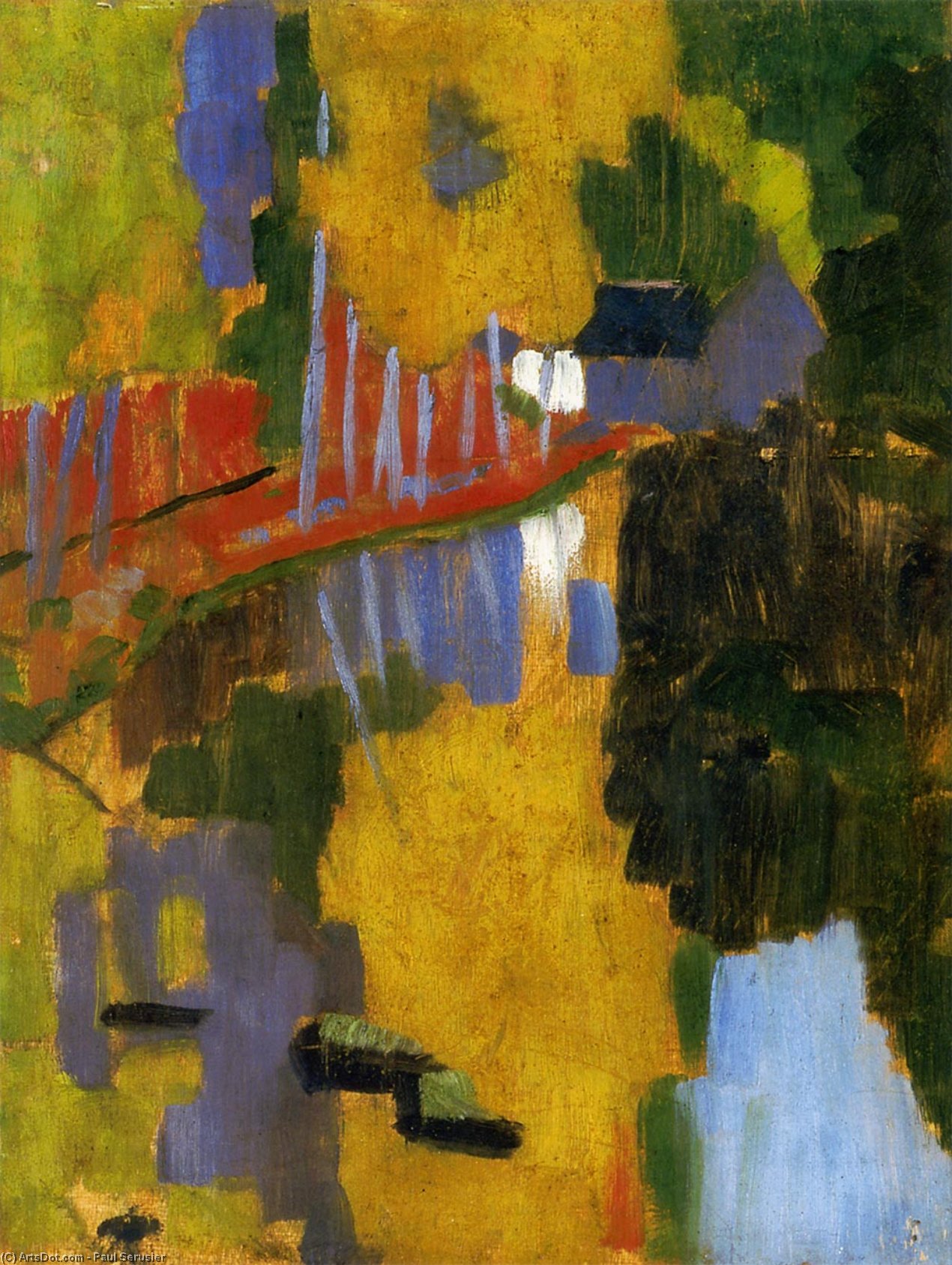
A vibrant explosion of color and abstraction defines this Post-Impressionist masterpiece The Talisman by Paul Sérusier, a seminal work of Cloisonnism that invites you to explore the roots of modern art.
 Read More
Explore the art of Paul Sérusier (1864-1927), a French Post-Impressionist painter & pioneer of abstract art. Discover his Cloisonnism style, influence on Les Nabis, and key works like 'The Talisman'.
Giclée / Art Print
Museum-quality giclée or canvas print with fast production and flexible finish options. ( Buy Hand Made Painting Switch to Digital Image)




































Standard
custom
CM
INCH
Pick from our preset sizes that match the artwork's original proportions.
Loading sizes...

width
height
Type the width and the height you need, to fit your frame or your wall. A print can only be cut, never made bigger than the picture, so a size with a different shape loses a part of the image. We send you a digital mockup to approve before we print anything. The picture shown on this page does not show the real cut — only the mockup does.
Worldwide Delivery () in 2 weeks instead of standard 4/5 weeks. (25 October)

Free Worldwide Express Shipping

High-Quality Linen Canvas

Full Shipping Insurance

Customs Tax Refund Guarantee

True Color Matching Guarantee

100-Day Return Policy (Defects Only)

100% Money-Back Guarantee

Bulk Discount Offer
 Glass option is only available in size under 110 CM

The Talisman
Giclée / Art Print
Reproduction Size
-


Total Price
$ 70
A Visionary Fragment: The Birth of Abstraction
In the annals of modern art history, few small-scale works possess the seismic power of Paul Sérusier’s The Talisman. Painted in 1888, this miniature masterpiece serves as much more than a mere landscape; it is a manifesto captured in pigment. Created during a transformative summer in Pont-Aven, the painting emerged from a profound encounter between the young Sérusier and the seasoned Paul Gauguin. Under Gauguin’s rigorous guidance, Sérus deliberately moved away from the fleeting light of Impressionism toward a more structured, symbolic language. The result is a work that does not merely represent a bridge over water, but rather distills the very essence of nature into a rhythmic arrangement of pure color and form.
The composition invites the viewer to wander across a vibrant yellow archway that spans the canvas with architectural confidence. Below, the water reflects a kaleidoscope of hues, while the background is populated by lush, stylized trees that frame the scene in an embrace of verdant tones. The presence of small figures on the bridge and birds drifting through the sky adds a layer of lively, breathing energy to the piece, preventing the abstraction from feeling cold or detached. Instead, there is a palpable sense of movement and life, as if the viewer has stumbled upon a fleeting, magical moment in the French countryside.
The Mastery of Cloisonnism and Color
Technically, The Talisman is a triumph of Cloisonnism, a style characterized by bold, flat areas of color separated by dark, distinct outlines. This technique, reminiscent of medieval stained glass, allows Sérusier to experiment with the emotional weight of color rather than the literal accuracy of light and shadow. The palette is unapologetically bright and saturated; the brilliant yellows and deep greens work in harmony to create a visual vibration that captivates the eye. By reducing the landscape to its most essential geometric components, Sérusier paved the way for the Nabis movement and the eventual rise of pure abstraction.
For the discerning collector or interior designer, this painting offers an unparalleled opportunity to introduce a piece of art history into a contemporary space. The work’s compact dimensions—a mere 21 x 27 cm—make it an intimate jewel, perfect for a curated gallery wall or as a focal point in a sophisticated study. A high-quality reproduction of this masterpiece brings with it not just the aesthetic beauty of Post-Impressionism, but the intellectual weight of a painting that changed the course of Western art. It is a conversation starter, a burst of historical vitality, and a profound testament to the power of seeing the world through a lens of pure, unadulterated color.
Questions & Answers
Is Paul Sérusier, creator of "The Talisman", known under other names?
Paul Sérusier appears under the alternate names Louis-Paul-Henri Sérusier.
How harmonious are the colors of "The Talisman" by Paul Sérusier?
The color harmony of "The Talisman" is recorded as strong color unity.
What size is "The Talisman" by Paul Sérusier in real life?
"The Talisman" measures 21 x 27 cm in its original form. Original dimensions are a useful reference when choosing a reproduction size.
Related Artworks


Artist Biography
early life and education
paul sérusier, a french painter, was born on november 9, 1864, in paris. he studied at the académie julian, where he became a monitor in the mid-1880s. this marked the beginning of his artistic journey, which would eventually lead him to pioneer abstract art and inspire the avant-garde nabis movement, synthetism, and cloisonnism.artistic career
in the summer of 1888, sérusier traveled to pont-aven, where he joined a small group of artists centered around paul gauguin. under gauguin's close supervision, sérusier painted "the talisman," an extreme exercise in cloisonnism that approximated pure abstraction. this piece showcased his innovative style and willingness to experiment with new techniques. as a post-impressionist painter, sérusier was part of the group les nabis, alongside pierre bonnard, édouard vuillard, and maurice denis. although not as widely recognized as some of his peers, sérusier's contributions to the development of abstract art are undeniable.notable works and legacy
some of sérusier's notable works include:- l'averse (1893), musée d'orsay, paris
- portrait of paul ranson (1890), musée d'orsay, paris
- melancholy (1890)
- the snake eaters (1894), muzeum narodowe, warsaw
artistic movement and influence
sérusier's work was influenced by cloisonnism, a style characterized by bold and flat forms separated by dark contours. this movement, which emerged in the late 19th century, played a significant role in shaping the development of modern art.- explore more on cloisonnism: the cloisonnism art movement
- discover sérusier's work: paul serusier | TopImpressionists.com
- learn about the nabis movement: the nabis art movement

Paul Sérusier
1864 - 1927 , France
Quick Facts
- Full Name: Louis-Paul-Henri Sérusier
- Nationality: French
- Date Of Birth: 1864
- Date Of Death: 1927
- Place Of Birth: Paris, France
- Notable Artworks:
- The Talisman
- Landscape at the Bois d’Amour
- Artistic Movement Or Style: Post-Impressionism
- Artists Who Influenced This Artist:
- Paul Gauguin
- Maurice Denis
Related Articles

The Soul of Color: A Journey into the Emotional Resonance of Lyrical Abstraction
Embark on a cultural journey through Lyrical Abstraction. Explore how masters like Kandinsky used color and motion to translate emotion into visual poetry. Discover the profound beauty of abstract expressionism and learn to curate emotional resonance in your own art collection.
Capturing Emotion: A Journey Through the Soul of Expressionist Landscapes
Explore the profound emotional depth of Expressionist landscapes. Discover how Post-Impressionist masters moved beyond light to capture the soul through vibrant color and form. A curated journey for true art lovers seeking the beauty of expressive mastery.
Explore artworks organized by themes, styles, and characteristics.