


 Preview
 Send
Send Share
Share
 Details
 Guide
Guide

 Download
 Similars
 X-Ray
X-Ray Diaporama
 Stats
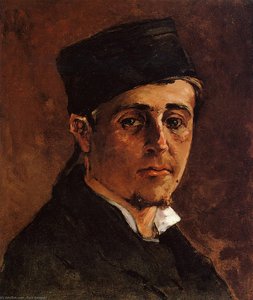
StatsSelf Portrait
 Acrylic On Canvas
- WallArt
- British Impressionism
 1920
1920 74.0 x 59.0 cm
 Fitzwilliam College
Philip Wilson Steer's "The President Woodrow Wilson House" captures a contemplative man in a suit, showcasing his signature Impressionistic style and masterful use of light & shadow. Explore this evocative portrait.
 Read More
Discover Philip Wilson Steer (1860-1942), a pivotal British Impressionist renowned for luminous landscapes & seascapes. Influenced by Manet & Whistler, his works are held in Tate & Uffizi collections.
Purchase a high-resolution, enhanced digital image, far superior to the online preview.
Each file is meticulously prepared by our in-house specialists using advanced tools and expert manual retouching. We ensure every image has exceptional clarity, precise color accuracy, and fine detail.
The final file is delivered via email within 72 hours, optimized for immediate use in professional, editorial, and print environments. This is the same quality trusted by top-tier design studios, publishers, and galleries.
Digital Image
Download a high-resolution file for personal display, printing, and creative projects. ( Switch to Print Buy Hand Made Painting)
Included in Every Digital Image Order
Expert Digital Delivery, Guaranteed
When you choose TopImpressionists.com, you're not just getting an image - you're receiving a professionally enhanced digital artwork, crafted with precision and backed by a satisfaction guarantee. Here's everything that comes with your order, automatically:

Fast Email Delivery
Your high-resolution digital image file will be emailed to you within 72 hours of ordering - ready for immediate use.

AI-Enhanced Digital File
Your artwork is professionally optimized using advanced AI tools and manual editing, ensuring maximum detail, clarity, and color accuracy.

Free Lifetime Re-Delivery
Accidentally deleted or lost your file? No worries - we'll resend it to you anytime, free of charge.

No Import Fees - Ever
Enjoy your artwork instantly with zero customs, duties, or delivery fees - digital downloads are always tax-free.

Color Accuracy Guarantee
We ensure your digital image reflects the original colors as closely as possible using professional tools and color management.

100-Day Satisfaction Guarantee
If you're not satisfied with your digital image, we'll revise it or refund 100% within 100 days - no questions asked.

100% Money-Back Guarantee
Not satisfied? Get a full refund within 100 days of receiving your digital file - no questions asked.

Bulk Order Discounts
Buy 3 images, save 10% - Buy 5, save 15% - Buy 10+, save 20%. Great for creative projects, galleries, and agencies.
A Portrait of Quiet Intensity: Philip Wilson Steer’s “The President Woodrow Wilson House”
Philip Wilson Steer's "The President Woodrow Wilson House," painted in 1920, isn’t merely a depiction of a building; it’s a carefully constructed tableau brimming with subtle symbolism and imbued with the melancholic beauty characteristic of the artist. This oil-on-canvas work, measuring 74 x 59 cm, transports us to a moment suspended between formality and introspection – a visual poem reflecting on leadership, memory, and the quiet dignity of American history. Steer, a pivotal figure in British Impressionism, masterfully employs a muted palette dominated by greys, blues, and browns, creating an atmosphere of subdued light and contemplative stillness. The composition itself is deliberately restrained, focusing intently on the imposing façade of the Wilson House in Washington D.C., rendered with a remarkable sensitivity to texture and light.
The Impressionist’s Lens: Technique and Style
Steer's approach aligns closely with the tenets of Impressionism, yet he transcends simple replication. He doesn’t strive for photographic accuracy but rather captures an *impression* – a fleeting moment imbued with feeling. Notice how he utilizes broken brushstrokes to suggest the play of light on the stone walls and the subtle shifts in shadow. The artist's layering technique is particularly evident in the rendering of the building’s surface, where individual strokes coalesce to create a sense of depth and volume. Steer was deeply influenced by John Constable and J.M.W. Turner, artists known for their atmospheric landscapes and masterful use of light and color. This influence is palpable in Steer's ability to evoke a specific mood through his manipulation of tone and texture – a feeling of quiet contemplation and perhaps even a touch of wistful nostalgia.
Symbolism Within the Frame: Leadership and Reflection
The choice of subject matter—the Wilson House—is rich in symbolic potential. Woodrow Wilson, the 28th President of the United States, was a complex figure – lauded for his leadership during World War I but also criticized for his handling of racial issues at home. Steer’s painting doesn't offer a straightforward portrait of Wilson himself, instead focusing on the building that housed him and, by extension, representing the weight of responsibility and the enduring legacy of power. The muted colors and the solitary nature of the scene suggest a reflection on leadership itself – its burdens, its triumphs, and its inevitable passage of time. The composition’s stillness invites viewers to contemplate the unseen narratives contained within those walls.
A Legacy of Light: Steer's Influence and Artistic Context
Philip Wilson Steer was a significant figure in British art, bridging the gap between Impressionism and a more traditional English style. His work gained recognition during his time as a painting tutor at the Slade School of Fine Art, where he profoundly influenced generations of young artists. His exploration of coastal scenes, particularly those along the Suffolk coast, cemented his reputation for capturing the ethereal beauty of the British landscape. “The President Woodrow Wilson House” stands as a testament to Steer’s ability to imbue seemingly simple subjects with profound emotional resonance. It's a poignant reminder that even in grand architectural settings, moments of quiet contemplation and subtle symbolism can hold immense artistic value. Reproductions of this piece offer a captivating glimpse into the artist’s world and invite viewers to engage with the complexities of American history through the lens of Impressionist artistry.
Questions & Answers
Is there a slideshow for "Self Portrait" by Philip Wilson Steer?
A slideshow is available: the Diaporama page of "Self Portrait" by Philip Wilson Steer.
Is "Self Portrait" by Philip Wilson Steer a bright or a dark artwork?
Overall, "Self Portrait" is recorded as deep_shadow. Perceived brightness describes how light or dark the work appears.
How intense are the colors in "Self Portrait" by Philip Wilson Steer?
"Self Portrait" by Philip Wilson Steer shows a monochromatic color intensity.
Related Artworks


Artist Biography
Early Life and Artistic Foundations
Philip Wilson Steer, born in Birkenhead in 1860, emerged from a family deeply rooted in the artistic world—his father was both a portrait painter and a dedicated art teacher. This early exposure proved formative, nurturing a sensibility that would define his life’s path. A relocation to Whitchurch near Monmouth when he was just three years old instilled a connection with the British countryside that would resonate throughout his oeuvre. His formal education began at Hereford Cathedral School, providing a foundational grounding before he wholeheartedly pursued his artistic ambitions. Steer's training continued at the Gloucester School of Art and the South Kensington Drawing Schools, but it was his sojourn to Paris between 1880 and 1884 that proved truly transformative. Studying at the Académie Julian and later under Alexandre Cabanel at the École des Beaux Arts, he encountered a world brimming with new ideas and approaches to painting.The Embrace of Impressionism and a Distinctive Style
Paris became a crucible for Steer’s artistic development. He was profoundly moved by the works of Édouard Manet and James McNeill Whistler, absorbing their innovative techniques in capturing light, color, and atmosphere. This exposure ignited within him a passion for Impressionism, yet he never simply replicated it. Steer skillfully blended these French influences with his inherent English sensibilities, forging a style uniquely his own. His paintings are characterized by a remarkable ability to seize fleeting moments—the play of sunlight on water, the ephemeral quality of coastal air. He employed loose brushstrokes and vibrant colors not merely to depict scenes but to evoke emotions and create an immersive sense of immediacy. Recurring themes in his work include beach scenes and seascapes, often bathed in silvery, translucent light, demonstrating a mastery of depicting the freshness and luminosity of these environments. Works like The Music Room, early in his career, showcase his burgeoning skill with composition and light, while pieces such as Girls Running: Walberswick Pier burst with the energy and vibrancy of a Suffolk coastal town.A Champion of Modern Art and Etaples Influence
Steer wasn’t content to simply paint; he actively shaped the artistic landscape of Britain. He played a pivotal role in establishing the New English Art Club, an organization dedicated to championing modern artistic expression—a bold move at a time when traditional tastes still held sway. Through this platform and regular exhibitions at the Royal Academy, including participation in the groundbreaking London Impressionist Exhibition of 1889, he helped introduce new ideas and challenge conventional norms. His time spent at the Etaples art colony in 1887 further refined his artistic vision. This vibrant community of artists provided a stimulating environment for experimentation and collaboration, solidifying his ability to capture light and atmosphere with increasing nuance and skill. Steer drew inspiration from a diverse range of masters—John Constable, J.M.W. Turner, and even François Boucher—but always filtered these influences through his own unique perspective.Legacy, Recognition, and Enduring Influence
Philip Wilson Steer continued to paint prolifically until health issues forced him to stop in 1940, passing away two years later at the age of 81. His contributions were widely recognized during his lifetime, culminating in an Order of Merit. Today, his works are held in prestigious collections worldwide, including the Tate Gallery and even the Uffizi Gallery—a testament to his international acclaim. Beyond his paintings themselves, Steer’s legacy extends through his long tenure as a painting tutor at the Slade School of Art. For many years, he profoundly influenced generations of young artists, imparting not only technical skills but also a deep appreciation for observation and artistic integrity. His contribution to the development and acceptance of Impressionism in Britain is undeniable, solidifying his place as a significant figure in British art history—a painter who successfully bridged the gap between tradition and modernity, leaving an enduring mark on the landscape of British art. Notable works like Convalescent, with its rich textures and evocative gaze, and The Teme at Ludlow, highlighting serene beauty and masterful brushwork, continue to captivate audiences today, demonstrating the timeless quality of his artistic vision.
Philip Wilson Steer
1860 - 1942 , United Kingdom
Quick Facts
- Full Name: Philip Wilson Steer
- Nationality: British
- Date Of Birth: 1860
- Date Of Death: 1942
- Place Of Birth: Birkenhead, United Kingdom
- Notable Artworks:
- The Music Room
- Girls Running
- Convalescent
- The Teme at Ludlow
- Mother and Daughter
- Artistic Movement Or Style: Impressionism
- Artists Who Influenced This Artist:
- Manet
- Whistler
- Constable
- Turner
- Boucher
- Artists Or Movements Influenced By This Artist: British Impressionism