

 Preview
 Send
Send Share
Share
 Details
 Guide
Guide

 Download
 Similars
 X-Ray
X-Ray Diaporama
 Q&A
Q&A Stats
StatsThe Garden


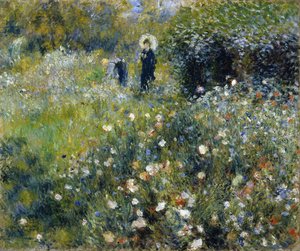
Immerse yourself in Renoir’s "The Garden," a masterpiece of Impressionism! Witness light, color, and fleeting beauty captured with loose brushstrokes & vibrant hues. Explore this iconic work's history & technique.
 Read More
Renoir was an Impressionist master known for Luncheon of the Boating Party. Discover his luminous paintings today.
Giclée / Art Print
Museum-quality giclée or canvas print with fast production and flexible finish options. ( Buy Hand Made Painting Switch to Digital Image)




P118B $10

P118H $10

P118W $10

P438Z $10

P508JH $12

P508YH $12

P805H $10

P805Z $10

P919BZ $10

P919G $10

P919XJ $10

P959ZH $10

P968JZ $12

W106C $8

W218G $10

W218JH $8

W218Y $10

W307PJ $10

W316G $10

W316PJ $8

W316Y $10

W398PJ $8

W4111J $10

W500HY $15

W500JH $15

W692G $12

W849H $8

W940BG $15

W953PJ $8




Standard
custom
CM
INCH
Pick from our preset sizes that match the artwork's original proportions.
Loading sizes...

width
height
Type the width and the height you need, to fit your frame or your wall. A print can only be cut, never made bigger than the picture, so a size with a different shape loses a part of the image. We send you a digital mockup to approve before we print anything. The picture shown on this page does not show the real cut — only the mockup does.
Worldwide Delivery () in 2 weeks instead of standard 4/5 weeks. (3 November)

Free Worldwide Express Shipping

High-Quality Linen Canvas

Full Shipping Insurance

Customs Tax Refund Guarantee

True Color Matching Guarantee

100-Day Return Policy (Defects Only)

100% Money-Back Guarantee

Bulk Discount Offer
 Glass option is only available in size under 110 CM

The Garden
Giclée / Art Print
Reproduction Size
-


Total Price
$ 70
A Symphony of Light and Color: The Essence of Renoir’s Garden
In the pantheon of Impressionism, few works capture the ephemeral magic of a summer afternoon as tenderly as Pierre-Auguste Renoir’s “The Garden,” completed in 1875. This masterpiece is far more than a mere landscape; it is a profound meditation on the fleeting nature of beauty and the vibrant pulse of life. As one gazes upon the canvas, they are immediately transported to a sun-drenched sanctuary where the boundaries between humanity and nature seem to dissolve. The painting centers around a graceful woman strolling along a path, flanked by flowerbeds that erupt in a breathtaking palette of scarlet, ivory, and soft blush pink. Renoir’s ability to orchestrate these hues creates a sensory experience that feels almost tactile, inviting the viewer to step into this lush, breathing world.
The composition is masterfully layered to provide both intimacy and depth. While the woman in the foreground serves as our emotional anchor, scattered figures populate the background, suggesting a larger, lively social tapestry woven into the natural splendor. A subtle yet poignant detail—a bird perched delicately on a branch—serves as a reminder of the spontaneous, unscripted beauty found in the wild. For the discerning collector or interior designer, this painting offers a sense of movement and vitality; it is a piece that does not merely sit upon a wall but breathes life into a room, acting as a window into a more luminous era.
Technique and the Impressionist Spirit
Renoir’s technical brilliance lies in his rejection of the rigid, photographic realism favored by the academic traditions of his time. Instead, he embraced the revolutionary plein air approach, working directly from nature to capture the true essence of light. His technique is characterized by loose, rhythmic brushstrokes and a sophisticated use of broken color. Rather than blending pigments into a flat, uniform shade on his palette, Renoir applied thin glazes of color that blend optically in the viewer's eye. This method allows the sunlight to appear as if it is truly dancing across the petals and skin of his subjects.
This luminous effect creates an airy, weightless quality that is a hallmark of his style. The way light filters through the foliage, creating dappled shadows and brilliant highlights, demonstrates a mastery of atmosphere that few could replicate. For those seeking to adorn a space with art that evokes tranquility and warmth, Renoir’s method provides a perfect balance of complexity and softness. The painting does not demand attention through heavy, dark tones; rather, it seduces the eye with its brilliance and the delicate interplay of light and shadow.
Historical Resonance and Emotional Legacy
To understand “The Garden” is to understand the birth of a movement. Created during a period of intense artistic experimentation in Paris, the work stands as a testament to the courage of the Impressionist circle—including luminaries like Monet and Sisley—who dared to challenge the status quo. Renoir’s journey from a humble porcelain painter to a master of light informs the very texture of his work; there is a certain preciousness to his application of color that echoes his early training in delicate ornamentation.
Beyond its historical significance, the emotional impact of the piece is timeless. It evokes a sense of nostalgia for a pastoral ideal, a peaceful retreat from the complexities of modern life. The painting celebrates femininity, social harmony, and the simple joy of existence. Whether displayed in a grand salon or a quiet study, a high-quality reproduction of this work serves as a constant source of inspiration, reminding us to find beauty in the fleeting moments and to appreciate the vibrant colors that surround us every day.
Questions & Answers
How is the mood of "The Garden" by Pierre-Auguste Renoir described?
The overall mood of "The Garden" by Pierre-Auguste Renoir is serene. The mood describes the general atmosphere of the work.
What feeling does "The Garden" by Pierre-Auguste Renoir convey?
"The Garden" by Pierre-Auguste Renoir conveys a joyful feeling within an overall serene mood.
How does "The Garden" fit into Pierre-Auguste Renoir's themes and style?
"The Garden" shares with Pierre-Auguste Renoir's other works its Impressionism style and the recorded themes: light-infused impressionist style, romantic garden ideals, social leisure, beauty, renoir’s signature aesthetic, celebration of nature's charm.
Related Artworks




Artist Biography
A Childhood of Porcelain and Light
In the provincial streets of Limoges, France, a young boy named Pierre-Auguste Renoir began his life immersed in the delicate precision of craftsmanship. His father was a tailor, and the family eventually moved to Paris in 1845, seeking better prospects in the bustling capital. At thirteen, necessity led him into an apprenticeship as a porcelain painter, a role that demanded a keen eye for detail and a steady hand. This early work with ceramics instilled in him a lasting appreciation for color and texture. While his days were spent decorating fine china, his spirit often wandered toward the galleries of the Louvre. There, he studied the techniques of the Old Masters, absorbing the way they handled light and form.
The path from decorative art to the canvas was paved by a desire for something more expressive than mere reproduction. After leaving the porcelain factory, he sought formal training at the studio of Charles Gleyre. It was within this creative circle that he met fellow students such as Claude Monet, Alfred Sisley, and Frédéric Bazille. These friendships formed the bedrock of a new way of seeing. They shared a common goal to move away from the rigid rules of academic painting, preferring instead to capture the fleeting atmosphere of a moment. His early successes, like Lise with a Parasol in 1867, began to show this emerging interest in the natural world and the soft glow of outdoor light.
The Pulse of Parisian Life
As the years progressed, Renoir became a central figure in the movement known as Impressionism. He participated in the first exhibition of this group in 1874, displaying six paintings that challenged the traditional art establishment. His work during this period focused on the joy found in everyday social gatherings and the lively energy of the city. In works such as Dance at Le Moulin de la Galette, he used broken brushstrokes to mimic the way sunlight filters through leaves, creating a sense of movement and warmth. He did not seek grand historical narratives; rather, he looked for beauty in the simple pleasure of a summer afternoon or a group of friends enjoying a meal.
The subject matter of his canvases often celebrated the human form and the softness of skin. He had a particular talent for portraying feminine beauty, drawing inspiration from the sensual lines of Peter Paul Rubens and Jean-Antoine Watteau. His paintings, such as Luncheon of the Boating Party, captured the conviviality of life on the Seine, with figures bathed in a natural, luminous glow. This period of his life was defined by an embrace of the ephemeral, focusing on how light dances across fabric and settles upon a garden landscape.
A Shift Toward Form and Final Years
In the 1890s, Renoir’s approach to the canvas underwent a significant change. Following travels to Italy, where he studied the works of Raphael and Titian, he began to move away from the loose, blurry edges of his youth. He sought a more structured and classical method, emphasizing volume, contour, and clear lines. This transition toward a more disciplined technique is evident in his later works, such as The Great Bathers, which possess a sculptural quality. Despite the physical struggle of rheumatoid arthritis, which eventually forced him to paint with a brush attached to his hand, his dedication to his vision never wavered.
He eventually settled in Cagnes-sur-Mer, France, at the Domaine des Collettes, a place filled with olive groves and orange trees that provided fresh inspiration. In these later years, his palette remained warm, even as his style became more formal. He continued to produce portraits, landscapes, and still lifes until his death in 1919. His legacy remains tied to his ability to find divinity in the mundane, leaving behind a body of work that continues to reflect the warmth and light of the human experience.

Pierre-Auguste Renoir
1841 - 1919 , France
Quick Facts
- Artistic Movement Or Style: Impressionism
- Artists Or Movements Influenced By This Artist: ['Impressionism']
- Artists Who Influenced This Artist:
- Gustave Courbet
- Édouard Manet
- Peter Paul Rubens
- Jean-Antoine Watteau
- Full Name: Pierre-Auguste Renoir
- Nationality: French
- Notable Artworks:
- Dance at Le Moulin de la Galette
- Luncheon of the Boating Party
- After the Bath
- Place Of Birth: Limoges, France
- Date Of Birth: 1841
- Date Of Death: 1919
Related Articles

Impressionism's Finest: 10 Masterpieces That Revolutionized Art | TopImpressionists
Journey through Impressionism's golden age! Explore 10 masterpieces by Monet, Renoir & Degas that redefined art. Discover the stories behind these iconic paintings and find museum-quality reproductions to elevate your home decor on TopImpressionists.com.

Impressionism's Greatest Hits: 10 Masterpieces for Your Home | TopImpressionists
Journey through Impressionism's finest! Explore 10 masterpieces by Monet, Degas & Renoir – discover their stories, techniques & lasting impact. Find museum-quality art reproductions for your home at TopImpressionists.com. Explore the full collection online.

The Luminous World of Pierre-Auguste Renoir: An Exploration of Impressionism's Sensuous Embrace
Explore the captivating world of Pierre-Auguste Renoir! Discover his life, iconic Impressionist masterpieces & enduring legacy with our expert guide. High-quality reproductions available.

25 Masterpieces by Pierre-Auguste Renoir: The Essence of Impressionism
Explore 25 iconic Pierre-Auguste Renoir masterpieces. Discover the beauty of Impressionism on TopImpressionists.com.

Impressionistic Landscapes: 10 Masterpieces That Changed Art & Decor
Journey into the heart of Impressionism! Explore 10 masterpieces by Monet, Renoir & Degas that revolutionized landscape art. Discover their stories, techniques & find museum-quality reproductions to elevate your home decor on TopImpressionists.com.
Explore artworks organized by themes, styles, and characteristics.


