

 Preview
 Send
Send Share
Share
 Details
 Guide
Guide

 Download
 Similars
 X-Ray
X-Ray Diaporama
 Q&A
Q&A Stats
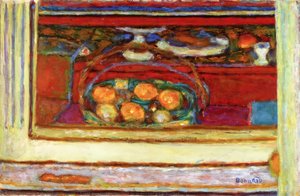
StatsFruit Bowl

- 46.0 x 37.0 cm


Experience Pierre Bonnard’s ‘Fruit Bowl’ (1914). A vibrant still life showcasing oranges, apples & bananas in his signature Impressionistic style. Hand-painted reproduction available.
 Read More
A master of Intimism, Pierre Bonnard captured light in works like The Dining Room. Discover his vibrant, emotive masterpieces today.
Giclée / Art Print
Museum-quality giclée or canvas print with fast production and flexible finish options. ( Buy Hand Made Painting Switch to Digital Image)




P118B $10

P118H $10

P118W $10

P438Z $10

P508JH $12

P508YH $12

P805H $10

P805Z $10

P919BZ $10

P919G $10

P919XJ $10

P959ZH $10

P968JZ $12

W106C $8

W218G $10

W218JH $8

W218Y $10

W307PJ $10

W316G $10

W316PJ $8

W316Y $10

W398PJ $8

W4111J $10

W500HY $15

W500JH $15

W692G $12

W849H $8

W940BG $15

W953PJ $8




Standard
custom
CM
INCH
Pick from our preset sizes that match the artwork's original proportions.
Loading sizes...

width
height
Type the width and the height you need, to fit your frame or your wall. A print can only be cut, never made bigger than the picture, so a size with a different shape loses a part of the image. We send you a digital mockup to approve before we print anything. The picture shown on this page does not show the real cut — only the mockup does.
Worldwide Delivery () in 2 weeks instead of standard 4/5 weeks. (11 November)

Free Worldwide Express Shipping

High-Quality Linen Canvas

Full Shipping Insurance

Customs Tax Refund Guarantee

True Color Matching Guarantee

100-Day Return Policy (Defects Only)

100% Money-Back Guarantee

Bulk Discount Offer
 Glass option is only available in size under 110 CM

Fruit Bowl
Giclée / Art Print
Reproduction Size
-


Total Price
$ 70
A Still Life of Quiet Intensity: Pierre Bonnard’s ‘Fruit Bowl’ (1914)
Pierre Bonnard's Fruit Bowl, painted in 1914, offers a poignant glimpse into the artist’s evolving approach to depicting domestic scenes. Measuring 46 x 37 cm, this intimate composition transcends a simple representation of fruit; it is a carefully constructed meditation on light, color, and the quiet beauty of everyday objects. Executed with Bonnard's signature meticulous brushwork and his masterful manipulation of tonal values, the painting speaks to a period of profound artistic experimentation within the Nabis group, of which he was a key member.
The Nabis Influence and Bonnard’s Palette
Bonnard's association with the Nabis – “The Prophets” – profoundly shaped his artistic vision. This group sought to create religious art through the use of color, drawing inspiration from Spanish mysticism and the works of William Morris. Fruit Bowl reflects this influence in its deliberate avoidance of academic realism. Instead of striving for photographic accuracy, Bonnard prioritized conveying atmosphere and emotion through a vibrant, almost hallucinatory palette. The dominant hues – rich oranges, deep reds, and muted greens – are not merely descriptive; they are imbued with symbolic weight, reflecting the Nabis’s interest in exploring spiritual themes through color.
- Color as Symbol: Bonnard's use of orange is particularly noteworthy. It evokes warmth, vitality, and perhaps even a hint of religious fervor, aligning with the Nabis movement’s exploration of spirituality.
- Tonal Modulation: The subtle shifts in tone – from the luminous highlights on the oranges to the darker shadows within the bowl – create a sense of depth and volume, drawing the viewer into the scene.
Composition and Technique – A Study in Detail
The composition of Fruit Bowl is deceptively simple yet remarkably effective. Bonnard’s close-up perspective forces the viewer to confront the individual elements—the oranges, apples, and banana—with a heightened sense of detail. His brushstrokes are visible, adding a textural quality that enhances the painting's tactile appeal. The arrangement of the fruit itself is not random; it suggests a carefully considered balance, reflecting Bonnard’s meticulous observation skills honed during his early work in caricature.
Historical Context and Emotional Resonance
Painted in 1914, just months before the outbreak of World War I, Fruit Bowl offers a poignant reflection on a world on the brink of upheaval. The painting’s serene subject matter – a commonplace scene transformed into something extraordinary through Bonnard's artistic vision – can be interpreted as a quiet resistance to the impending chaos. The work embodies Bonnard’s ability to find beauty and meaning in the ordinary, a characteristic that resonates deeply with viewers today. It evokes a sense of nostalgia for a simpler time, inviting contemplation on themes of domesticity, memory, and the fleeting nature of beauty.
A Timeless Masterpiece – Reproduction Options
TopImpressionists offers meticulously crafted hand-painted reproductions of Pierre Bonnard’s Fruit Bowl, ensuring that you can experience the full impact of this remarkable artwork. Each reproduction is created using traditional techniques and archival materials, guaranteeing its longevity and preserving the original painting's vibrant colors and exquisite detail. Whether for your home or office, a TopImpressionists reproduction of *Fruit Bowl* will be a timeless addition to any collection.
Questions & Answers
Is "Fruit Bowl" available as a fine art print?
To get a print of "Fruit Bowl" by Pierre Bonnard, simply order it on its Fine Art Print page: a fine art print on cotton canvas or archival canvas paper.
How do emotion and gift occasion combine for "Fruit Bowl" by Pierre Bonnard?
The nostalgic tone of "Fruit Bowl" by Pierre Bonnard matches its recommended gift occasion: birthday.
Who is the author of "Fruit Bowl", and in which movement?
"Fruit Bowl" was created by Pierre Bonnard in the Post-Impressionism style. Artist and movement identify the work's tradition.
Related Artworks




Artist Biography
Early Life, Family and Training
Pierre Bonnard entered the world on 3 October 1867 in Fontenay-aux-Roses, Hauts-de-Seine, France. He was born into a family of structured expectations; his father, Eugène Bonnard, held a senior position within the French Ministry of War. While his lineage was rooted in the administrative stability of the state, Pierre’s domestic sphere was shaped by his mother, Élisabeth Mertzdorff, who hailed from Alsace. He grew up alongside his brother, Charles, and his sister, Andrée, within a household that would eventually see his sister marry the composer Claude Terrasse.
His formal education followed the traditional paths of the era, yet his inclinations leaned toward the visual rather than the bureaucratic. He sought instruction at the Ecole des Beaux-Arts and later at the Academie Julian. These institutions provided the technical foundation for a man who would eventually move away from academic rigidity. His early years were marked by a developing sensitivity to the way light and form could be captured, a skill that would later define his approach to the most mundane aspects of existence.
The Nabis and Artistic Development
Bonnard’s early years were marked by a quiet departure from the legal path his father had envisioned. After honing his observational skills through caricature, he found his true calling within the avant-garde circles of Paris. He became a founding member of Les Nabis, a group of artists who sought to move beyond mere representation. This period was defined by a shift toward the decorative and the symbolic, as he began to distance himself from the strictures of academic tradition. He was a leading figure in the transition from Impressionism to Modernism, navigating the space between the fleeting light of the previous generation and the more structured, subjective explorations of the new century.
His developing vision was shaped by a profound interest in the works of Paul Gauguin, whose influence helped steer him toward a more stylized approach to form and color. This was further enriched by the influence of Japanese art. The prints of Hokusai and other Japanese masters offered him a new way to organize space and line. Rather than focusing on grand historical narratives, Bonnard turned his attention to the quietude of domestic life. He sought to capture the atmosphere of a moment, often working from memory to translate personal impressions onto the canvas. This method allowed him to prioritize the emotional resonance of a scene over a literal, photographic depiction of reality.
Technique and Unique Artistic Style
Bonnard’s approach to the canvas was defined by a preference for the internal logic of color over the strictures of literal representation. He often moved away from direct observation, choosing instead to paint from memory. This reliance on recollection allowed him to distill a scene into its essential emotional components, frequently resulting in works where the decorative qualities and chromatic intensity took precedence over the actual subject matter. In his hands, a domestic interior became less a record of a room and more an exploration of how light and hue interact within a private space.
His physical relationship with the medium was equally unconventional. He frequently unstretched his canvases, tacking them directly to the wall. This method allowed him to work on the edges of the frame, occasionally using the cropping effect to further flatten the pictorial space. Such techniques contributed to the stylized, almost graphic quality of his compositions. The resulting surfaces often appeared to breathe with a sense of movement, achieved through a varied application of oil color that could range from thin, translucent washes to thick, textured marks.
This focus on the atmosphere of the everyday meant that even the most mundane arrangements—a bowl of fruit or a woman in a quiet room—were transformed through his specific use of light. He possessed a particular ability to capture both the harsh glare of midday sun and the soft, artificial glow of an indoor lamp. By prioritizing the subjective experience of color, he moved his work toward a modern sensibility that favored the sensation of a moment over its mere documentation.
Life with Marthe de Méligny
In 1893, a woman named Maria Boursin entered Bonnard’s life, a presence that would define the domestic landscape of his later years. Known to him as Marthe, she was more than a companion; she became the primary lens through which he viewed the private world. Their relationship was one of long-term intimacy and shared space, evolving from a deep connection into a formal union when they married in 1925. This partnership provided the steady, quiet rhythm that underpinned his creative output for decades.
Marthe was a constant presence in his studio, often serving as his most frequent model. She appeared in his works in a variety of roles, from the casual participant in a family scene to the subject of many nudes. Because she bathed every day to manage a tubercular condition, Bonnard frequently captured her in the private, vulnerable moments of her bathing rituals. These depictions were not mere studies of anatomy but were reflections of their daily life together, often characterized by the soft light of their shared surroundings.
Their life together was marked by a certain stillness, a sense of being caught in a fleeting moment of domesticity. Even as the years passed, her image remained central to his vision, appearing in various forms as they moved through their lives. She remained by his side until her death in 1942, leaving behind a visual record of a life lived in close, observant proximity.
Key Works and Notable Paintings
Bonnard’s early output reveals the foundations of his evolving vision. In 1891, Panneaux décoratifs - Femmes au jardin demonstrated the stylized decorative qualities that would define his career. By 1892, The Dressing Gown showed a growing interest in the quietude of domestic life. These early years were marked by a transition from the structured influences of his training toward a more personal, subjective way of seeing the world.
As his style matured, the subject matter often became secondary to the way light and color occupied a space. Girl in Straw Hat (Femme au chapeau rouge, painted in 1903, exemplifies this shift, where the figure is often absorbed into a complex arrangement of color. Later, in 1925, The Window captured a sense of looking through a frame into a world of shifting light. His late work continued this exploration until the very end; The Almond Tree in Blossom, painted about 1946, remains a significant example of his preoccupation with the interplay of light and nature.
- Panneaux décoratifs - Femmes au jardin (1891)
- The Dressing Gown (1892)
- Girl in Straw Hat (Femme au chapeau rouge) (1903)
- The Window (1925)
- The Almond Tree in Blossom (about 1946)
Legacy and Lasting Influence
Bonnard’s contribution to modernism lies in his refusal to be easily categorized. While his early years were defined by his membership in Les Nabis alongside Edouard Vuillard and Paul Serusier, his work eventually moved beyond the group's specific boundaries. He transitioned from the structured concerns of Impressionism toward a more complex, subjective modernism. His paintings are visually complex in the extreme, often blurring the lines between the subject and its surroundings. This complexity was achieved through a restless, tactile approach to the medium, utilizing a remarkable range of thick or thin, fat or lean, brushed or wiped marks.
The artist’s influence is felt in the way he treated the surface of the canvas. By often tacking unstretched canvases directly to the wall, he allowed for a unique, haptic quality that influenced how subsequent generations approached the physical presence of a painting. His ability to manipulate color and light allowed him to capture the flux of a moment, often treating the scene as a fragment of a larger, shifting experience. He did not merely record a view; he reconstructed it through a personal, internal logic that prioritized the sensation of seeing over the mere accuracy of the object.
- La Vielle Femme, l’Enfant, et la Bassett (1927)
- Méditerranée (1909 and 1911)
- The White Interior (1932)
- The French Window (1932)
Where to See His Works Today
The physical presence of Bonnard’s vision remains scattered across several major institutions, allowing his specific approach to light and domesticity to be studied in various contexts. In the United States, his influence is felt through collections in New York City, where the Museum of Modern Art holds his paintings. The Metropolitan Museum of Art also maintains works that reflect his shift toward a more modern sensibility. For those seeking his presence in the American Midwest, the Art Institute of Chicago preserves pieces that highlight his unique handling of color.
Across the Atlantic, his reach extends into the prominent galleries of Europe. The Tate Modern in London houses his works, offering a perspective on his development within the broader movements of the era. These collections provide a way to encounter the quiet, often fragmented scenes he composed from memory, moving away from the grand narratives of his predecessors toward the intimacy of the everyday.
- Woman in Checkered Dress (1890)
- The Dining Room (1913)
- The Window (1925)
- The Almond Tree in Blossom (1947)

Pierre Bonnard
1867 - 1947 , France
Quick Facts
- Artistic Movement Or Style: Post-Impressionism, Intimism, Les Nabis
- Artists Or Movements Influenced By This Artist: ['Modernism']
- Artists Who Influenced This Artist:
- Paul Gauguin
- Hokusai
- Full Name: Pierre Bonnard
- Nationality: French
- Notable Artworks:
- Woman in Checkered Dress
- The Dining Room
- Bowl of Fruit
- The Almond Tree in Blossom
- Place Of Birth: Fontenay-aux-Roses, France
- Date Of Birth: 1867
- Date Of Death: 1947
Related Articles

10 Masterpieces That Capture Pure Tension and Anxiety
Experience the raw power of tension through 10 iconic masterpieces. From Expressionism to Surrealism, explore the stories behind these evocative works and find museum-quality art reproductions for your space. Discover all masterpieces on TopImpressionists.com.

The Luminous Essence of Impressionism: Finding Serenity in Pure Light and Quiet Moments
Step into a world of dappled sunlight and tranquil beauty. Discover exquisite, hand-painted Impressionist reproductions that capture the soul of Monet and Renoir. Experience museum-grade artistry and personalized service designed for the true art lover at TopImpressionists.com.

Tactile Radiance: Examining Light and Brushwork in Monet’s Impressionist Fruit Still Lifes
Explore Monet's mastery of light and texture in his 1869 still lifes. Discover the evolution of Impressionist technique with us.
Sun-Drenched Citrus: The Vibrant Beauty of Oranges in Impressionist Masterpieces
Embark on a sensory journey through Impressionist masterpieces. Discover how Renoir and Cézanne captured the vibrant light and luscious textures of sun-drenched oranges in exquisite still life paintings designed to inspire and transform your home.

The Luminous Harvest: Exploring Light and Texture in Impressionist Fruit Still Lifes
Explore the mastery of light and texture in Impressionist fruit still lifes. Discover the secrets of Renoir and Cézanne today.
Explore artworks organized by themes, styles, and characteristics.


