Preview
 Send
Send Share
Share
 Details
 Guide
Guide

 Download
 Similars
 X-Ray
X-Ray Diaporama
 Q&A
Q&A Stats
StatsBegonia


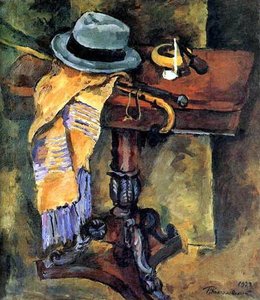
Explore Pyotr Konchalovsky's captivating Begonia – a still life masterpiece depicting vibrant red and pink flowers within elegant vases alongside delicate cups, capturing the spirit of Russian art history.
 Read More
A key figure of the Jack of Diamonds movement, he mastered Fauvism and Socialist Realism. Discover his vibrant paintings and portraits today.
Giclée / Art Print
Museum-quality giclée or canvas print with fast production and flexible finish options. ( Buy Hand Made Painting Switch to Digital Image)




P118B $10

P118H $10

P118W $10

P438Z $10

P508JH $12

P508YH $12

P805H $10

P805Z $10

P919BZ $10

P919G $10

P919XJ $10

P959ZH $10

P968JZ $12

W106C $8

W218G $10

W218JH $8

W218Y $10

W307PJ $10

W316G $10

W316PJ $8

W316Y $10

W398PJ $8

W4111J $10

W500HY $15

W500JH $15

W692G $12

W849H $8

W940BG $15

W953PJ $8




Standard
custom
CM
INCH
Pick from our preset sizes that match the artwork's original proportions.
Loading sizes...

width
height
Type the width and the height you need, to fit your frame or your wall. A print can only be cut, never made bigger than the picture, so a size with a different shape loses a part of the image. We send you a digital mockup to approve before we print anything. The picture shown on this page does not show the real cut — only the mockup does.
Worldwide Delivery () in 2 weeks instead of standard 4/5 weeks. (10 November)

Free Worldwide Express Shipping

High-Quality Linen Canvas

Full Shipping Insurance

Customs Tax Refund Guarantee

True Color Matching Guarantee

100-Day Return Policy (Defects Only)

100% Money-Back Guarantee

Bulk Discount Offer
 Glass option is only available in size under 110 CM

Begonia
Giclée / Art Print
Reproduction Size
-


Total Price
$ 70
A Portrait of Turbulent Russia: Exploring Pyotr Konchalovsky’s “Begonia”
Pyotr Petrovich Konchalovsky's "Begonia," painted circa 1908, stands as a poignant emblem of the Russian avant-garde’s fascination with capturing fleeting moments of beauty amidst societal upheaval. More than just a depiction of flowers—specifically a begonia blossom—the painting embodies a broader artistic impulse to distill emotion and intellect into visual form, reflecting the anxieties and aspirations of a nation grappling with rapid modernization.
Style & Technique: Konchalovsky’s approach aligns squarely with Neo-Impressionism, championed by artists like Georges Seurat and Paul Cézanne. Unlike Impressionists who sought to capture atmospheric effects, Konchalovsky meticulously applied small dots of pure pigment—primarily reds, pinks, and yellows—to build up tonal variations within the flower petals and vases. This technique, known as Pointillisme, wasn’t merely a stylistic choice; it represented a deliberate rejection of traditional brushstrokes in favor of scientific observation and mathematical precision. The artist painstakingly analyzed how light interacts with color, striving to reproduce its nuances with unparalleled accuracy.
Historical Context: Painted during the Belle Époque—a period characterized by optimism and artistic experimentation—"Begonia" speaks to a Russia undergoing significant transformations under Tsar Nicholas II’s reign. While outward appearances suggested prosperity and grandeur (the opulent palaces of St. Petersburg), beneath the surface simmered discontent fueled by social inequalities and burgeoning revolutionary sentiment. The painting's stillness contrasts sharply with this turbulent backdrop, inviting contemplation on themes of fragility and resilience.
Symbolism & Composition: The begonia itself carries considerable symbolic weight. Traditionally associated with femininity, beauty, and rebirth—often depicted as a symbol of resurrection—the flower’s delicate petals symbolize the ephemeral nature of life and the importance of savoring every moment. The vases serve as containers for this beauty, mirroring the role of art in preserving and transmitting cultural values. Furthermore, the arrangement of objects – the vases, cups, and begonia – contributes to a carefully constructed visual narrative that emphasizes balance and harmony despite the underlying tension.
Emotional Impact: Viewing “Begonia” evokes a sense of quiet contemplation and melancholic beauty. The artist’s masterful use of color and technique captures not only the physical appearance of the flower but also its emotional essence—a subtle suggestion of vulnerability amidst grandeur, mirroring the complexities of Russian society at the turn of the century. It's a piece that lingers in the mind long after viewing, prompting reflection on themes of beauty, decay, and the enduring power of artistic expression.
- Artist: Pyotr Petrovich Konchalovsky
- Year Painted: Circa 1908
- Style: Neo-Impressionism
- Technique: Pointillisme (Dot Painting)
Questions & Answers
What emotional tone accompanies the Russian Symbolism style of "Begonia"?
"Begonia" carries a tranquil emotional tone within the Russian Symbolism movement.
What feeling do the colors of "Begonia" by Pyotr Konchalovsky create?
The neutrals palette of "Begonia" by Pyotr Konchalovsky goes together with its tranquil emotional tone. Color is one of the ways a work conveys feeling.
Where should a reproduction of "Begonia" by Pyotr Konchalovsky be hung?
Format (portrait) and recommended space (living room) are the two placement facts recorded for "Begonia" by Pyotr Konchalovsky.
Related Artworks




Artist Biography
Early Life, Family and Artistic Training
The story of Pyotr Konchalovsky begins in the village of Slavianka, located within the Kharkov Governorate of the Russian Empire. Born on 21 February 1876, he entered a world where the boundaries of art and intellect were already being drawn by those around him. His father, Pyotr Petrovich Konchalovsky, was a man of letters and a publisher of art, a profession that ensured the household was steeped in the visual and literary currents of the era. This environment provided a natural, if quiet, introduction to the life of a creator, as the family eventually moved to Moscow, where the home became a gathering place for many significant figures of the Russian art scene.
His formal education began in the classrooms of the Moscow School of Painting, Sculpture and Architecture. It was here that the young man first began to refine his technical grasp of form and color. However, his ambitions eventually pulled him toward the heart of the Western art world. Between 1896 and 1898, he traveled to Paris to study at the Académie Julian. This period of immersion in the French atmosphere allowed him to witness firsthand the shifting perspectives of European modernism, an experience that would later inform his own distinctive approach to the canvas.
Upon returning to his homeland, he sought the highest level of academic rigor, enrolling in the Imperial Academy of Arts in Saint Petersburg. He remained there until 1907, when he graduated as a trained painter and graphic artist. This rigorous training, spanning from the studios of Moscow to the academies of Paris and Saint Petersburg, provided the foundation for a career that would eventually navigate the complex shifts of the Russian and Soviet eras.
The Rise of the Russian Avant-Garde
As the winds of change swept through the Russian art scene, Konchalovsky found himself at the center of a radical storm. He became a founding member and the chairman of the Jack of Diamonds group, a collective that sought to shatter the stale traditions of the academy. This society, which he helped co-found in 1910, acted as a vessel for new, daring ideas that challenged the established order. His leadership within this group helped define a period of intense experimentation, where the old rules of representation were cast aside in favor of something much more visceral.
His canvases from these years reveal a man deeply engaged with the modern spirit of Europe. He moved away from mere imitation, instead embracing the bold, expressive qualities of Fauvism and the structural clarity of Cezannism. This was a time of profound discovery, where he sought to capture the essence of form and color through a lens that was both modern and deeply personal. His work during this era reflected a restless energy, mirroring the shifting landscape of a nation in flux.
- Matador Manuel Gartha (1910)
- Bullfighting amateur (1910)
- Still Life with a Coffeepot (1919)
Technique, Style and Artistic Influences
The brushwork of Konchalovsky was shaped by a profound encounter with the masters of the West. During his time in Paris, he found himself drawn to the structured compositions of Paul Cézanne, a connection that would define much of his early development. He sought to understand the very essence of form through this Cezannism, yet he was equally moved by the expressive intensity found in the works of Vincent van Gogh. This pursuit of color and emotion led him to Arles, where he attempted to penetrate the heart of Van Gogh’s vision. He also drew inspiration from the bold, flattened aesthetics of Paul Gauguin, blending these diverse European currents into a singular, searching language.
His style was never a static thing; it was a restless dialogue between competing movements. He moved through the experiments of Cubism and the bright, uninhibited palettes of Fauvism, often finding common ground with Primitivism. There was a certain weight to his figures, a sense of corporeality that some linked to the traditions of Venetian painting. This ability to balance the radical with the substantial allowed him to navigate the shifting tides of Russian modernism. He was a man who could embrace the avant-garde while maintaining a deep, underlying connection to the physical presence of his subjects.
As the years passed and the political landscape of his country shifted, his approach underwent a final, significant transformation. He moved away from the experimental fervor of his youth to become a late realist master. This evolution saw him trade the fragmented planes of his earlier years for a more solid, grounded representation of life. Even as he embraced the requirements of a new era, the strength of his hand remained evident in his depictions of the world around him.
Transition to Socialist Realism
As the political winds in Russia shifted, Konchalovsky found himself navigating a landscape that demanded a new kind of visual language. In 1922, he made a significant move by joining the Association of Artists of Revolutionary Russia, an organization that stood in stark opposition to the avant-garde circles he had once led. This was a period of profound realignment. By the 1930s, the experimental spirit of his youth began to recede, replaced by a commitment to Socialist Realism. He did not merely adopt this style; he became a classic exemplar of Soviet painting, finding a way to harmonize his technical skill with the ideological requirements of the era.
This transition was marked by a shift toward a more monumental and solid form of representation. While his earlier years were defined by the pursuit of modernism, his later output reflected the gravity of the state. His ability to adapt his artistic voice to these changing currents did not go unnoticed by the authorities. In 1943, he was honored as a Laureate of the Stalin Prize, a recognition that solidified his standing within the official artistic establishment. His work from this time often carried a sense of weight and permanence, capturing the spirit of a nation in flux through a lens of structured, purposeful realism.
Key Works and Artistic Output
Throughout a career marked by constant movement and shifting loyalties, Konchalovsky produced a vast body of work, estimated at more than five thousand pieces. His hand moved between the intimate details of a tabletop and the grand scale of public life. In 1911, he turned his attention to the quiet, earthy textures of nature in Mushrooms. This period of his life saw him exploring how light and form could be simplified to capture the essence of a subject. By 1912, his gaze had traveled toward the Mediterranean, resulting in Siena: Piazza dei Signori, a work that reflected his deep engagement with the structures and colors of the Italian landscape.
As the years passed and the political winds of Russia shifted, his subjects changed to match the era. He did not merely observe; he adapted his vision to the changing world around him. In 1916, he produced Agave, a work that demonstrated his continued interest in the interplay of bold shapes. His output remained prolific even as he navigated the complexities of the Soviet regime, moving from the experimental spirit of his youth toward a more monumental and ceremonial style of portraiture and landscape. He sought to find a way to maintain his personal voice even when the requirements of the state demanded a different kind of representation.
Family Legacy and Personal Life
The artist’s private life was deeply intertwined with the creative currents of his era. In 1902, he married Olga Surikova, a union that anchored him within a circle of intellectuals and creators. This domestic sphere was never quiet, as the impulse to create seemed to run through his very bloodline. His children did not merely observe his work but pursued their own distinct paths of expression, ensuring the family name remained etched in the cultural fabric of the nation.
His son, Mikhail Petrovich Konchalovsky, followed the visual arts, adopting the brush to navigate his own aesthetic concerns. Meanwhile, his daughter, Natalia Konchalovskaya, found her voice through the written word, becoming a poet and a writer of stories for children. The creative spark continued to leap across generations; his grandson, Nikita Mikhalkov, eventually moved into the realm of cinema as a film director. Through these descendants, the influence of the painter reached far beyond the canvas, extending into the worlds of literature and film.

Pyotr Konchalovsky
1876 - 1956 , Russia
Quick Facts
- Artistic Movement Or Style: Fauvism, Cézannism, Socialist Realism
- Artists Or Movements Influenced By This Artist: ['Russian avant-garde']
- Artists Who Influenced This Artist:
- Paul Cézanne
- Vincent van Gogh
- Full Name: Pyotr Petrovich Konchalovsky
- Nationality: Russian
- Notable Artworks:
- Still Life with a Coffeepot
- Matador Manuel Gartha
- Still Life. Peaches.
- Portrait of daughter
- Place Of Birth: Kharkiv, Russia
- Date Of Birth: 1876
- Date Of Death: 1956
Related Articles

Victor Vasnetsov: Myth, Nationalism & the Revival of Russian Fairy Tale Painting
Explore the captivating world of Victor Vasnetsov, a co-founder of Russian folklorist painting. Discover his iconic works, influence on national identity, and lasting legacy in this expert guide.

Blossoming Symbolism: A Historical Journey Through Flowers in Western Painting
Explore the rich history of flower symbolism in Western painting! Discover how artists from the Renaissance to Modernism used blossoms to convey meaning, emotion & beauty. Learn about iconic artworks and movements.

Silent Narratives: Exploring the Enduring Appeal of Still Life Painting Across Centuries
Explore the rich history of still life painting with TopImpressionists. Discover Dutch Masters, decode vanitas symbolism & learn about collecting timeless art. Expert insights and museum-quality reproductions.

Ivan Bilibin: A Synthesis of Folklore, Modernism & National Identity in Russian Illustration
Explore the enchanting world of Ivan Bilibin, a master Russian illustrator who synthesized folklore, Art Nouveau & national identity. Discover his iconic fairy tale illustrations and legacy with TopImpressionists.

Masterpieces of Paul Cézanne: The Top 25 Essential Artworks
Explore 25 iconic Paul Cézanne masterpieces and the genius of Post-Impressionism. Discover the full collection online at TopImpressionists.com.
Explore artworks organized by themes, styles, and characteristics.