Atelier — Complimentary worldwide shipping — Delivery 2–6 weeks
Sell Your Art Wishlist Cart
PreviewPreview Buy print Buy printBuy Image Buy Image SendSend
DetailsDetails Add to favorites Add to favorites DownloadDownload SimilarsSimilars X-RayX-Ray DiaporamaDiaporama

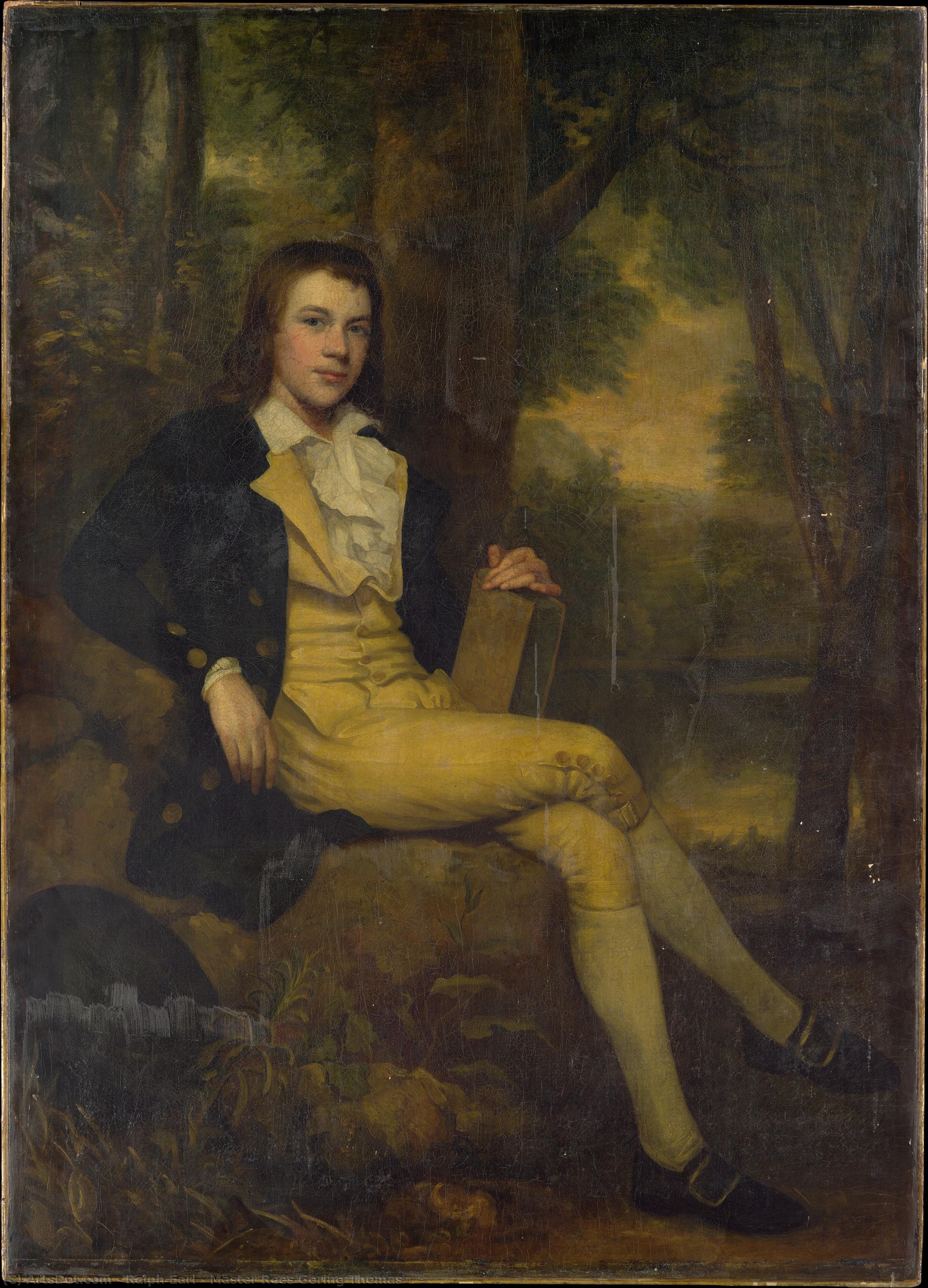
Master Rees Goring Thomas

Experience Neoclassical dignity with Ralph Earl's portrait of colonial life; capture the spirit of 18th-century American refinement today.

Explore the portraits of Ralph Earl, an American painter (1751-1801). Known for his colonial era works & Niagara Falls panorama, discover a unique artistic legacy.

Hand Made Oil Reproduction

Hand-painted oil on canvas in your size and frame, made to order by our artists.

P118B $10
P118H $10
P118W $10
P438Z $10
P508JH $12
P508YH $12
P805H $10
P805Z $10
P919BZ $10
P919G $10
P919XJ $10
P959ZH $10
P968JZ $12
W106C $8
W218G $10
W218JH $8
W218Y $10
W307PJ $10
W316G $10
W316PJ $8
W316Y $10
W398PJ $8
W4111J $10
W500HY $15
W500JH $15
W692G $12
W849H $8
W940BG $15
W953PJ $8

Standard
custom
CM
INCH

Pick from our preset sizes that match the artwork's original proportions.

width
height

You may enter your own dimensions to fit a specific frame or space. If your selected size does not match the original image's proportions, we will either crop the artwork or extend the painting with additional hand-painted elements. A digital mockup will be sent for your approval before production begins.
Please note that the on-screen preview does not reflect the actual cropping or extension. Only the mockup will accurately show the final composition.
While custom sizes are available, we recommend selecting a dimension from the predefined list to preserve the original proportions.

Examples of what can be changed: Replace face with customer photo; Add pet (e.g., replace cat with dog); Include hidden message in background; Change background landscape or elements.
After order, TopImpressionists.com team will email client for instructions and provide a mockup preview

Worldwide Delivery () in 3/4 weeks instead of standard 5 weeks. (24 July). No compromise on quality.

why_choose_icon
Free Worldwide Express Shipping
why_choose_icon
High-Quality Linen Canvas
why_choose_icon
Full Shipping Insurance
why_choose_icon
Customs Tax Refund Guarantee
why_choose_icon
True Color Matching Guarantee
why_choose_icon
60-Day Return Policy (Defects Only)
why_choose_icon
100% Money-Back Guarantee
why_choose_icon
Bulk Discount Offer

Total Price

-

reproduction

Master Rees Goring Thomas

Reproduction Medium

Reproduction Size

-

Total Price

-

Quick Facts

  • Artistic style: Neoclassical
  • Title: Master Rees Goring Thomas
  • Medium: Oil on canvas
  • Notable elements or techniques: Chiaroscuro; rock setting
  • Artist: Ralph Earl
  • Subject or theme: Colonial portraiture; Dignity

Art Quiz

There is only one correct answer for each question.

Question 1:
What artistic style is noted as being prevalent during the time this portrait was painted?
Question 2:
What element in the painting symbolizes resilience and permanence, mirroring colonial aspirations?
Question 3:
Which technique did Ralph Earl use to sculpt the figure and add a sense of solemn grandeur?
Question 4:
What does the book or paper held by Master Rees Goring Thomas primarily represent?
Question 5:
In what year was the painting, 'Master Rees Goring Thomas,' created?

Artwork Description

Master Rees Goring Thomas: A Portrait of Colonial Dignity

The painting “Master Rees Goring Thomas,” attributed to Ralph Earl (circa 1783–84), stands as a testament to the artistic sensibilities of colonial America—a period defined by burgeoning wealth, expanding horizons, and an earnest desire for self-representation. Executed in oil on canvas, this portrait captures not merely likeness but also embodies the ethos of its time: composure, refinement, and an acknowledgement of social status.
  • Subject Matter: The central figure is Rees Goring Thomas, a prominent landowner from Shropshire, England—a man whose position within the colonial hierarchy demanded visual articulation. Earl skillfully rendered him seated upon a rock, legs crossed in a posture indicative of both authority and contemplative repose.
  • Style & Technique: Earl’s approach aligns with the prevailing Neoclassical style prevalent during his era. Precise lines delineate anatomical features, creating an illusionistic depth that elevates the portrait beyond mere likeness. The artist employed chiaroscuro—the dramatic interplay of light and shadow—to sculpt Thomas's form and imbue the scene with a sense of solemn grandeur.
  • Historical Context: Painted during the American Revolution’s formative years, “Master Rees Goring Thomas” reflects the anxieties and aspirations of a nation grappling with independence. Earl’s decision to depict Thomas in this dignified pose speaks to the desire for stability amidst turbulent political upheaval—a yearning for continuity within a rapidly changing landscape.
  • Symbolism: The rock upon which Thomas sits serves as a potent symbol of resilience and permanence, mirroring the aspirations of the American colonies to establish enduring institutions rooted in Enlightenment ideals. Furthermore, the book or paper held by Thomas represents intellectual pursuits and civic engagement—values considered crucial for shaping the future republic.
  • Emotional Impact: Beyond its formal qualities, “Master Rees Goring Thomas” conveys a palpable sense of dignity and self-assurance. Earl’s masterful brushwork captures not only physical appearance but also inner character—projecting an image of cultivated intellect and unwavering conviction. It remains a captivating glimpse into the visual culture of a pivotal moment in American history.

Ralph Earl: A Pioneer of Colonial Portraiture

Ralph Earl (1751–1801) emerged as an exceptional figure within the burgeoning landscape of American art—a self-taught painter who defied convention and achieved renown through his dedication to portraiture. Unlike many artists of his time who pursued formal training, Earl honed his craft independently, immersing himself in observation and experimentation. His itinerant lifestyle allowed him to absorb influences from diverse artistic traditions, shaping his distinctive style. Notably, Earl’s depiction of Niagara Falls cemented his reputation as a panoramic visionary—a testament to his ambition and technical prowess.

Further Exploration & Research Resources

For deeper insights into Ralph Earl's life and work, consider exploring these resources:

Notable Works by Ralph Earl

Earl’s artistic legacy extends beyond “Master Rees Goring Thomas,” encompassing a substantial body of paintings—including portraits of Colonel William Taylor and numerous landscapes. His commitment to capturing the spirit of his era solidified his position as one of America's foremost artists.

Artist Biography

A Colonial Visionary: The Life and Legacy of Ralph Earl

In the tapestry of early American art, few threads are as vibrant or as uniquely textured as those woven by Ralph Earl. A self-taught master who emerged from the rugged landscapes of colonial New England, Earl possessed a rare ability to capture both the intimate dignity of the individual and the sweeping grandeur of the burgeoning American wilderness. Born in 1751 in the Massachusetts countryside, his journey was one of profound transformation—from an itinerant craftsman navigating the uncertainties of a young nation to a sophisticated portraitist whose work would eventually command the attention of the colonial elite.

Earl’s early years were defined by a restless pursuit of skill and a deep connection to the visual pulse of his era. Without the benefit of formal academic training, he developed a distinctive style characterized by a meticulous attention to detail and a certain rhythmic vitality. His establishment of a studio in New Haven, Connecticut, around 1774 marked the beginning of a prolific period of portraiture. These works were more than mere likenesses; they were carefully constructed symbols of status, character, and the burgeoning identity of a people on the precipice of revolution. Through his brush, the faces of the colonial era were immortalized with a sense of permanence and grace.

Artistry Amidst Revolution

The turbulent atmosphere of the American Revolution served as both a backdrop and a catalyst for Earl’s creative evolution. As the fires of conflict ignited at Lexington and Concord, Earl did not merely observe from the sidelines; he translated the chaos of war into powerful visual narratives. His collaboration with engraver Amos Doolittle resulted in a series of dramatic battle scenes that functioned as potent propaganda for the revolutionary cause. These prints, disseminated widely, demonstrated Earl’s capacity to use art as a tool for social commentary and political expression, blending his technical prowess with a profound sense of historical urgency.

Seeking to refine his burgeoning talent, Earl undertook a daring and transformative voyage to England in 1778. Legend suggests he traveled under the guise of a servant to a British captain, a testament to the resourcefulness and determination that defined his character. This period of exposure to European traditions provided him with invaluable insights into the classical techniques of portraiture and landscape. Upon his return to American shores, his work began to exhibit a newfound sophistication, blending the rugged honesty of his American roots with the refined elegance of the Old World.

The Panoramic Spirit and Historical Significance

While his portraits remain cornerstone achievements of his career, Earl’s contribution to the American landscape tradition is nothing short of monumental. He possessed an extraordinary eye for the sublime, most notably evidenced in his breathtaking depictions of Niagara Falls. In these panoramic visions, he moved beyond simple documentation, instead capturing the overwhelming power and spiritual majesty of the natural world. His ability to scale his vision from the intimate details of a sitter's lace collar to the thundering expanse of a waterfall demonstrates a versatility that few of his contemporaries could match.

The historical significance of Ralph Earl lies in his role as a bridge between the colonial past and the emerging American identity. His oeuvre serves as a visual archive of a nation in flux, documenting the faces, the politics, and the landscapes that shaped the United States. Through his work, we encounter the quiet strength of the colonial subject and the untamed beauty of the American frontier. Today, Earl is remembered not just as a painter, but as a visionary who helped define the visual language of a new era, leaving behind a legacy that continues to resonate with the spirit of discovery and resilience.

Ralph Earl

Ralph Earl

1751 - 1801 , United States of America

Quick Facts

  • Artistic Movement Or Style: Neoclassical
  • Artists Or Movements Influenced By This Artist: ['Romanticism']
  • Artists Who Influenced This Artist: ['Benjamin West']
  • Date Of Birth: May 11, 1751
  • Date Of Death: August 16, 1801
  • Full Name: Ralph Earl
  • Nationality: American
  • Notable Artworks:
    • Niagara Falls Panorama
    • Portrait of Martha Rogers
  • Place Of Birth: Shrewsbury, United States of America
Explore artworks organized by themes, styles, and characteristics.
© TopImpressionists.com — All Rights Reserved  ·  100% Hand-Painted · Satisfaction Guaranteed · Free Worldwide Shipping
VISA MASTERCARD