


 Preview
 Send
Send Share
Share
 Details
 Guide
Guide

 Download
 Similars
 X-Ray
X-Ray Diaporama
 Stats
StatsSelf Portrait
 Oil On Canvas
- WallArt
- Post-Impressionism
 1899
1899- 19th Century
 33.0 x 41.0 cm
A striking post-impressionist self portrait by Raoul Dufy captures a serious man in a red bow tie with vibrant oil textures, offering a unique opportunity to bring this piece of French art history into your collection.
 Read More
Explore the art of Raoul Dufy (1877-1953), a French Fauvist painter celebrated for his vibrant, decorative style & joyful scenes of leisure, landscapes, and city life. #RaoulDufy #Fauvism
Giclée / Art Print
Museum-quality giclée or canvas print with fast production and flexible finish options. ( Buy Hand Made Painting Switch to Digital Image)




P118B $10

P118H $10

P118W $10

P438Z $10

P508JH $12

P508YH $12

P805H $10

P805Z $10

P919BZ $10

P919G $10

P919XJ $10

P959ZH $10

P968JZ $12

W106C $8

W218G $10

W218JH $8

W218Y $10

W307PJ $10

W316G $10

W316PJ $8

W316Y $10

W398PJ $8

W4111J $10

W500HY $15

W500JH $15

W692G $12

W849H $8

W940BG $15

W953PJ $8




Standard
custom
CM
INCH
Pick from our preset sizes that match the artwork's original proportions.
Loading sizes...

width
height
Type the width and the height you need, to fit your frame or your wall. A print can only be cut, never made bigger than the picture, so a size with a different shape loses a part of the image. We send you a digital mockup to approve before we print anything. The picture shown on this page does not show the real cut — only the mockup does.
Worldwide Delivery () in 2 weeks instead of standard 4/5 weeks. (24 October)

Free Worldwide Express Shipping

High-Quality Linen Canvas

Full Shipping Insurance

Customs Tax Refund Guarantee

True Color Matching Guarantee

100-Day Return Policy (Defects Only)

100% Money-Back Guarantee

Bulk Discount Offer
 Glass option is only available in size under 110 CM

Self Portrait
Giclée / Art Print
Reproduction Size
-


Total Price
$ 70
A Moment Captured in Time: The Introspection of Raoul Dufy
In the quiet, contemplative moments before his brush became a conduit for the exuberant colors of Fauvism, Raoul Dufy captured a profound sense of self through his Self Portrait. Painted in 1899, this work serves as a poignant window into the artist's early psyche, long before he became the master of light and joyful French landscapes. The portrait presents a man poised in a moment of deep thought, his gaze averted from the viewer as if lost in an internal dialogue or observing something unseen beyond the frame. Clad in a formal suit jacket and a striking red bow tie, the subject possesses a certain gravity, a seriousness that hints at the burgeoning talent and the intense dedication required to navigate the competitive art world of late 19th-century France.
The technique employed in this oil on canvas reflects the rich, tactile traditions of the era. Even in this early stage of his career, one can sense the influence of the Impressionist masters, with a deliberate use of texture to create depth and presence. The way the light catches the fabric of his attire and the subtle shadows contouring his face suggests a mastery of form that would later evolve into his signature decorative style. There is a weight to the colors here—a richness that anchors the subject within the composition, providing a sense of permanence and dignity that makes the piece feel both intimate and monumental.
The Prelude to Vibrancy: Style and Historical Context
To look upon this 1899 masterpiece is to witness the genesis of a legend. At the time of this painting, Dufy was still deeply immersed in the academic foundations of Le Havre and the burgeoning influences of Montmartre. While his later works would dance with the wild, uninhibited hues of Fauvism, this self-portrait retains a more somber, post-impressionist restraint. It is a study in character rather than a celebration of spectacle. The artist uses a palette that, while grounded, prepares the eye for the chromatic revolutions to come, using contrast and tonal shifts to direct the viewer's emotion toward the subject's contemplative state.
For collectors and interior designers, this piece offers a unique opportunity to possess a foundational moment in art history. It provides a sophisticated anchor for a room, offering a sense of intellectual depth and historical weight. Unlike more boisterous works, this portrait invites quiet observation, making it an ideal centerpiece for a study, a library, or a formal sitting area where conversation and reflection are encouraged. The subtle tension between the man's formal attire and his wandering gaze creates a narrative mystery that continues to captivate anyone who lingers before its canvas.
An Invitation to Elegance
Bringing a high-quality reproduction of this Self Portrait into a home or gallery space is more than an act of decoration; it is an act of curation. It allows the timeless elegance of Dufy’s early period to breathe within a modern setting, bridging the gap between the turn of the century and the contemporary era. The painting's ability to evoke emotion—ranging from a sense of nostalgic melancholy to a profound respect for the artist's journey—makes it a versatile and powerful addition to any curated collection.
Whether you are an art enthusiast seeking to connect with the roots of French modernism or a designer looking for a piece that embodies serious, classical beauty, this work stands as a testament to the enduring power of the human spirit captured through paint. It remains a soulful, evocative masterpiece that promises to inspire awe and contemplation for generations to come.
Questions & Answers
Which artist and which style stand behind "Self Portrait"?
Behind "Self Portrait" stand Raoul Dufy and the Post-Impressionism movement.
How strong are the colors of "Self Portrait"?
The color of "Self Portrait" is balanced soft in saturation and balanced in intensity.
What aliases or alternate names does Raoul Dufy have?
Raoul Dufy appears under the alternate names Dufy.


Artist Biography
A Life Immersed in Color and Light
Raoul Dufy, born in the port city of Le Havre, Normandy, in 1877, was an artist whose name became synonymous with joy, vibrancy, and a distinctly French *joie de vivre*. His journey began not amidst palettes and easels, but within the practical world of commerce, working for a coffee-importing company after leaving school at fourteen. Yet, even then, the pull towards artistic expression proved irresistible. Evening classes at Le Havre’s École des Beaux-Arts ignited a passion that would define his life, forging friendships with fellow artists Raimond Lecourt and Othon Friesz – companions who shared a studio in Montmartre and a commitment to exploring new visual languages. These early years were steeped in the influence of Impressionism, particularly the luminous landscapes of Claude Monet and Camille Pissarro, laying the foundation for Dufy’s later mastery of light and color. He received a scholarship to study at the École Nationale supérieure des Beaux-Arts in Paris, further honing his skills and immersing himself in the artistic ferment of the era.Embracing Fauvism and Finding His Voice
The turn of the 20th century found Dufy navigating the evolving landscape of modern art. Initial explorations led him through Cubism, but it was Henri Matisse’s groundbreaking *Luxe, Calme et Volupté* at the 1905 Salon des Indépendants that proved truly transformative. The sheer audacity of color and expressive freedom unleashed by Matisse and his fellow “Fauves” – the wild beasts – resonated deeply with Dufy, propelling him towards a style characterized by bold hues and liberated brushwork. However, Dufy didn’t simply mimic; he absorbed the energy of Fauvism and distilled it into something uniquely his own. He moved away from strict adherence to the movement's tenets, developing a more decorative and fluid approach. This period saw him experimenting with various mediums – illustration, textile design for Paul Poiret, even ceramics – demonstrating a remarkable versatility that extended beyond the confines of traditional painting. His designs weren’t merely applied ornamentation; they were integral expressions of his artistic vision, bringing color and dynamism to everyday objects.A Stenographic Style: Capturing Modern Life
By the 1920s, Dufy had fully blossomed into a master of what became known as his “stenographic” style. This technique involved rapidly applying thin washes of color over skeletal structures, creating an impression of movement and spontaneity. It was a method perfectly suited to capturing the energy of modern life – yachting regattas, bustling city scenes, elegant social gatherings on the French Riviera. Dufy wasn’t interested in meticulous detail; he sought to convey atmosphere, emotion, and the fleeting beauty of a moment. His paintings became celebrations of leisure, pleasure, and the vibrant pulse of contemporary society. He painted orchestras, racecourses, and seascapes with an effervescent quality that captured the spirit of the Jazz Age. This period also saw him undertaking large-scale commissions, including the monumental *La Fée Electricité* for the 1937 Exposition Internationale in Paris – a vast work celebrating electricity’s impact on modern life, executed with remarkable speed and ingenuity using a new quick-drying medium.Legacy and Enduring Appeal
Despite facing health challenges later in life due to rheumatoid arthritis, Dufy continued to paint with unwavering dedication until his death in 1953. His work can be found in prestigious collections worldwide, including the Museum Royal Collection in the United Kingdom, a testament to his enduring artistic significance. Dufy’s influence extends beyond painting; his designs continue to inspire textile and decorative arts. He left behind an impressive body of work – thousands of paintings, watercolors, drawings, prints, and applied art pieces – that collectively represent a celebration of life, color, and the beauty of the everyday. Raoul Dufy wasn’t merely a painter; he was a chronicler of his time, capturing the spirit of an era with a unique blend of Fauvist energy, decorative flair, and a distinctly optimistic vision. His art remains profoundly relevant today, offering a vibrant escape and a reminder to embrace the *joie de vivre* that permeated his life and work.Key Characteristics of Dufy’s Art
- Vibrant Color Palette: Dufy was renowned for his use of bright, saturated colors, often applied in thin washes.
- Dynamic Composition: His paintings frequently feature energetic compositions that convey a sense of movement and spontaneity.
- Decorative Style: A strong decorative element is present throughout his work, influenced by his designs for textiles and ceramics.
- Celebration of Modern Life: Dufy’s art often depicts scenes of leisure, social gatherings, and the pleasures of contemporary society.
- Stenographic Technique: His signature style involved rapidly applying thin washes of color over skeletal structures.

Raoul Dufy
1877 - 1953 , France
Quick Facts
- Full Name: Raoul Dufy
- Nationality: French
- Date Of Birth: 1877
- Date Of Death: 1953
- Place Of Birth: Le Havre, France
- Notable Artworks:
- The Thoroughbred
- Portrait of Mme. Dufy
- La Fée Electricité
- Artistic Movement Or Style: Fauvism
- Artists Who Influenced This Artist:
- Monet
- Pissarro
- Matisse
- Artists Or Movements Influenced By This Artist: Ceramics & Textiles
Related Articles

Beyond the Light: Discovering the Soul and Emotional Depth of Post-Impressionism
Embark on a cultural journey through Post-Impressionism. Discover the profound emotional depth of masters like Van Gogh and Cézanne, exploring how they moved beyond light to capture the very soul of human experience through vibrant color and symbolic form.

Capturing the Soul: The Ethereal Magic and Timeless Technique of Impressionist Portraiture
Discover the ethereal beauty of Impressionist portraiture. Explore how masters like Monet and Renoir captured light and soul through brushwork, and learn how to bring this timeless magic into your home with exquisite, hand-painted oil reproductions from TopImpressionists.com.

Capturing Emotion: A Journey Through the Soul of Expressionist Landscapes
Explore the profound emotional depth of Expressionist landscapes. Discover how Post-Impressionist masters moved beyond light to capture the soul through vibrant color and form. A curated journey for true art lovers seeking the beauty of expressive mastery.
Beyond the Light: Capturing Emotion Through the Expressive Soul of Post-Impressionism
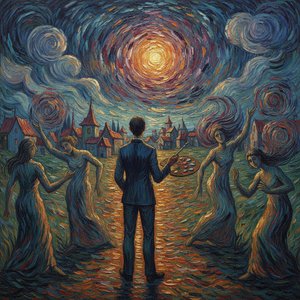
Explore the profound emotional depth of Post-Impressionism. Discover how masters like Van Gogh and Cézanne moved beyond light to capture raw feeling through color and texture. A journey into art history for the true connoisseur.
Explore artworks organized by themes, styles, and characteristics.


