


 Preview
 Send
Send Share
Share
 Details
 Guide
Guide

 Download
 Similars
 X-Ray
X-Ray Diaporama
 Stats
StatsJerusalem, (1967)

Explore Reuven Rubin’s "Jerusalem" (1967), a hazy, impressionistic landscape evoking tranquility & peace through watercolor/gouache. Discover its symbolism & post-impressionist style.
Reuven Rubin (1893-1974): Romanian-Israeli painter & diplomat. Pioneer of the 'Eretz Yisrael' style, known for landscapes, biblical scenes & capturing Israeli life with a unique blend of European & local influences.
 Read More
The artwork displayed on this page is protected by copyright law, which means we cannot legally create or sell an identical reproduction. This protection is enforced under international agreements such as the Berne Convention and by national laws, including those outlined by the U.S. Copyright Law - Title 17.
As a respectful and legal alternative, we offer custom, hand-painted artworks inspired by the original. Our skilled and professional artists carefully study the original's style, mood, and artistic essence to create a new, unique piece that evokes the same feeling - while remaining an original creation in its own right.
This method fully complies with copyright regulations because it does not involve copying or duplicating the protected artwork. Instead, it is a creative reinterpretation - a new painting that is influenced by the original but not identical to it.
Hand Made Oil Reproduction
Hand-painted oil on canvas in your size and frame, made to order by our artists. ( Switch to Print Switch to Digital Image)




































Standard
custom
CM
INCH
Pick from our preset sizes that match the artwork's original proportions.
Loading sizes...

width
height
Type the width and the height you need, to fit your frame or your wall. This is hand-painted, so for a size with a different shape the artist can paint a bit more around the picture, or cut a bit — you choose. We send you a digital mockup to approve before the painting starts. The picture shown on this page does not show the real result — only the mockup does.
Examples of what can be changed: Replace face with customer photo; Add pet (e.g., replace cat with dog); Include hidden message in background; Change background landscape or elements.
After order, TopImpressionists.com team will email client for instructions and provide a mockup preview
After order, TopImpressionists.com team will email client for instructions and provide a mockup preview
Worldwide Delivery () in 3/4 weeks instead of standard 5 weeks. (24 October). No compromise on quality.

Free Worldwide Express Shipping

High-Quality Linen Canvas

Full Shipping Insurance

Customs Tax Refund Guarantee

True Color Matching Guarantee

100-Day Return Policy (Defects Only)

100% Money-Back Guarantee

Bulk Discount Offer
 Glass option is only available in size under 110 CM

Jerusalem, (1967)
Reproduction Medium
Reproduction Size
-


Total Price
$ 269
Related Artworks


Artist Biography
A Life Painted in Light: The World of Reuven Rubin
Reuven Rubin, born Rubin Zelicovici in 1893 in the Romanian town of Galati, was more than simply a painter; he embodied the spirit of early Israel, acting as a cultural diplomat and a foundational figure in defining a uniquely Israeli artistic identity. Emerging from humble beginnings as one of thirteen children within a devout Hasidic Jewish family, Rubin’s path diverged from tradition through an innate artistic talent that blossomed even in his youth – crafting a mizrah plaque for his local synagogue became an early testament to his burgeoning skill. This initial spark propelled him towards formal training, first with a scholarship from Zionist leader Dr. Adolf Stander to the Bezalel Academy of Art and Design in Jerusalem in 1911. However, the rigid methodologies of Bezalel proved stifling for Rubin’s evolving vision, leading him to seek further artistic development in the vibrant heart of Paris in 1913, studying at the prestigious École Nationale Supérieure des Beaux-Arts. The outbreak of World War I brought a temporary return to Romania, but the seeds of his artistic journey had been firmly sown.
Forging an Israeli Aesthetic
The years following the war were pivotal in Rubin’s development. A period spent traveling with Arthur Kolnik and exhibiting their work in New York City in 1921 offered a glimpse into the international art scene, but it was his emigration to Mandate Palestine in 1923 that truly ignited his artistic purpose. He wasn't merely documenting a landscape; he strived to capture the very soul of a nascent nation. Influenced by the post-impressionistic techniques of Cézanne and the naive charm of Henri Rousseau, alongside elements of neo-Byzantine art from his Romanian heritage, Rubin forged a style that was both modern and deeply rooted in the land. His landscapes weren’t photographic representations but rather emotional responses to the Israeli terrain – bathed in a distinctive light, imbued with a sense of spiritual resonance. He focused on portraying the diverse inhabitants of this new land: Yemenite Jews, Hasidic figures, Arab villagers, each rendered with sensitivity and respect. Recurring motifs like sun-drenched depictions of Jerusalem and the Galilee became hallmarks of his work, reflecting both a personal connection to these sacred places and a broader attempt to define a visual language for Israeli identity. A unique signature – his first name in Hebrew, surname in Roman letters – symbolized this very fusion of tradition and modernity. He was instrumental in founding the “Eretz-Yisrael” style, a movement dedicated to creating art that reflected the spirit and character of the land itself. His paintings became windows into a world being born, capturing not just what was seen but what was felt – the hopes, dreams, and struggles of a people reclaiming their heritage.
Beyond the Canvas: Art, Theater, and Diplomacy
Rubin’s contributions extended far beyond the realm of painting. He became a central figure in the Palestinian artistic community, serving as Chairman of the Association of Painters and Sculptors of Palestine in 1924, and holding his first solo exhibition that same year at the Tower of David in Jerusalem – a landmark event that later traveled to Tel Aviv. His creative energy wasn’t confined to canvases; he brought his visual sensibility to the stage, designing backdrops for prominent theaters like Habima and Ohel from the 1930s onwards, enriching Israel's cultural landscape with his artistic vision. However, perhaps one of Rubin’s most remarkable achievements came in 1948, when he was appointed as Israel’s first diplomatic envoy to Romania – a poignant return to his birthplace, now representing a newly independent nation. This role seamlessly blended his personal history with his commitment to the burgeoning state of Israel, demonstrating an extraordinary capacity for bridging cultural divides and fostering international understanding. He documented his life experiences in his 1969 autobiography, “My Life - My Art”, offering invaluable insights into his artistic journey and philosophical outlook. This period solidified Rubin’s position not just as an artist but as a national figure, embodying the spirit of a new nation forging its identity on the world stage.
A Lasting Legacy
Reuven Rubin’s impact on Israeli art is undeniable. His work continues to captivate audiences with its unique blend of European influences and distinctly Israeli sensibility. The establishment of the Rubin Museum in Tel Aviv in 1983, a testament to his bequest of his home and collection, ensures that his artistic legacy will endure for generations to come. Today, his paintings are increasingly sought after by collectors, achieving significant sales at international auctions like Sotheby’s, demonstrating a growing recognition of his historical importance and artistic merit. He wasn't simply painting pictures; he was constructing an identity – a visual narrative of a nation in the making. Rubin’s career exemplifies the powerful intersection of art, diplomacy, and nation-building, solidifying his place as one of Israel’s most important and beloved artists. His paintings remain vibrant testaments to a life lived with passion, purpose, and an unwavering dedication to capturing the beauty and spirit of the land he called home.
- Key Influences: Cézanne, Henri Rousseau, Neo-Byzantine art.
- Major Themes: Israeli landscapes, biblical scenes, portraits of diverse communities within Palestine/Israel.
- Signature Style: A blend of post-impressionism and naive art, characterized by vibrant colors and emotional resonance. His unique signature – Hebrew first name, Roman surname – symbolized the fusion of tradition and modernity.

Reuven Rubin
1893 - 1974 , Romania
Quick Facts
- Full Name: Reuven Rubin
- Nationality: Israeli-Romanian
- Date Of Birth: 1893
- Date Of Death: 1974
- Place Of Birth: Galati, Romania
- Artistic Movement Or Style: Eretz Yisrael, Post-Impressionism
- Artists Who Influenced This Artist:
- Cézanne
- Henri Rousseau
- Artists Or Movements Influenced By This Artist:
- Israeli art
- Eretz Yisrael style
Related Articles

Capturing Emotion: A Journey Through the Soul of Expressionist Landscapes
Explore the profound emotional depth of Expressionist landscapes. Discover how Post-Impressionist masters moved beyond light to capture the soul through vibrant color and form. A curated journey for true art lovers seeking the beauty of expressive mastery.

Capturing the Soul: The Most Emotionally Moving Impressionist and Post-Impressionist Masterpieces
Discover the profound emotional depth of Impressionist and Post-Impressionist masterpieces. Explore how legends like Monet, Van Gogh, and Gauguin captured light and soul through evocative landscapes and vibrant brushwork for a timeless connection to art history.

Beyond the Light: Capturing Raw Emotion and Subjective Vision in Post-Impressionist Landscapes
Explore the profound emotional depth of Post-Impressionist landscapes. Discover how masters like Van Gogh moved beyond light to capture raw human feeling through vibrant color and expressive texture in this expert art history retrospective.
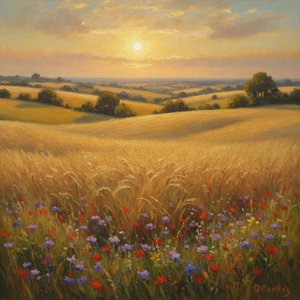
Golden Fields & Sun-Drenched Meadows: Capturing the Soul of Impressionist Landscapes
Immerse yourself in the luminous world of Impressionist landscapes. Discover how masters like Monet and Gauguin captured ephemeral light through plein air painting, and learn to bring the soul of sun-drenched meadows into your home with exquisite, hand-painted oil reproductions.

The Beauty of Impermanence: Capturing Decay through Impressionist Eyes
Explore the profound beauty of impermanence through Impressionist and Post-Impressionist eyes. Discover how masters like Monet and Van Gogh captured fleeting light and the poetic essence of nature's transitions in our deep dive into art history and emotional landscapes.
Explore artworks organized by themes, styles, and characteristics.


