


 Preview
 Send
Send Share
Share
 Details
 Guide
Guide

 Download
 Similars
 X-Ray
X-Ray Diaporama
 Stats
StatsThe Spanish Gypsy


Robert Henri's "The Spanish Gypsy" captures a Roma woman’s defiant spirit with striking realism. Explore the painting's story, inspired by Henri's time in Madrid and his empathy for marginalized communities.
 Read More
Robert Henri (1865-1929) was a pivotal figure of the Ashcan School, championing American Realism & capturing everyday life with striking honesty. Influenced artists like Edward Hopper.
Giclée / Art Print
Museum-quality giclée or canvas print with fast production and flexible finish options. ( Buy Hand Made Painting Switch to Digital Image)




P118B $10

P118H $10

P118W $10

P438Z $10

P508JH $12

P508YH $12

P805H $10

P805Z $10

P919BZ $10

P919G $10

P919XJ $10

P959ZH $10

P968JZ $12

W106C $8

W218G $10

W218JH $8

W218Y $10

W307PJ $10

W316G $10

W316PJ $8

W316Y $10

W398PJ $8

W4111J $10

W500HY $15

W500JH $15

W692G $12

W849H $8

W940BG $15

W953PJ $8




Standard
custom
CM
INCH
Pick from our preset sizes that match the artwork's original proportions.
Loading sizes...

width
height
Type the width and the height you need, to fit your frame or your wall. A print can only be cut, never made bigger than the picture, so a size with a different shape loses a part of the image. We send you a digital mockup to approve before we print anything. The picture shown on this page does not show the real cut — only the mockup does.
Worldwide Delivery () in 2 weeks instead of standard 4/5 weeks. (21 October)

Free Worldwide Express Shipping

High-Quality Linen Canvas

Full Shipping Insurance

Customs Tax Refund Guarantee

True Color Matching Guarantee

100-Day Return Policy (Defects Only)

100% Money-Back Guarantee

Bulk Discount Offer
 Glass option is only available in size under 110 CM

The Spanish Gypsy
Giclée / Art Print
Reproduction Size
-


Total Price
$ 70
A Glimpse into the Soul: Robert Henri’s “The Spanish Gypsy”
Robert Henri's "The Spanish Gypsy," painted in 1912, isn’t merely a portrait; it’s a carefully constructed tableau of observation and empathy. This arresting image captures a young woman from Madrid’s Roma community, a figure rendered with an uncommon directness that speaks volumes about Henri’s commitment to American Realism – a movement he championed as a rejection of academic art's idealized forms. The painting immediately draws the viewer in, not through grand gestures or dramatic lighting, but through the quiet intensity of her gaze and the subtle details of her attire. Henri wasn’t interested in romanticizing poverty or exoticizing the Roma; instead, he sought to present her as a fully realized human being, imbued with dignity and an unspoken story.
The Ashcan School and the Champion of the Marginalized
To understand “The Spanish Gypsy,” one must appreciate Robert Henri’s place within the Ashcan School. Emerging in New York City around 1908, this group of artists – including George Bellows, John Sloan, and Charles Demuth – deliberately rejected the polished surfaces and historical subjects favored by the established art world. They sought to depict everyday life, particularly the lives of working-class Americans and marginalized communities. Henri’s early life, marked by instability and a deliberate severance from his past identity as Robert Cozad, profoundly shaped this perspective. His experiences instilled within him a deep understanding of displacement and resilience – qualities he powerfully conveyed through his art. The painting reflects this ethos; it's not about judging or presenting the Roma as ‘other,’ but rather offering a respectful and intimate portrayal of a woman living on the fringes of society.
Henri’s decision to paint in Madrid during the summer of 1912 was deliberate. He sought out this community, recognizing their inherent dignity and strength. He famously described her as entering his studio “with austere defiance,” suggesting a quiet resistance to being objectified or reduced to a stereotype. This encounter highlights Henri's belief that genuine art arises from direct observation and an honest engagement with the subject matter.
Decoding Symbolism: Color, Gesture, and Narrative
The painting’s composition is deceptively simple yet remarkably effective. The woman sits in a plain chair – a symbol of her relative lack of privilege, but also of quiet strength. Her pink dress, though modest, possesses a vibrant hue that draws the eye and hints at an underlying vitality. Henri's masterful use of oil paint creates a rich texture and depth, particularly evident in the folds of her clothing and the subtle variations in skin tone. The background is deliberately muted, drawing attention to the subject’s face – a focal point where Henri captures a complex range of emotions: curiosity, perhaps a hint of sadness, and an undeniable sense of self-possession.
The presence of the two other figures—a man standing behind her and another further back—adds layers of narrative ambiguity. Are they guardians, observers, or simply part of her world? Henri leaves these details intentionally vague, inviting the viewer to project their own interpretations onto the scene. The chair itself is a key element; it’s not an ornate piece of furniture but a functional object, grounding the figure in reality and emphasizing her connection to everyday life.
A Legacy of Honest Representation
“The Spanish Gypsy” remains a powerful testament to Robert Henri's artistic vision. It’s a painting that transcends its subject matter to offer a profound meditation on identity, resilience, and the dignity of ordinary people. Henri’s commitment to portraying his subjects with honesty and empathy paved the way for future generations of American artists who sought to capture the complexities of modern life. Today, reproductions of this iconic work continue to resonate with viewers, reminding us of the importance of looking beyond superficial appearances and recognizing the humanity in all individuals.
Questions & Answers
What is "The Spanish Gypsy" about?
"The Spanish Gypsy" by Robert Henri depicts: gypsy, woman, portrait, spain, ethnicity, interior, clothing, expression.
How can I get a digital file of "The Spanish Gypsy" by Robert Henri?
"The Spanish Gypsy" is available as a high-resolution digital image download, purchased directly on its Digital Image page.
How do contrast and harmony combine in "The Spanish Gypsy"?
The color analysis of "The Spanish Gypsy" by Robert Henri records a serene contrast and a strong color unity harmony.


Artist Biography
A Turbulent Genesis: The Early Life of Robert Henri
Robert Henri, born Robert Henry Cozad in Cincinnati, Ohio, in 1865, carried within him from the outset a sense of displacement and reinvention that would profoundly shape both his life and art. His childhood was far from idyllic; shadowed by the volatile relationship between his father, John Jackson Cozad—a man of ambition and risk as a gambler and real estate developer—and his mother, Theresa Gatewood Cozad. This instability culminated in a dramatic event in 1882: a fatal shooting over a land dispute that forced the family into flight, adopting new identities to escape retribution. Young Robert became Robert Henri, a deliberate severing from a past fraught with conflict and a symbolic rebirth as an artist. The westward journey through Nebraska and Colorado, culminating in a settling in New York City and then Atlantic City, instilled within him a deep empathy for those living on the fringes of society—an empathy that would become a defining characteristic of his artistic vision. This early experience of upheaval and reinvention fostered a spirit of independence and a commitment to portraying life as it truly was, unburdened by convention or societal expectation.
Forging a New Vision: Artistic Development and Influences
Henri’s formal artistic education began at the Pennsylvania Academy of the Fine Arts in Philadelphia under Thomas Anshutz, where he honed his technical skills. However, it was his subsequent journey to Paris in 1888 that truly ignited his artistic awakening. Initially drawn to the academic tradition at the Académie Julian and influenced by masters like William-Adolphe Bouguereau and François Millet, Henri gradually gravitated towards Impressionism. Yet, he wasn’t content with merely replicating what he saw; he sought a more profound engagement with reality—a way to capture not just the fleeting effects of light but also the raw emotion and vitality of modern life. This quest led him to embrace a bolder, more direct approach, influenced by the Dutch Realist Franz Hals, whose loose brushwork and psychological insight resonated deeply with Henri’s own artistic sensibilities. He began experimenting with *pochades*, small wood panels used for quick sketches, encouraging spontaneity and immediacy in his work. Returning to America, he became a dedicated teacher, imparting not just technique but also a philosophy of art rooted in observation, honesty, and individual expression.
Championing the Real: The Ashcan School and “The Eight”
Robert Henri’s impact on American art extended far beyond his own canvases; he became a catalyst for change, challenging the conservative norms of the established art world. He was a central figure in the emergence of the Ashcan School—a group of artists who dared to depict the gritty realities of urban life, from bustling city streets to crowded tenements. Henri’s commitment to realism and his rejection of academic pretension led him to organize “The Eight” in 1908—a collective of like-minded artists including William Glackens, George Luks, Everett Shinn, and John Sloan—who staged an independent exhibition as a direct protest against the restrictive policies of the National Academy of Design. This act of defiance was a watershed moment in American art history, signaling a shift away from European dominance and towards a uniquely American artistic voice. Henri’s paintings during this period, such as “Woman in Manteau” (1899) and his evocative portraits, captured the dignity and resilience of ordinary people, offering a powerful counterpoint to the idealized representations favored by the establishment.
Legacy and Enduring Influence
Robert Henri’s influence on subsequent generations of American artists is immeasurable. As a teacher, he mentored a remarkable roster of talent, including Joseph Stella, Edward Hopper, Rockwell Kent, George Bellows, Norman Raeben, Louis D. Fancher, and Stuart Davis—artists who would go on to shape the course of 20th-century art. His book, *The Art Spirit*, published posthumously in 1923, remains a seminal text for aspiring artists, offering timeless wisdom on observation, technique, and the importance of artistic integrity. Henri’s commitment to portraying life with honesty and empathy, his rejection of convention, and his unwavering belief in the power of art to connect with audiences continue to inspire artists today. His paintings are not merely representations of reality; they are windows into the human condition—testaments to the beauty, struggle, and resilience of the human spirit. He left an indelible mark on American Realism, paving the way for a more democratic and inclusive art world that celebrated the everyday experiences of ordinary people. His legacy endures not only through his own masterful works but also through the countless artists he inspired to find their own voices and tell their own stories.

Robert Henri
1865 - 1929 , United States of America
Quick Facts
- Full Name: Robert Henri
- Nationality: American
- Date Of Birth: 1865
- Date Of Death: 1929
- Place Of Birth: Cincinnati, United States of America
- Notable Artworks:
- Woman in Manteau
- La Neige (The Snow)
- O in Black with Scarf
- Sissy in Yellow
- Artistic Movement Or Style: Ashcan School, Realism
- Artists Who Influenced This Artist:
- William Bouguereau
- Francois Millet
- Artists Or Movements Influenced By This Artist:
- Edward Hopper
- The Eight
Related Articles
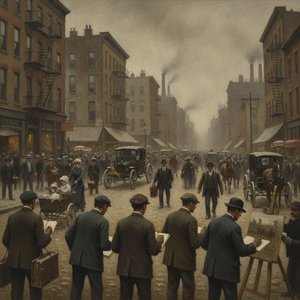
The Ashcan School: Capturing the Raw, Unfiltered Soul of Urban Life through American Realism
Discover the raw beauty of the Ashcan School. Explore how masters like Bellows and Henri captured the gritty, vibrant soul of early 20th-century New York through profound American Realism and evocative urban landscapes.

Capturing the Grey Light: A Journey Through the Soulful Atmosphere of the Hague School
Explore the evocative beauty of the Hague School. Discover how Dutch masters captured the soulful 'grey light' through atmospheric realism and tonalism, paving the way for Impressionism. A deep dive into the misty landscapes and emotional depth of this legendary art movement.

The Raw Truth: A Definitive Guide to the Power and Legacy of Social Realism Art
Explore the profound impact of Social Realism. Discover how masters like Courbet rejected idealism to capture the raw, socio-political truths of the working class through powerful, unvarnished art history and enduring visual critique.

The Unvarnished Truth: A Cultural Journey Through the Soul of American Realism
Explore the profound beauty of American Realism. From the Ashcan School's urban grit to intimate portraits, discover how artists captured the authentic soul of a nation through unvarnished truth and masterful observation.
Explore artworks organized by themes, styles, and characteristics.


