

 Preview
 Send
Send Share
Share
 Details
 Guide
Guide

 Download
 Similars
 X-Ray
X-Ray Diaporama
 Q&A
Q&A Stats
StatsPresentation in the Temple

- 71.0 x 61.0 cm


Sebastien Bourdon's 'Presentation in the Temple' (1644) is a dramatic Baroque masterpiece depicting Mary presenting Jesus at the temple, showcasing Caravaggio’s influence and rich detail.
 Read More
Explore Sébastien Bourdon's 17th-century French art! Master of portraiture & dramatic scenes, known for his Caravaggio influence & works like 'The Crucifixion'. Discover his legacy!
Giclée / Art Print
Museum-quality giclée or canvas print with fast production and flexible finish options. ( Buy Hand Made Painting Switch to Digital Image)




P118B $10

P118H $10

P118W $10

P438Z $10

P508JH $12

P508YH $12

P805H $10

P805Z $10

P919BZ $10

P919G $10

P919XJ $10

P959ZH $10

P968JZ $12

W106C $8

W218G $10

W218JH $8

W218Y $10

W307PJ $10

W316G $10

W316PJ $8

W316Y $10

W398PJ $8

W4111J $10

W500HY $15

W500JH $15

W692G $12

W849H $8

W940BG $15

W953PJ $8




Standard
custom
CM
INCH
Pick from our preset sizes that match the artwork's original proportions.
Loading sizes...

width
height
Type the width and the height you need, to fit your frame or your wall. A print can only be cut, never made bigger than the picture, so a size with a different shape loses a part of the image. We send you a digital mockup to approve before we print anything. The picture shown on this page does not show the real cut — only the mockup does.
Worldwide Delivery () in 2 weeks instead of standard 4/5 weeks. (4 November)

Free Worldwide Express Shipping

High-Quality Linen Canvas

Full Shipping Insurance

Customs Tax Refund Guarantee

True Color Matching Guarantee

100-Day Return Policy (Defects Only)

100% Money-Back Guarantee

Bulk Discount Offer
 Glass option is only available in size under 110 CM

Presentation in the Temple
Giclée / Art Print
Reproduction Size
-


Total Price
$ 70
A Moment of Divine Revelation in Baroque Light
To stand before this depiction of Presentation in the Temple is to be enveloped by the dramatic chiaroscuro that defined the height of the Baroque era. Sébastien Bourdon, a master whose brushstrokes seem imbued with palpable emotion, captures not merely an event, but a profound spiritual moment. The scene unfolds with an immediacy that pulls the viewer directly into the sacred gathering. Observe the central grouping: the tender interaction between mother and child forms the emotional core, while surrounding figures participate in a tableau vivant of devotion. Bourdon’s handling of light is nothing short of miraculous; it does not simply illuminate the scene, it seems to emanate from the divine action itself, carving out figures from deep shadow with masterful precision.
Mastery of Baroque Drama and Composition
Bourdon, trained in the grand traditions that flowed from Rome, understood drama as a compositional element. This painting is a testament to his ability to merge narrative storytelling with technical brilliance. The composition guides the eye effortlessly across the figures—from the solemnity of the old man holding an infant, to the attentive gazes of those nearby. Even the inclusion of seemingly incidental elements, such as the two watchful dogs positioned on either side, adds a layer of grounded realism that anchors the spiritual weight of the subject matter. The placement of the chair near the center suggests both repose and ritual importance, subtly directing our focus toward the unfolding narrative.
Symbolism Woven into Sacred Detail
The symbolism within this work is rich and deeply resonant for the art connoisseur. The act of presentation itself speaks to themes of piety, lineage, and divine acknowledgment. Every gesture—the gentle touch, the upward gaze—is weighted with theological meaning. In Baroque art, animals often serve as silent witnesses or symbolic complements; here, the dogs may represent fidelity or the earthly connection to the sacred rite taking place. To own a reproduction of this piece is to invite into your space not just decoration, but contemplation—a visual meditation on faith and human connection.
Technique and Enduring Emotional Resonance
Executed in 1644, this work showcases Bourdon’s mature technique: a vibrant yet controlled palette used to heighten the emotional stakes. The texture suggested by the paint handling—the softness of drapery against the solidity of flesh—is breathtaking. For those who appreciate historical painting and the dramatic flair of the seventeenth century, this piece offers an unparalleled opportunity. It speaks to a time when art was not merely observed, but experienced; it demands participation from the viewer's heart. Reproducing such a work allows modern interiors to breathe with the grandeur and emotional depth of a Baroque masterwork.
Questions & Answers
How is "Presentation in the Temple" situated historically?
Historically, "Presentation in the Temple" is a Baroque Painting work of the broader Early-Modern era.
What subject and atmosphere does "Presentation in the Temple" by Sébastien Bourdon combine?
"Presentation in the Temple" by Sébastien Bourdon depicts nativity, temple, mary, joseph, childbirth, religious, baroque, figures, in a dramatic mood. Subject and atmosphere together describe the work.
What color saturation does "Presentation in the Temple" by Sébastien Bourdon have?
"Presentation in the Temple" by Sébastien Bourdon is recorded with a clear color presence saturation.
Artist Biography
A Master of Light and Versatility: The Life of Sébastien Bourdon
Sébastien Bourdon (1616–1671) remains one of the most captivating and multifaceted figures of the seventeenth-century French Baroque. Born in Montpellier into a family of Protestant artists, his early life was shaped by the vibrant, yet often turbulent, artistic traditions of southern France. His journey from a young apprentice to a foundational member of the Académie Royale de Peinture et de Sculpture is a testament to a profound, restless intellect and an unparalleled ability to absorb the stylistic currents of Europe. After early training in Paris, Bourdon’s path led him through Bordeaux and Toulouse before reaching the spiritual and artistic heart of the continent: Rome. It was in Italy that his talent truly ignited, as he immersed himself in the works of masters like Caravaggio, Nicolas Poussin, and Claude Lorrain. This period of intense study allowed him to develop a unique visual language—one that could pivot from the gritty, dramatic realism of the Caravaggisti to the luminous, classical elegance of the Venetian school.The Evolution of Style and Technique
What truly distinguishes Bourdon’s oeuvre is its remarkable stylistic fluidity, a quality that sometimes drew both admiration and criticism from his contemporaries. His development was marked by a series of transformative encounters with different European traditions. Following a pivotal visit to Venice, his palette underwent a profound metamorphosis; the starker contrasts of his early training gave way to a richer, more atmospheric use of color inspired by the Venetian masters. This evolution allowed him to masterfully navigate between disparate genres. In his portraiture, he often adopted a Rubensian approach or favored intimate, bust-length compositions that captured the psychological depth and elegance of his subjects, such as the Swedish noblewoman in Countess Ebba Sparre. Conversely, his religious works utilized a dramatic chiaroscuro to evoke spiritual awe, most notably in his monumental masterpiece, The Crucifixion of St. Peter, created for the cathedral of Notre Dame.Legacy and Historical Significance
Beyond his individual canvases, Bourdon played a crucial role in the institutionalization of French art. As a co-founder of the Royal Academy in 1648, he helped establish the standards of excellence that would define French painting for generations. His career was also characterized by an extraordinary breadth of service; his reputation as a premier portraitist led him to the court of Queen Christina of Sweden, where he served as court painter, bringing the sophisticated aesthetics of Paris and Rome to Stockholm. Whether depicting the harrowing tension of Moses and the Brazen Serpent or the serene grandeur of classical landscapes, Bourdon’s work embodies the dual spirit of the Baroque era: the intense emotional drama of the human condition and the balanced, intellectual pursuit of classical beauty. His ability to synthesize the naturalist traditions of France with the monumental styles of Italy ensures his enduring place in the pantheon of European art history.
Sébastien Bourdon
1616 - 1671 , France
Quick Facts
- Full Name: Sébastien Bourdon
- Nationality: French
- Date Of Birth: 1616
- Date Of Death: 1671
- Place Of Birth: Montpellier, France
- Notable Artworks:
- The Crucifixion of St. Peter
- The Deposition
- Artistic Movement Or Style: Baroque
- Artists Who Influenced This Artist:
- Nicolas Poussin
- Claude Lorrain
- Caravaggio
- Artists Or Movements Influenced By This Artist: ['French Baroque Art']
Related Articles

The Visceral Stage: Exploring Dramatic Narratives & Emotional Intensity in Baroque Art
Explore the dramatic world of Baroque art! Discover iconic masters like Caravaggio & Rembrandt, their techniques, and the movement's lasting impact. Expert insights for collectors & enthusiasts at TopImpressionists.

Baroque Classicism: The Grandeur of Order and Drama in 17th-Century Art History
Explore the profound elegance of Baroque Classicism. Discover how 17th-century masters synthesized dramatic emotion with classical order through the lens of the Counter-Reformation and the works of legends like Carlo Maratta and Andrea Sacchi.
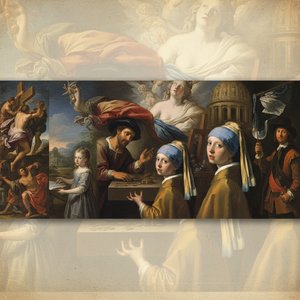
Baroque Masterpieces: 10 Paintings That Defined an Era |
Journey through the drama & grandeur of Baroque art! Explore 10 masterpieces by Caravaggio, Rembrandt, Rubens & more. Discover stunning oil paintings, rich colors & timeless stories. Find museum-quality reproductions at .

The Dramatic Flourish: Exploring the Baroque Movement's Enduring Legacy in Art History
Explore the dramatic world of Baroque art! Discover iconic artists like Caravaggio & Rubens, defining techniques, and its lasting impact on art history. Expert insights for collectors & enthusiasts at TopImpressionists.

Baroque Drama: Bringing Opulence & Emotion into Contemporary Interiors
Explore the opulent world of Baroque interior design! Discover key elements, modern applications & how to bring dramatic elegance into your home with TopImpressionists.com's authentic reproductions.
Explore artworks organized by themes, styles, and characteristics.


