A Serene Encounter with German Romanticism
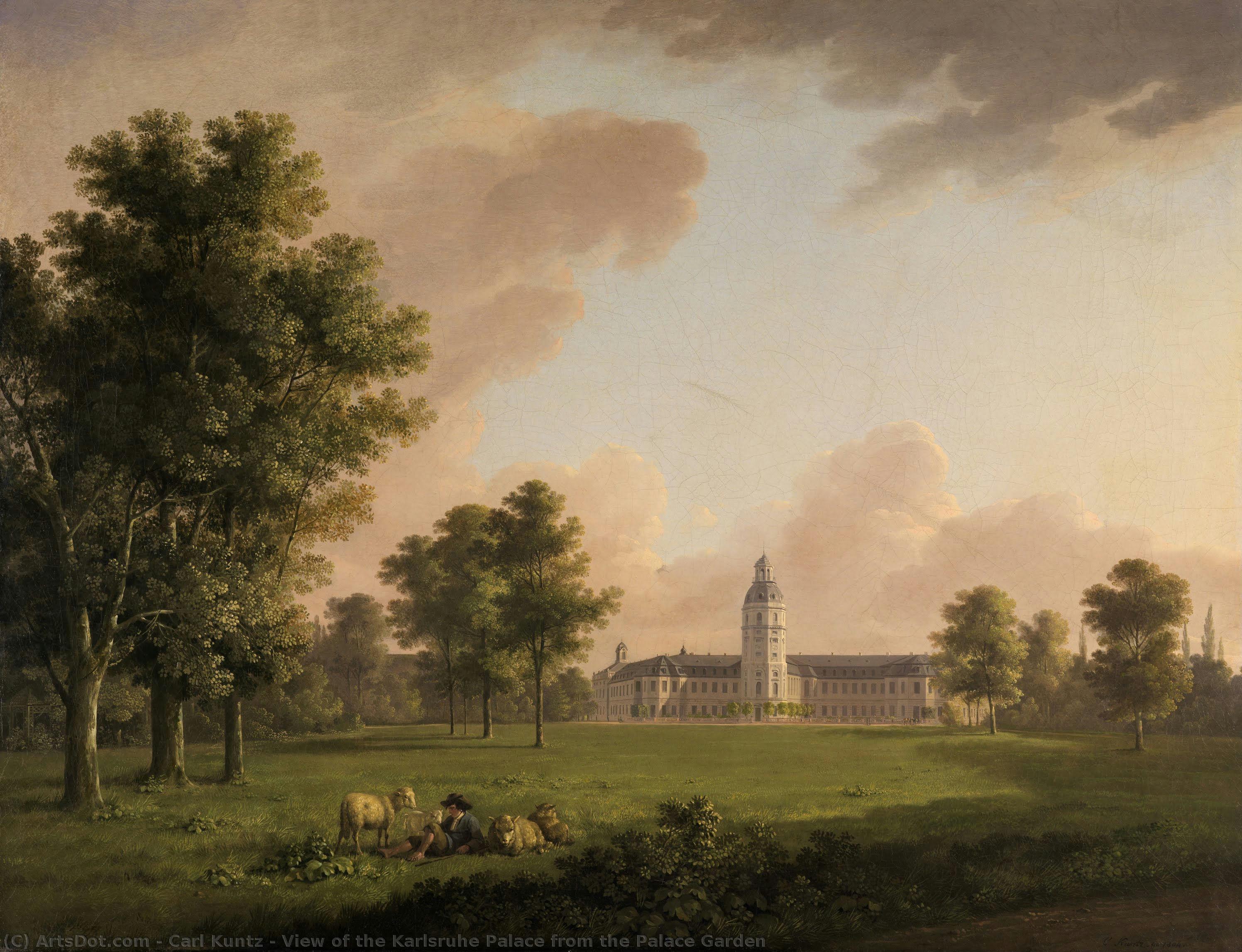
In the quietude of the early nineteenth century, the landscape painter Carl Kuntz captured a moment of profound tranquility that transcends the boundaries of time. His masterpiece, View of the Karlsruhe Palace from the Palace Garden, serves as a window into an era where the grandeur of architecture and the simplicity of nature existed in perfect, rhythmic harmony. Painted in 1804, this work is far more than a mere topographical record; it is an evocative invitation to step into a world of pastoral peace. As the eye wanders across the canvas, one is immediately struck by the seamless integration of the imposing palace structure with the soft, undulating greenery of its surrounding gardens, creating a composition that feels both monumental and intimately approachable.
The painting’s soul resides in its masterful use of light and atmosphere, characteristic of the German landscape tradition. Kuntz employs oil on canvas to build layers of texture that breathe life into the scene. The central clock tower of the Karlsruhe Palace stands as a sentinel of order and civilization, yet it is softened by the lush, verdant foliage that frames the view. The artist’s technique allows for a delicate play of light upon the grass, where the presence of grazing sheep introduces a rhythmic, organic element to the structured garden. These animals, along with the solitary figure tending to them, act as symbols of arcadian innocence, grounding the architectural majesty in the humble, cyclical beauty of rural life.
An Aesthetic Vision for the Discerning Collector
For the art enthusiast or the interior designer, this piece offers a sophisticated anchor for any curated space. The color palette—dominated by earthy greens, soft sky blues, and the warm, weathered tones of the palace masonry—provides a calming influence that is ideal for creating a sanctuary within a home. Because Kuntz focuses on the idyllic and the serene, the artwork possesses a timeless quality that complements both classical European decor and contemporary minimalist settings. It does not merely occupy a wall; it expands the perceived boundaries of a room, offering a sense of depth and an escape into a lush, historical landscape.
Investing in a high-quality reproduction of this work allows one to possess a fragment of German art history. The meticulous attention to detail found in Kuntz’s brushwork—from the individual blades of grass to the distant architectural flourishes—ensures that the emotional impact of the original is preserved. This painting is an exquisite choice for those who seek to surround themselves with art that evokes nostalgia, stability, and a deep appreciation for the quiet wonders of the natural world. It remains a testament to a period when the landscape was viewed not just as scenery, but as a mirror to the peacefulness of the human spirit.


 Preview
 Buy Print
 Send
Send Share
Share
 Details

 Download
 Similars
 X-Ray
X-Ray Diaporama


 Read More






































 Glass option is only available in size under 110 CM



