 Preview
 Send
Send Share
Share
 Details
 Guide
Guide

 Download
 Similars
 X-Ray
X-Ray Diaporama
 Stats
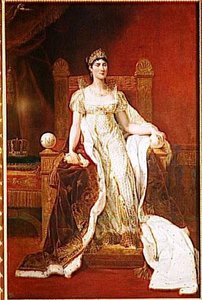
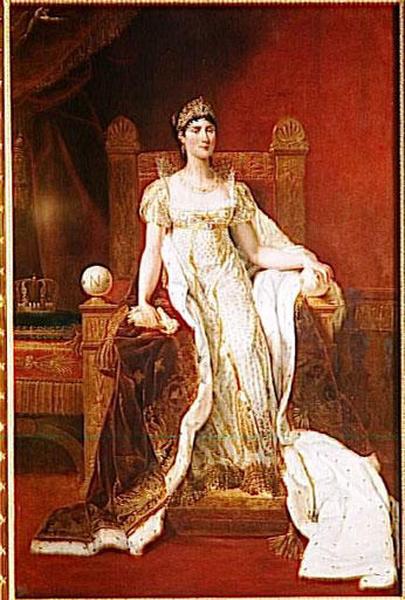
StatsJOSEPHINE DE BEAUHARNAIS, IMPERATRICE DES FRANCAIS (1763 1814)

Admire Josephine de Beauharnais in this stunning Neoclassical portrait! Guillaume Guillon-Lethière’s masterpiece showcases imperial power & elegance. Explore its rich details & historical significance.
Guillaume Guillon-Lethière (1760-1832) was a French Neoclassical painter of Caribbean descent, known for historical and allegorical scenes. Explore his impactful works & legacy at the Louvre.
 Read More
Hand Made Oil Reproduction
Hand-painted oil on canvas in your size and frame, made to order by our artists. ( Switch to Print Switch to Digital Image)




































Standard
custom
CM
INCH
Pick from our preset sizes that match the artwork's original proportions.
Loading sizes...

width
height
You may enter your own dimensions to fit a specific frame or space. If your selected size does not match the original image's proportions, we will either crop the artwork or extend the painting with additional hand-painted elements. A digital mockup will be sent for your approval before production begins.
Please note that the on-screen preview does not reflect the actual cropping or extension. Only the mockup will accurately show the final composition.
While custom sizes are available, we recommend selecting a dimension from the predefined list to preserve the original proportions.
Examples of what can be changed: Replace face with customer photo; Add pet (e.g., replace cat with dog); Include hidden message in background; Change background landscape or elements.
After order, TopImpressionists.com team will email client for instructions and provide a mockup preview
After order, TopImpressionists.com team will email client for instructions and provide a mockup preview
Worldwide Delivery () in 3/4 weeks instead of standard 5 weeks. (23 September). No compromise on quality.

Free Worldwide Express Shipping

High-Quality Linen Canvas

Full Shipping Insurance

Customs Tax Refund Guarantee

True Color Matching Guarantee

100-Day Return Policy (Defects Only)

100% Money-Back Guarantee

Bulk Discount Offer
 Glass option is only available in size under 110 CM

JOSEPHINE DE BEAUHARNAIS, IMPERATRICE DES FRANCAIS (1763 1814)
Reproduction Medium
Reproduction Size
-


Total Price
$ 269
Artist Biography
A Caribbean Voice in the Halls of Neoclassicism: The Life and Art of Guillaume Guillon-Lethière
Guillaume Guillon-Lethière, born in 1760 on the island of Saint-Domingue (modern-day Haiti), occupies a unique and compelling position within the history of French art. His story is one of remarkable resilience, artistic dedication, and a pioneering spirit that challenged the conventions of his time. The son of a French planter and a freed African woman, Lethière’s mixed heritage was often obscured in official accounts, yet it profoundly shaped his perspective and ultimately informed the powerful themes present in his work. He arrived in France at a young age to receive an education befitting his father's aspirations, quickly demonstrating a prodigious talent for drawing. This early aptitude led him to study under Joseph-Marie Vien, a staunch advocate of classical simplicity and directness – a foundation that would become central to Lethière’s artistic style. His initial training was rigorous, focused on copying antique sculptures and mastering the principles of composition and anatomy. However, it was his acceptance into the prestigious Académie Royale de Peinture et de Sculpture in 1784 that truly launched his career, followed by winning the coveted *Prix de Rome* in 1785, granting him a period of study at the French Academy in Rome.From Roman Grandeur to Revolutionary Ideals
Lethière’s time in Rome proved transformative. Immersed in the world of classical antiquity, he absorbed the grandeur and moral weight of ancient art, which resonated deeply with his own burgeoning sense of social consciousness. He meticulously studied the works of Raphael, Michelangelo, and other Renaissance masters, honing his skills in figure painting and narrative composition. However, the political upheaval sweeping France during the Revolution cast a long shadow over his Roman sojourn. News of the escalating conflict and the ideals of liberty, equality, and fraternity ignited a passion within him, influencing his artistic direction upon his return to Paris in 1792. He embraced Neoclassicism not merely as an aesthetic style but as a vehicle for expressing revolutionary principles. His early post-Rome works began to reflect this shift, moving away from purely mythological subjects towards scenes imbued with civic virtue and patriotic fervor. This period saw him aligning himself with the Jacobins and actively participating in the artistic projects designed to celebrate the new Republic.Championing Abolition Through Art
The horrors of slavery, a reality intimately known to Lethière through his birthland, became a central preoccupation of his art. He passionately believed that art could be a powerful tool for social change and dedicated himself to depicting scenes that exposed the brutality of the slave trade and championed the cause of abolition. His most significant work in this vein is arguably *Le Triomphe de la Liberté* (The Triumph of Liberty), completed in 1796, which features prominently Black figures actively participating in the overthrow of slavery. This painting, commissioned for a public building during a period when France was grappling with its colonial past, stands as a bold statement against racial injustice and a testament to Lethière’s commitment to equality. It is important to note that while his depictions were progressive for their time, they weren't without the complexities of representing Black figures through a European artistic lens. He also created *Marcus Aurelius Distributing Relief to the Poor*, which subtly alluded to the plight of enslaved people by portraying an emperor known for his justice and compassion.Later Years and Enduring Legacy
Following the tumultuous years of the Revolution, Lethière continued to produce historical and allegorical paintings, often focusing on themes of heroism, sacrifice, and moral rectitude. He became a professor at the École des Beaux-Arts in 1809, succeeding Jacques-Louis David – a position that allowed him to influence generations of young artists. His teaching emphasized rigorous draftsmanship, classical principles, and the importance of conveying noble sentiments through art. While his later works sometimes lacked the raw emotional power of his earlier revolutionary pieces, they continued to demonstrate his mastery of composition, color, and form. He received numerous commissions from the state and private patrons throughout his career, solidifying his reputation as a leading Neoclassical painter. Guillaume Guillon-Lethière died in Paris in 1832, leaving behind a body of work that is increasingly recognized for its artistic merit and historical significance. His paintings are now held in major museums around the world, including the Louvre, offering a powerful glimpse into the life and vision of an artist who dared to challenge convention and use his art as a voice for social justice.Influences and Historical Significance
- Joseph-Marie Vien: Lethière’s early teacher instilled in him a love for classical simplicity, directness, and moral clarity – principles that would define his artistic style.
- Roman Antiquity: His time at the French Academy in Rome profoundly shaped his aesthetic sensibility, inspiring his use of classical forms, heroic figures, and narrative compositions.
- The French Revolution: The ideals of liberty, equality, and fraternity ignited a passion within Lethière, influencing him to embrace Neoclassicism as a vehicle for expressing revolutionary principles.
- Jacques-Louis David: As his successor at the École des Beaux-Arts, David’s influence can be seen in Lethière's emphasis on rigorous draftsmanship and classical training.

guillon guillaume (lethiere)
1760 - 1832
Quick Facts
- Artistic Movement Or Style: Neoclassicism
- Artists Who Influenced This Artist:
- Jacques-Louis David
- Jean-Baptiste Descamps
- Gabriel François Doyen
- Date Of Birth: 1760
- Date Of Death: 1832
- Full Name: Guillaume Guillon-Lethière
- Nationality: French
- Notable Artworks:
- Woman of Canaan at the Feet of Christ
- La Mort de Virginie
- Place Of Birth: Sainte-Anne, Guadeloupe
Related Articles

Timeless Elegance: The Grace, Order, and Intellectual Majesty of Neoclassical Portraiture
Explore the profound beauty of Neoclassical portraiture. Discover how masters used order, grace, and antiquity to transform portraits into timeless monuments of virtue and character through academic excellence.
Explore artworks organized by themes, styles, and characteristics.