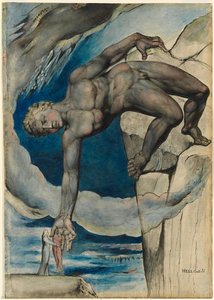
A Moment of Divine Creation: Sir William Blake Richmond’s *Venus and Anchises*
Sir William Blake Richmond's 1890 painting, *Venus and Anchises*, is more than merely a depiction of mythological lovers; it’s a profound meditation on the very essence of creation itself. This monumental canvas, measuring an impressive 2965 x 1486 cm, transports us to a secluded corner of Mount Ida, where Venus, in her role as the embodiment of springtime and burgeoning life, encounters Anchises, the progenitor of Aeneas – a pivotal figure in Roman mythology. Richmond’s interpretation transcends a simple narrative, instead presenting a powerful allegory for the creative force inherent within nature, a theme deeply rooted in his own artistic sensibilities and informed by the visionary works of William Blake himself.
- The Romantic Vision: Richmond was a key figure in the British Pre-Raphaelite movement, renowned for his meticulous attention to detail and his ability to infuse his paintings with a palpable sense of emotion. *Venus and Anchises* exemplifies this approach, showcasing a vibrant landscape teeming with blossoming flora – a deliberate symbol of renewal and fertility.
- Symbolic Resonance: The doves circling the lovers are not merely decorative; they represent the Holy Spirit, further emphasizing the divine origins of creation. The careful positioning of Anchises, almost hidden within the landscape, suggests the difficulty in grasping the fundamental forces that shape existence.
Technical Mastery and Pre-Raphaelite Influence
Richmond’s technical skill is immediately apparent in the painting's rich textures and luminous palette. He employs a characteristic Pre-Raphaelite technique – meticulous brushwork, vibrant color mixing, and an almost photographic realism – to capture the delicate beauty of the figures and their surroundings. The use of light is particularly masterful, creating a soft, diffused glow that enhances the idyllic atmosphere. Note the artist's deliberate focus on capturing the textures of the foliage and the subtle nuances of skin tones, hallmarks of Richmond’s style.
- Color Palette: The dominant hues – greens, pinks, and golds – evoke a sense of springtime abundance and spiritual grace.
- Brushwork: Richmond's signature short, broken brushstrokes contribute to the painting’s shimmering quality and create a dynamic sense of movement within the composition.
Historical Context and Artistic Legacy
*Venus and Anchises* was created during a period of significant artistic innovation in Britain. Richmond’s work reflects the broader cultural currents of the late 19th century, including a renewed interest in classical mythology and a fascination with landscape painting. His association with the ‘Ancients,’ a group influenced by William Blake, further shaped his artistic vision, encouraging him to explore themes of spirituality and symbolism within his art. The painting’s creation coincided with Richmond's established career as a portrait painter, demonstrating his versatility and mastery across various genres.
- Sir William Blake Richmond (1809-1896): A prominent figure in the Pre-Raphaelite Brotherhood, Richmond’s work is characterized by its romanticism, meticulous detail, and exploration of mythological and literary themes.
- Royal Academy Connections: Richmond exhibited extensively at the Royal Academy, gaining recognition for his skill and artistic vision.
A Timeless Masterpiece – A Reproduction Opportunity
This exceptional reproduction offers a unique opportunity to own a piece of art history. Crafted with meticulous attention to detail, mirroring Richmond’s original technique, this hand-painted reproduction captures the essence of *Venus and Anchises* in stunning fidelity. Whether adorning a grand salon or adding a touch of timeless beauty to a smaller space, this artwork is sure to be a captivating focal point, resonating with its profound symbolism and exquisite craftsmanship.



 Preview
 Buy Print
 Send
Send Share
Share
 Details

 Download
 Similars
 X-Ray
X-Ray Diaporama


 Read More






































 Glass option is only available in size under 110 CM