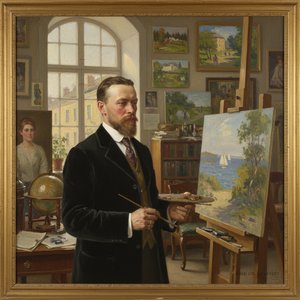
Albert Edelfelt’s “The Foreman’s House at Saari Manor” – A Portrait of Finnish Rural Tranquility
Saari Manor, nestled in Häme Province, Finland, stands as a testament to Victorian grandeur and artistic vision. Albert Edelfelt's captivating depiction of the manor house—specifically its foreman’s residence—captures not merely architectural beauty but also embodies a profound sense of serenity and connection with nature. Painted in 1893, this artwork transcends mere representation; it speaks volumes about Finland’s cultural heritage and Edelfelt’s masterful approach to capturing mood and atmosphere.
Style and Technique: Impressionistic Refinement
Edelfelt's style leans heavily into impressionism, albeit tempered with a distinctly academic grounding. Unlike the radical experimentation of Monet or Renoir, Edelfelt prioritizes tonal harmony and meticulous detail—characteristics inherited from Jean-Léon Gérôme’s influence during his Parisian studies. However, he skillfully blends these elements to achieve an ethereal quality, reminiscent of plein air painting while maintaining compositional control. The brushstrokes are visible yet blended seamlessly, creating a textured surface that subtly reflects the dappled sunlight filtering through the surrounding trees. This technique lends itself beautifully to conveying the warmth and vibrancy of the Finnish countryside.
Historical Context: Finland’s Belle Époque Embrace
The late 19th century witnessed Finland's burgeoning embrace of Western culture—a period known as the Belle Époque. Edelfelt, like many artists of his time, sought inspiration from both classical ideals and contemporary artistic trends. Saari Manor itself represents a significant architectural achievement, commissioned by Baron Viktor Gabriel Edvard Carl Maximilian von Rosenhane to commemorate his marriage. The manor’s design reflects Victorian sensibilities—a desire for grandeur, symmetry, and ornamentation—yet it is harmoniously integrated with the natural landscape. Edelfelt's painting serves as an emblem of this era’s optimism and fascination with rural life.
Symbolism: Domestic Harmony and Pastoral Ideal
Beyond its aesthetic appeal, “The Foreman’s House” carries symbolic weight. The house itself symbolizes domestic stability and familial contentment—values deeply cherished in Finnish culture during the Belle Époque. The surrounding trees and flowers represent fertility, renewal, and the beauty of the natural world—themes prevalent throughout Scandinavian art history. Furthermore, the inclusion of a bench invites contemplation and encourages viewers to immerse themselves in the tranquility of Saari Manor’s gardens. Edelfelt's deliberate choices contribute to an overarching narrative of pastoral harmony – a celebration of simple pleasures and unspoiled landscapes.
Emotional Impact: A Balm for the Soul
Ultimately, Edelfelt’s masterpiece evokes a powerful emotional response. The painting radiates warmth and luminosity—drawing the eye inward with its soft hues and subtle tonal variations. It inspires feelings of peace, contentment, and nostalgia – transporting viewers back to a bygone era of elegance and rural charm. “The Foreman’s House at Saari Manor” remains an enduring symbol of Finnish artistic excellence and continues to captivate audiences worldwide with its ability to capture the essence of beauty and tranquility.
- Artist: Albert Edelfelt
- Year Painted: 1893
- Medium: Oil on Canvas
- Location: Saari Manor, Häme Province, Finland



 Preview
 Buy Print
 Send
Send Share
Share
 Details

 Download
 Similars
 X-Ray
X-Ray Diaporama
 Read More






































 Glass option is only available in size under 110 CM