

Shown: · With its frame:
 Preview
 Send
Send Share
Share
 Details
 Guide
Guide

 Download
 Similars
 X-Ray
X-Ray Diaporama
 Q&A
Q&A Stats
Stats
- 56.0 x 69.0 cm


$ 419
Hand Made Oil Reproduction
Hand-painted oil on canvas in your size and frame, made to order by our artists. ( Switch to Print Switch to Digital Image)
This Artwork Is Under Copyright Protection
The artwork displayed on this page is protected by copyright law, which means we cannot legally create or sell an identical reproduction. This protection is enforced under international agreements such as the Berne Convention and by national laws, including those outlined by the U.S. Copyright Law - Title 17.
As a respectful and legal alternative, we offer custom, hand-painted artworks inspired by the original. Our skilled and professional artists carefully study the original's style, mood, and artistic essence to create a new, unique piece that evokes the same feeling - while remaining an original creation in its own right.
This method fully complies with copyright regulations because it does not involve copying or duplicating the protected artwork. Instead, it is a creative reinterpretation - a new painting that is influenced by the original but not identical to it.
 Read more
Size
·Standard
custom
CM
INCH
Pick from our preset sizes that match the artwork's original proportions.
Loading sizes...

width
height
Type the width and the height you need, to fit your frame or your wall. This is hand-painted, so for a size with a different shape the artist can paint a bit more around the picture, or cut a bit — you choose. We send you a digital mockup to approve before the painting starts. The picture shown on this page does not show the real result — only the mockup does.
Finish
·
White $1

Blurside $1

Extended $1

P118B $10

P118H $10

P118W $10

P438Z $10

P508JH $12

P508YH $12

P805H $10

P805Z $10

P919BZ $10

P919G $10

P919XJ $10

P959ZH $10

P968JZ $12

W106C $8

W218G $10

W218JH $8

W218Y $10

W307PJ $10

W316G $10

W316PJ $8

W316Y $10

W398PJ $8

W4111J $10

W500HY $15

W500JH $15

W692G $12

W849H $8

W940BG $15

W953PJ $8

H24-GOLD $30

H24-SILVER $30

H36-GOLD $45

H36-SILVER $45
Shipped in a protective tube, ready for your own framer.
Above 105 cm the frame is shipped as a kit for a professional framer — read the details.
Extras
optionalWhat do the extras include?
Examples of what can be changed: Replace face with customer photo; Add pet (e.g., replace cat with dog); Include hidden message in background; Change background landscape or elements.
After order, TopImpressionists.com team will email client for instructions and provide a mockup preview
After order, TopImpressionists.com team will email client for instructions and provide a mockup preview
Worldwide Delivery () in 3/4 weeks instead of standard 5 weeks. (1 November). No compromise on quality.
Protective Varnish
Nameplate
Engraved Bronze Plaque Details
This elegant plaque features the artist's name and the title of the artwork, finely engraved for a timeless presentation.
It is made from bronze with a refined, elegant finish. The text is precisely laser-engraved for a sharp and permanent result. Measuring 9x2 cm, the plaque is compact yet easy to read. It's built to be durable and scratch-resistant, offering a professional, museum-quality look. Mounting is simple thanks to the included adhesive backing.
Transparent Acrylic Plaque Details
The plaque includes essential engraved details such as the artist's name, the title of the artwork, the date it was created, the type of media used-like oil on canvas or watercolor-a brief description of the piece, and a QR code that links to the complete artwork information.
It is crafted from clear acrylic, offering a sleek, modern appearance. The text is UV-engraved in black to ensure strong visual contrast. With a size of 10x15 cm, it ensures optimal readability. It comes equipped with two metal hooks for secure wall mounting. The plaque is designed to be weather-resistant, making it suitable for various environments, and it includes interactive features that work seamlessly with smartphone scanning.
Black Acrylic Plaque Details
This elegant plaque includes engraved information such as the artist's name, the title of the artwork, the date it was created, the type of media used (like oil on canvas or watercolor), a short description of the artwork, and a QR code for quick access to more information.
The plaque itself is made from refined black acrylic with a premium finish. The text is laser-engraved in white for high contrast and readability. Its size is 10x15 cm, designed to be easy to read. It comes with two metal hooks for professional mounting. The design is sleek and fits any interior style. It is also weather-resistant and durable, with built-in digital integration for mobile compatibility.
Glass option is only available in size under 110 CM
 Glass option is only available in size under 110 CM
- Free Worldwide Express Shipping
- High-Quality Linen Canvas
- Full Shipping Insurance
- Customs Tax Refund Guarantee
- True Color Matching Guarantee
- 100-Day Return Policy (Defects Only)
- 100% Money-Back Guarantee
- Bulk Discount Offer


Collectible Description
Admire Munnings’ ‘Beach Scene’ (1905), an Impressionistic landscape of seaside leisure. Explore its vibrant colors, loose brushstrokes & tranquil composition – a captivating piece by a British master.
Artist Biography
Sir Alfred James Munnings (1878-1959): Discover England's foremost horse painter! Explore vibrant Impressionistic scenes of hunting, racing & rural life. A passionate defender of traditional art.
About the painting
A Moment of Tranquil Leisure: Unpacking Munnings' "Beach Scene"
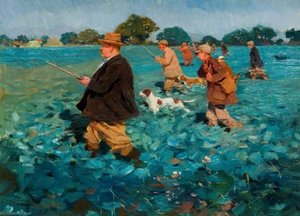
Sir Alfred James Munnings’ 1905 painting, “Beach Scene,” isn’t merely a depiction of a seaside vista; it’s a carefully constructed tableau brimming with the spirit of Edwardian England and a profound appreciation for the natural world. Captured in an Impressionistic style – a hallmark of Munnings' oeuvre – the canvas vibrates with light and atmosphere, eschewing photographic realism in favor of conveying a fleeting, sensory experience. The scene unfolds on a grassy cliff overlooking a shimmering expanse of sea, populated by figures engaged in relaxed leisure activities: families picnicking, boats bobbing gently in the water, and individuals strolling along the shore. Munnings masterfully utilizes loose brushstrokes and a vibrant color palette – predominantly greens and blues that mimic the coastal environment – to create an immediate sense of warmth and tranquility. It’s a scene designed not for grand narrative, but for quiet contemplation and the simple pleasures of summer.
- Technique: Munnings employs oil paints with remarkable skill, layering colors to achieve depth and luminosity. The visible brushstrokes contribute to the painting's textured surface, hinting at the physicality of the landscape and inviting closer inspection.
- Composition: A strong diagonal line created by the cliff edge draws the viewer’s eye into the scene, anchoring the composition and establishing a sense of perspective.
- Color Palette: The dominant greens and blues evoke the refreshing qualities of the sea and shore, while subtle variations in hue suggest shifting light conditions.
The Artist's Vision: Munnings and the Newlyn School
To fully appreciate “Beach Scene,” it’s crucial to understand the context within which Munnings was working – specifically, his association with the Newlyn School of artists. This group, centered in Cornwall during the early 20th century, rejected the rigid conventions of academic art and embraced a more direct, observational approach. They were deeply connected to the rural landscape and sought to capture its essence with honesty and immediacy. Munnings’ work exemplifies this ethos; he wasn't striving for idealized beauty but rather documenting the authentic experience of coastal life. His background as a printer and illustrator honed his eye for detail and composition, while his lifelong passion for horses – another recurring theme in his art – undoubtedly informed his ability to capture movement and energy within the scene.
Born in Mendham Township, Suffolk, in 1878, Munnings’ early life was steeped in agricultural traditions. This connection to the land profoundly shaped his artistic sensibilities, influencing his choice of subject matter and his commitment to portraying rural England with a deep sense of respect and affection. His later years were marked by a shift towards equine art, but “Beach Scene” offers a beautiful glimpse into his earlier explorations of landscape and human interaction with nature.
Symbolism and the Edwardian Spirit
Beyond its immediate visual appeal, "Beach Scene" is rich in symbolic meaning. The tents scattered across the cliff represent temporary shelter and community – a gathering place for families and friends to enjoy the summer months. The boats symbolize exploration and movement, hinting at the adventurous spirit of the era. More subtly, the painting captures a specific moment in time—the leisurely pace of Edwardian England, before the looming shadows of World War I began to darken the horizon. The scene exudes a sense of optimism and contentment, reflecting a society that valued tradition, leisure, and connection with nature.
The inclusion of figures engaged in various activities – picnicking, strolling, boating – suggests a shared experience of joy and camaraderie. Munnings’ ability to capture these subtle nuances of human interaction elevates the painting beyond a simple landscape depiction, transforming it into a poignant portrait of a bygone era.
A Timeless Masterpiece: Reproductions and Beyond
TopImpressionists is proud to offer high-quality reproductions of Sir Alfred James Munnings’ “Beach Scene.” Whether you're an art collector seeking to expand your collection or an interior designer searching for a captivating piece to adorn your walls, this painting offers a timeless appeal. The vibrant colors and evocative brushstrokes will bring a touch of coastal charm to any space, while the historical significance of the work adds depth and intellectual interest. Consider commissioning a hand-painted reproduction – a faithful recreation that captures the essence of Munnings’ original masterpiece, ensuring its beauty endures for generations to come.
Questions & Answers
Where does "Beach Scene" sit within Sir Alfred James Munnings's body of work?
Within Sir Alfred James Munnings's output, "Beach Scene" sits in the Impressionism style, alongside the themes of plein air impressionism, british sporting life", rural leisure & recreation, coastal british society, landscapes of the elite, critique of modernity, munnings' signature style.
What atmosphere would a reproduction of "Beach Scene" by Sir Alfred James Munnings bring to a room?
With its calm mood, "Beach Scene" is suggested for a living room.
What is "Beach Scene" about?
"Beach Scene" by Sir Alfred James Munnings depicts: coastal scene, beach gathering, british landscape, outdoor leisure, impressionist art, seaside painting, cliffside view.
Quick facts and art quiz
About Sir Alfred James Munnings

Sir Alfred James Munnings
1878 - 1959, United Kingdom
Artist Biography
A Life Immersed in Equine Grace
Sir Alfred James Munnings, a name inextricably linked to the vibrant depiction of horses and the romantic allure of rural England, occupies a pivotal position within 20th-century British art. Born in 1878 amidst the rolling landscapes of Suffolk, his life was profoundly shaped by an enduring connection with the equine world – a bond that would define his artistic vision and propel him to prominence. Munnings wasn’t simply recording what he saw; he was preserving a feeling, an atmosphere, a world poised on the brink of irreversible change. He captured a vanishing way of life, a keenly observed portrait of Britain steeped in tradition, hunting, and the rhythms of the countryside.
From Rural Beginnings to Artistic Development
Munnings’s artistic journey began not within the formal confines of an academy, but in the practical world of a Norwich printing house. This apprenticeship honed his skills in design and observation while simultaneously allowing him to pursue studies at the Norwich School of Art. It was a formative period, instilling a discipline that would serve him well as he navigated the challenges of establishing himself as an artist. Early influences included the plein air painters of the Newlyn School in Cornwall, where he embraced their commitment to capturing light and atmosphere directly from nature. This immersion in Impressionistic techniques laid the groundwork for his signature style – loose brushwork, a vibrant palette, and a palpable sense of movement. His early works often depicted rural scenes, particularly those featuring gypsies and horses roaming the Suffolk countryside, imbued with a romantic sensibility that showcased his growing mastery of color and light. These paintings weren’t merely representations; they were expressions of a deep affection for the land and its inhabitants.
War, Recognition, and a Champion of Tradition
The First World War profoundly shaped both Munnings's artistic perspective and his public profile. Though initially deemed unfit for combat, he served as an official war artist with the Canadian Cavalry Brigade, documenting the vital role horses played in the conflict. This experience brought him face-to-face with the harsh realities of war – the suffering, the loss, and the enduring bond between humans and animals. His paintings from this period are not glorifications of battle, but poignant reflections on sacrifice and resilience, capturing a somber beauty amidst devastation. The post-war years witnessed a surge in Munnings’s popularity and financial security. Prestigious commissions poured in, allowing him to acquire Castle House in Dedham, Essex – a property that would become both his home and studio for the remainder of his life. He became a sought-after portraitist, capturing the likenesses of prominent figures from the aristocracy and racing world. His ability to convey not only physical resemblance but also character and spirit cemented his reputation as one of Britain’s leading artists. However, Munnings was also a staunch defender of traditional artistic values.
A Controversial Voice and Enduring Legacy
Munnings's artistic philosophy was deeply rooted in tradition, and he became a vocal critic of the burgeoning modernist movements that were challenging conventional notions of art. His famous – and often controversial – 1949 BBC radio broadcast saw him launch a scathing attack on Cubism and Surrealism, delivered with characteristic candor (and reportedly fueled by alcohol). While his remarks sparked outrage among proponents of modern art, they also resonated with those who valued representational painting and the enduring power of artistic skill. He wasn’t simply resisting change for its own sake; he believed in the importance of preserving artistic standards and celebrating beauty in its traditional forms. This conviction culminated in his election as President of the Royal Academy in 1944, a position he held until 1949, solidifying his status within the British art establishment. He was knighted Bachelor in 1944 and appointed a Knight Commander of the Royal Victorian Order in 1947, further acknowledging his contributions to the nation’s cultural life. Sir Alfred James Munnings left behind a vast and compelling body of work that continues to captivate audiences today. His paintings offer a window into a bygone era – a world of horses, hunting, and rural landscapes that has largely disappeared. The Munnings Art Museum, established by his wife Violet at Castle House, serves as a testament to his enduring legacy, preserving his art and providing a space for future generations to appreciate his unique vision. Beyond the technical brilliance of his paintings, it is Munnings’s ability to evoke emotion that truly sets him apart. He captured not just the physical beauty of horses, but also their spirit, their power, and their connection to the human heart. His work remains a powerful reminder of the enduring appeal of representational painting and the importance of preserving artistic traditions in an ever-changing world.
Major Achievements
- Royal Academy President: Elected President of the Royal Academy in 1944, serving until 1949.
- Knighthood: Knighted Bachelor in 1944 and appointed a Knight Commander of the Royal Victorian Order in 1947.
- War Artist Commissions: Recognized for his work documenting the Canadian Cavalry during WWI.
- Sculptural Work: Created sculptures, including an equestrian statue of Edward Horner.
His legacy endures not only through his masterful paintings but also as a passionate advocate for artistic tradition in a rapidly modernizing world.
Quick facts about Sir Alfred James Munnings
- Full Name: Sir Alfred James Munnings
- Nationality: British
- Date Of Birth: 1878
- Date Of Death: 1959
- Place Of Birth: Mendham Township, United Kingdom
- Notable Artworks:
- The Fancy Dress Ball
- A Piper
- Sky Study -
- Artistic Movement Or Style: Impressionism
- Artists Who Influenced This Artist: ['Newlyn School painters']
Related Artworks


Explore artworks organized by themes, styles, and characteristics.







Sir Alfred James Munnings
Beach Scene
() ·
With its frame: · Hand-painted in oil on linen
Total