Preview
 Send
Send Share
Share
 Details
 Guide
Guide

 Download
 Similars
 X-Ray
X-Ray Diaporama
 Q&A
Q&A Stats
StatsFlorence
 Acrylic On Canvas
- WallArt
- Cubist Modernism
 1924
1924 66.0 x 91.0 cm
 Royal Scottish Academy of Art - Architecture
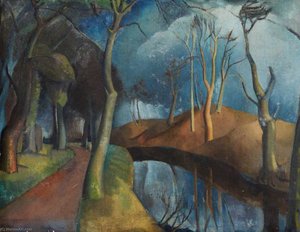
Sir William George Gillies’ "Florence" captures the vibrant Italian city with its iconic bridge and bustling scene. A stunning example of his artistic style, this painting showcases a beautiful representation of Florence's charm.
 Read More
Explore W.G. Gillies' Scottish landscapes & still lifes. Discover his Cubist influences, 1922 Group ties, Edinburgh College of Art legacy & profound impact on 20th-century art.
The artwork displayed on this page is protected by copyright law, which means we cannot legally create or sell an identical reproduction. This protection is enforced under international agreements such as the Berne Convention and by national laws, including those outlined by the U.S. Copyright Law - Title 17.
This method fully complies with copyright regulations because it does not involve copying or duplicating the protected artwork. Instead, it is a creative reinterpretation - a new painting that is influenced by the original but not identical to it.
Giclée / Art Print
Museum-quality giclée or canvas print with fast production and flexible finish options. ( Buy Hand Made Painting Switch to Digital Image)




P118B $10

P118H $10

P118W $10

P438Z $10

P508JH $12

P508YH $12

P805H $10

P805Z $10

P919BZ $10

P919G $10

P919XJ $10

P959ZH $10

P968JZ $12

W106C $8

W218G $10

W218JH $8

W218Y $10

W307PJ $10

W316G $10

W316PJ $8

W316Y $10

W398PJ $8

W4111J $10

W500HY $15

W500JH $15

W692G $12

W849H $8

W940BG $15

W953PJ $8




Standard
custom
CM
INCH
Pick from our preset sizes that match the artwork's original proportions.
Loading sizes...

width
height
Type the width and the height you need, to fit your frame or your wall. A print can only be cut, never made bigger than the picture, so a size with a different shape loses a part of the image. We send you a digital mockup to approve before we print anything. The picture shown on this page does not show the real cut — only the mockup does.
Worldwide Delivery () in 2 weeks instead of standard 4/5 weeks. (29 October)

Free Worldwide Express Shipping

High-Quality Linen Canvas

Full Shipping Insurance

Customs Tax Refund Guarantee

True Color Matching Guarantee

100-Day Return Policy (Defects Only)

100% Money-Back Guarantee

Bulk Discount Offer
 Glass option is only available in size under 110 CM

Florence
Giclée / Art Print
Reproduction Size
-


Total Price
$ 70
The Heart of Tuscany Captured: An Exploration of Gillies’ “Florence”
William George Gillies' "Florence," painted in 1924, isn’t merely a depiction of an Italian city; it’s a vibrant distillation of its spirit – a testament to the enduring beauty and bustling life of one of Europe’s most historically significant urban centers. This captivating canvas transports us directly to the heart of Tuscany, offering a glimpse into a world brimming with energy, commerce, and artistic resonance. The painting immediately draws the eye towards the graceful bridge that dominates the composition, its arched form acting as a visual anchor amidst the dynamic scene below. This isn’t a photographic representation; rather, Gillies employs a masterful blend of observation and imagination to create an atmosphere thick with movement and light.
Gillies, a key figure in the 1922 Group – a collective dedicated to promoting modern art in Scotland – was deeply influenced by both the Impressionists and the burgeoning Cubist movement. His early travels to Paris and Italy exposed him to these revolutionary styles, which he skillfully integrated into his own distinctive approach. “Florence” showcases this evolution; while retaining elements of traditional landscape painting, it’s imbued with a sense of fractured perspective and flattened planes reminiscent of Cubism, particularly in the treatment of the buildings lining the riverbank. The careful layering of color and brushstrokes creates an illusion of depth, inviting the viewer to lose themselves within the bustling cityscape.
A Symphony of Color and Light
The painting’s palette is remarkably rich and evocative. Gillies masterfully utilizes a range of warm ochres, deep blues, and vibrant reds to capture the essence of Florentine light. The sun, though not explicitly depicted, casts a golden glow across the scene, illuminating the reflections shimmering on the river's surface. Notice how he employs broken color – small dabs and strokes of contrasting hues – to suggest texture and form, particularly in the details of the buildings and boats. This technique adds a dynamic quality to the composition, preventing it from feeling static or overly formal.
- Dominant Colors: Warm ochres, deep blues, vibrant reds, and touches of green.
- Light & Shadow: Gillies expertly utilizes light and shadow to create a sense of depth and atmosphere.
- Brushwork: Loose, expressive brushstrokes contribute to the painting’s dynamic feel.
Symbolism and Historical Context
Beyond its aesthetic qualities, “Florence” is steeped in historical significance. The city itself represents a pivotal moment in Western civilization – the birthplace of the Renaissance, a period marked by an unprecedented flourishing of art, science, and culture. The bridge, a recurring motif in Gillies’ work, symbolizes connection and transition, linking the past with the present. The numerous boats navigating the river evoke the importance of trade and commerce to Florence's prosperity during this era. Furthermore, the painting subtly references the city’s architectural grandeur – the imposing buildings lining the riverbank are reminiscent of the palaces and churches that define Florence’s iconic skyline.
Painted in 1924, “Florence” reflects a period of renewed interest in classical art and culture following World War I. Gillies' work embodies a spirit of optimism and renewal, capturing the vibrant energy of a city poised to embrace the future while honoring its rich heritage. The painting’s enduring appeal lies not only in its technical brilliance but also in its ability to transport us back in time and evoke the timeless beauty of Florence.
Bringing “Florence” Home: A Reproduction for Your Space
TopImpressionists offers meticulously crafted, hand-painted reproductions of William George Gillies’ "Florence," ensuring that you can experience the full impact of this remarkable artwork within your own home. Our skilled artisans use traditional techniques and high-quality materials to faithfully recreate Gillies' unique style and color palette. Whether you are an art collector, a design enthusiast, or simply someone seeking to add a touch of timeless elegance to your space, our reproduction of “Florence” is the perfect choice. It’s more than just a print; it’s a window into the heart of Tuscany, capturing the spirit and beauty of one of the world's most beloved cities.
Questions & Answers
What national origin stands behind the Cubist Modernism of "Florence"?
"Florence" connects the Cubist Modernism movement with United Kingdom through its creator's birthplace.
What is "Florence" about, and what atmosphere does it have?
"Florence" by Sir William George Gillies depicts florence, italy, cityscape, bridge, river, buildings, boats, people, in a calm mood. Subject and atmosphere together describe the work.
Is there a factsheet about "Florence" by Sir William George Gillies for students?
A Guide page is available for "Florence" by Sir William George Gillies: a printable factsheet about the artwork, designed for students and classroom use.
Related Artworks


Artist Biography
Sir William George Gillies: A Life in Scottish Art
Early Life and Education
- Born: Haddington, East Lothian, United Kingdom, 1898.
- Gillies initially enrolled at the Edinburgh College of Art but his studies were interrupted by service in World War I with the Royal Engineers.
- Following the war, he returned to complete his education at the Edinburgh College of Art, graduating and subsequently becoming a dedicated teacher there for over 40 years.
Artistic Development and Influences
- Gillies’ artistic journey began with an exploration of Cubism after studying under André Lhote in Paris (1923) and traveling to Italy (1924).
- Early works, like “Two Pots, Saucer and Fruit” (1933), demonstrate this influence, showing a Cézanne-inspired arrangement with Braque and Picasso’s understated color palettes.
- A pivotal moment came in 1934 when he encountered the work of Paul Klee, inspiring him to adopt a more imaginative use of colour and childlike qualities in his compositions.
- He gradually moved away from strict Cubism, developing a distinctive style rooted in Scottish landscape and still life traditions.
The 1922 Group and Collaborative Spirit
- In 1922, Gillies co-founded the “1922 Group” alongside fellow artists including William Crozier, William Geissler, and William MacTaggart.
- This exhibition society provided a platform for emerging Scottish artists to showcase their work at the New Gallery in Edinburgh for a decade.
- The group fostered a sense of community and innovation within the Scottish art scene.
Themes and Subject Matter
- Landscapes: Gillies is renowned for his depictions of the Lothian, Fife, and Border regions of Scotland. He captured the essence of these landscapes with a sensitive eye.
- Still Lifes: Still life compositions were another significant focus, often featuring ceramics created by his younger sister, Emma Smith Gillies, whose premature death in 1936 deeply affected him.
- Portraiture: While he experimented with portraiture early in his career, landscapes and still lifes became his primary subjects.
Major Achievements and Recognition
- Gillies served as Principal of the Edinburgh College of Art from 1959 until his retirement in 1966.
- His prolific output and dedication to teaching had a profound influence on generations of Scottish painters.
- He was elected a Royal Academician (RA), signifying significant recognition within the art world.
Historical Significance and Legacy
- Sir William George Gillies is considered one of Scotland’s most important 20th-century painters.
- His work bridges the gap between early modernism and a distinctly Scottish artistic identity.
- Legacy: His influence extends beyond his paintings, shaping the direction of Scottish art through his teaching and mentorship.
- He died in 1973, leaving behind a rich body of work that continues to be celebrated for its beauty, sensitivity, and enduring relevance.

Sir William George Gillies
1898 - 1973 , United Kingdom
Quick Facts
- Name: Sir William George Gillies
- Movement:
- Cubism
- Scottish Colourists
- Birth Date: 1898
- Death Date: 1973
- Birth Place: Haddington, United Kingdom
- Nationality: Scottish
- Date Of Birth: 1898
- Date Of Death: 1973
- Influenced By:
- André Lhote
- Cézanne
- Braque
- Picasso
- Paul Klee
- Notable Works:
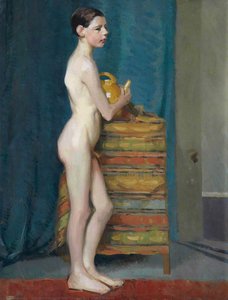
- Young Boy with a Teapot
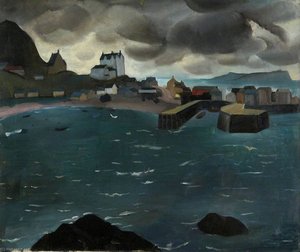
- Mediterranean Landscape with Overcast Sky
- Still Life – Yellow Jug and Striped Cloth
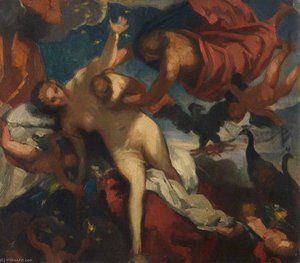
- The Origin of the Milky Way (after Jacopo Tintoretto)
- Place Of Birth: Haddington, United Kingdom
Related Articles

John Constable's Masterpieces: Explore 25 Iconic Landscapes for Your Home
Journey through John Constable's 25 most celebrated landscapes. Explore Romanticism, Dedham Vale & his masterful use of light in iconic paintings like 'Hay Wain'. Find museum-quality art reproductions and elevate your home decor on TopImpressionists.com.

Hudson River School: 10 Masterpieces That Capture America's Wild Beauty | TopImpressionists
Journey through America's breathtaking landscapes with our guide to the Top 10 Hudson River School masterpieces. Explore Thomas Cole, Frederic Church & more! Find museum-quality art reproductions and elevate your home decor at TopImpressionists.com.

Evocations of Place: A Historical Journey Through Landscape Art
Explore the rich history of landscape art with TopImpressionists. Discover renowned artists, movements like Impressionism & tonalism, and expert guidance for collecting timeless pieces. Find your perfect serene escape today!

Evocations of Place: A Historical Journey Through Landscape Art
Explore the rich history of landscape art with TopImpressionists. Discover renowned artists, movements like Impressionism & Romanticism, and expert guidance for collecting timeless pieces. Find your perfect serene escape today!

Romantic Landscapes: 10 Masterpieces for Your Home | TopImpressionists
Journey through 10 Romantic landscape masterpieces by Friedrich, Turner & Cole. Explore emotional art, sublime nature scenes & iconic 19th-century paintings. Find museum-quality reproductions for your home at TopImpressionists.com – discover the full collection online!
Explore artworks organized by themes, styles, and characteristics.