Preview
 Send
Send Share
Share
 Details
 Guide
Guide

 Download
 Similars
 X-Ray
X-Ray Diaporama
 Stats
StatsIndian Pinks
 Oil On Canvas
- WallArt
- Impressionism
 1928
1928- Modern
 33.0 x 40.0 cm
Admire Sir William Nicholson’s ‘Indian Pinks’ – an exquisite 1928 Impressionistic still life featuring vibrant florals & impasto texture. A timeless piece of British art.
 Read More
Discover Sir William Nicholson (1872-1949), a British painter celebrated for striking portraits, elegant still lifes & innovative woodcuts. Explore his Beggarstaff partnership and lasting influence on early 20th-century art.
Giclée / Art Print
Museum-quality giclée or canvas print with fast production and flexible finish options. ( Buy Hand Made Painting Switch to Digital Image)




P118B $10

P118H $10

P118W $10

P438Z $10

P508JH $12

P508YH $12

P805H $10

P805Z $10

P919BZ $10

P919G $10

P919XJ $10

P959ZH $10

P968JZ $12

W106C $8

W218G $10

W218JH $8

W218Y $10

W307PJ $10

W316G $10

W316PJ $8

W316Y $10

W398PJ $8

W4111J $10

W500HY $15

W500JH $15

W692G $12

W849H $8

W940BG $15

W953PJ $8




Standard
custom
CM
INCH
Pick from our preset sizes that match the artwork's original proportions.
Loading sizes...

width
height
Type the width and the height you need, to fit your frame or your wall. A print can only be cut, never made bigger than the picture, so a size with a different shape loses a part of the image. We send you a digital mockup to approve before we print anything. The picture shown on this page does not show the real cut — only the mockup does.
Worldwide Delivery () in 2 weeks instead of standard 4/5 weeks. (22 October)

Free Worldwide Express Shipping

High-Quality Linen Canvas

Full Shipping Insurance

Customs Tax Refund Guarantee

True Color Matching Guarantee

100-Day Return Policy (Defects Only)

100% Money-Back Guarantee

Bulk Discount Offer
 Glass option is only available in size under 110 CM

Indian Pinks
Giclée / Art Print
Reproduction Size
-


Total Price
$ 70
A Symphony of Petals and Light
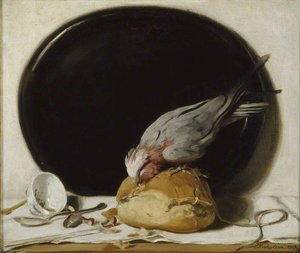
In the quiet intimacy of Sir William Nicholson’s 1928 masterpiece, Indian Pinks, the viewer is invited into a serene domestic sanctuary where time seems to slow. This exquisite still life captures more than just a floral arrangement; it captures a fleeting moment of grace. A vase overflows with the delicate textures of chrysanthemums and asters, their soft hues dancing against the rustic charm of a wooden table. The composition is masterfully balanced, drawing the eye through a rhythmic dance of organic forms—the rounded petals of the flowers contrasted by the humble, grounded presence of a slice of bread and a simple spoon. It is a scene that celebrates the profound beauty found in the commonplace, elevating everyday objects into a poetic meditation on existence.
The painting serves as a breathtaking example of Impressionistic brilliance, where the artist’s hand is visible in every expressive stroke. Nicholson employs a rich, tactile impasto technique, applying oil paints in thick, confident layers that lend the canvas a sculptural quality. This physical depth allows light to play across the surface of the painting, creating subtle shadows and highlights that breathe life into the flora. The palette is a sophisticated blend of muted earth tones and soft floral pigments, evoking a sense of natural warmth. Through this heavy texture, the artist achieves a sensory experience that transcends the visual, making the viewer almost feel the velvety weight of the petals and the rough grain of the wooden tabletop.
The Legacy of British Impressionism
To understand Indian Pinks is to understand the enduring legacy of Sir William Nicholson, a titan of early 20th-century British art. Born in Newark and trained under the watchful eyes of masters like William Cubley, Nicholson developed a style that bridged the gap between classical discipline and modern experimentation. This particular work, dating from 1928, reflects a period of his career where he had mastered the ability to infuse stillness with movement. His background, rooted in both industrial pragmatism and aesthetic tradition, allowed him to approach subject matter with a unique clarity—finding the extraordinary within the ordinary.
For the discerning collector or interior designer, this piece offers an unparalleled opportunity to introduce a sense of timeless elegance into a space. The artwork’s flattened perspective and focus on color saturation make it a versatile centerpiece, capable of anchoring a room with its quiet strength. Whether placed in a sun-drenched morning room or a sophisticated study, the painting radiates an emotional warmth that suggests themes of life, joy, and remembrance. Owning a high-quality reproduction of this work is not merely about decorating a wall; it is about bringing a piece of art history into the home—a tactile, luminous fragment of a bygone era that continues to inspire awe and tranquility.
Questions & Answers
What technique was used for "Indian Pinks", and when was it created?
"Indian Pinks" was made in 1928, in oil on canvas.
Where can I download "Indian Pinks" by Sir William Nicholson?
"Indian Pinks" by Sir William Nicholson can be downloaded from the artwork's Download page, as a high-resolution digital image download.
What feeling do the colors of "Indian Pinks" by Sir William Nicholson create?
The earthy palette of "Indian Pinks" by Sir William Nicholson goes together with its calm emotional tone. Color is one of the ways a work conveys feeling.
Related Artworks


Artist Biography
Early Life and Artistic Beginnings
Sir William Newzam Prior Nicholson, born in Newark-on-Trent in 1872, emerged from a background that blended industrial pragmatism with artistic sensibility. His father, a successful engineer and Conservative MP, instilled a sense of discipline, while his mother’s lineage connected him to the aesthetic traditions of Oxfordshire. From a young age, Nicholson displayed an aptitude for art, nurtured by lessons from William Cubley, a local painter who himself traced his artistic roots back to Sir Joshua Reynolds. This early exposure laid the foundation for a career that would span diverse mediums and styles. A brief stint at Hubert von Herkomer’s art school proved pivotal, not only for honing his skills but also for introducing him to Mabel Pryde, who would become his wife and an essential collaborator in his burgeoning artistic journey. It was through Mabel that he met her brother, James Pryde, a partnership that would soon revolutionize the world of graphic design.The Beggarstaffs and a Revolution in Poster Art
The collaboration between William Nicholson and James Pryde, known as “J. & W. Beggarstaff,” marked a turning point in British visual culture. Rejecting the prevailing ornate aesthetic of Victorian posters, they embraced a bold simplicity characterized by striking silhouettes, flat planes of color, and a deliberate rejection of traditional perspective. Their designs weren’t merely advertisements; they were statements—powerful, graphic compositions that captured the public's imagination. Posters for productions like Don Quixote and publications such as Harper’s Magazine became instantly recognizable, influencing a generation of artists and designers. This period wasn’t simply about commercial art; it was about redefining visual communication itself. The Beggarstaffs’ work challenged conventions, paving the way for modern graphic design and establishing Nicholson's reputation as an innovator. Their impact resonated far beyond the realm of posters, influencing illustration and even painting with its emphasis on strong form and deliberate composition.From Woodcuts to Portraits: A Developing Style
Following the dissolution of the Beggarstaff partnership, Nicholson embarked on a period of stylistic exploration. He turned his attention to woodcut and wood-engraving, techniques that allowed him to further refine his mastery of line and form. Encouraged by the influential James McNeill Whistler, he embraced these methods, producing intricate and evocative prints that showcased his growing artistic maturity. These works demonstrated a remarkable ability to capture essence with minimal detail, a quality that would become a hallmark of his style. Simultaneously, Nicholson began to establish himself as a portrait painter, receiving commissions from prominent figures of the era. His portraits weren’t merely likenesses; they were insightful studies of character, revealing the inner lives of his subjects through subtle nuances of expression and pose. Works like *Lady in Furs, Mme. P.* exemplify this skill, capturing not just physical appearance but also a sense of personality and social standing.Still Life, Landscape, and Lasting Legacy
In the later stages of his career, Nicholson increasingly focused on still life and landscape painting. His still lifes, such as *The Lowestoft Bowl*, are celebrated for their exquisite attention to detail, harmonious color palettes, and a quiet sense of intimacy. He imbued everyday objects with a poetic quality, elevating them beyond mere representation to become symbols of beauty and contemplation. His landscapes, often depicting scenes from his travels in Spain and Italy, reveal a sensitivity to light and atmosphere, capturing the essence of place with remarkable skill. Throughout his life, Nicholson remained a versatile artist, constantly experimenting with new techniques and approaches. He authored children’s books, designed for the theatre, and continued to produce prints alongside his paintings. Sir William Nicholson's influence extends beyond his own prolific output; he inspired generations of artists with his commitment to craftsmanship, his innovative spirit, and his ability to find beauty in the ordinary. His work remains a testament to the power of art to illuminate the human experience and transform our perception of the world around us. He died in 1949, leaving behind a rich artistic legacy that continues to captivate and inspire today.
Sir William Nicholson
1872 - 1949 , United Kingdom
Quick Facts
- Full Name: Sir William Newzam Prior Nicholson
- Nationality: British
- Date Of Birth: 1872
- Date Of Death: 1949
- Place Of Birth: Newark, United Kingdom
- Notable Artworks:
- Lady in Furs
- The Lowestoft Bowl
- Plaza de toros, Malaga
- Artistic Movement Or Style: Still life, portraiture
- Artists Who Influenced This Artist:
- James Pryde
- Whistler
Related Articles

The Magic of Lithography: Capturing Light and Texture in Every Impressionist Print
Discover the enchanting world of lithography through an Impressionist lens. Explore how this timeless technique captures the luminous light and delicate textures of masters like Monet and Renoir, offering a profound way to bring art history into your home with elegance and soul.

From Fleeting Moments to Eternal Masterpieces: Transform Your Memories into Bespoke Impressionist Oil Paintings
Elevate your cherished memories with TopImpressionists.com. We transform your photos into exquisite, hand-painted Impressionist oil masterpieces. Experience the timeless texture of real brushstrokes and professional artistry to create a lasting legacy for your home.

The Timeless Beauty of Oil on Panel: Capturing Light and Texture through the Impressionist Lens
Discover the exquisite depth of oil on panel. Explore how Impressionist masters captured light and texture through tactile brushwork, and learn how to bring these museum-quality, hand-painted masterpieces into your home with expert curation.

The Soul of Impressionism: Why Oil on Canvas Captures Eternal Light and Timeless Emotion
Discover the enchanting alchemy of Impressionism. Explore how the mastery of oil on canvas, through glazing and impasto, captures eternal light and emotion. Perfect for lovers of Monet and Van Gogh seeking the profound depth of hand-painted fine art.
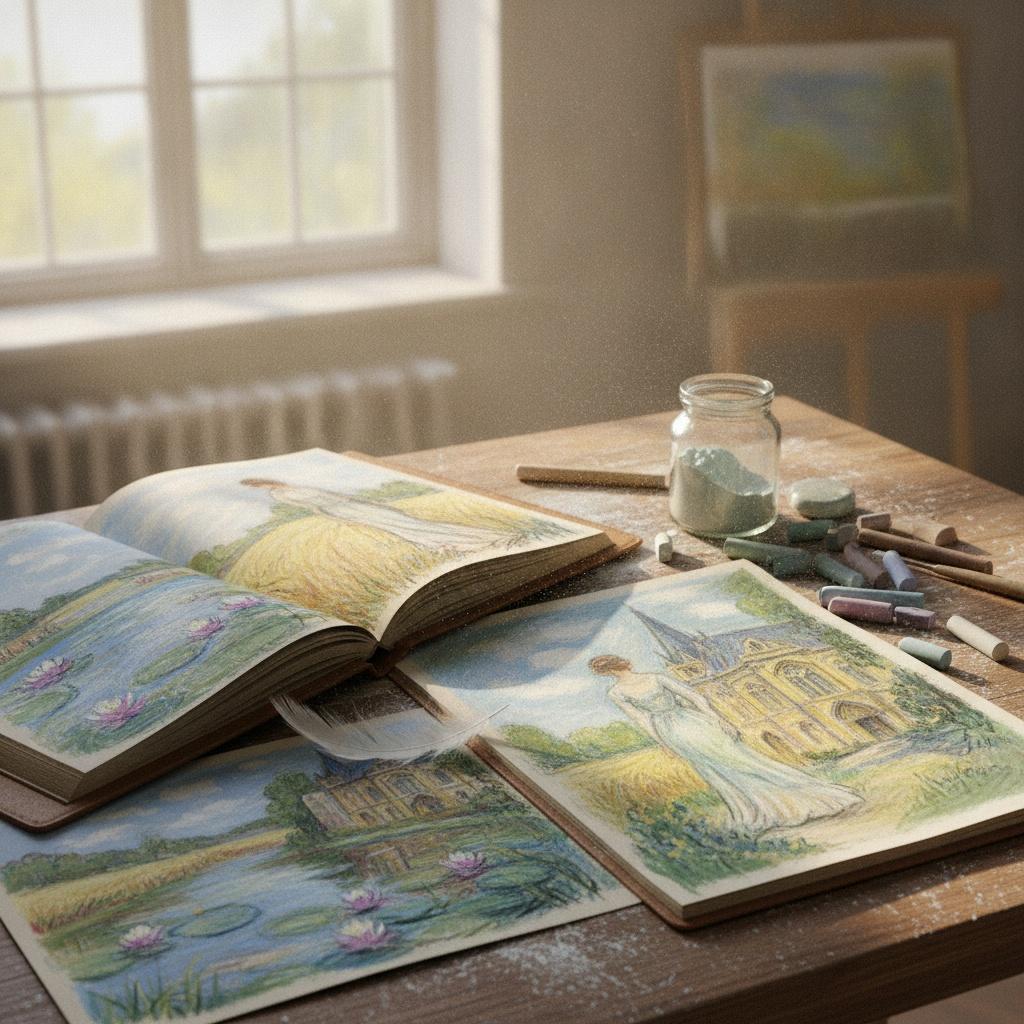
The Soft Magic of Chalk: Capturing Light, Texture, and the Ethereal Soul of Impressionist Masterpieces
Discover the ethereal beauty of pastel and chalk art. Explore how Impressionist masters like Van Gogh and Degas captured light and texture to create timeless, soulful masterpieces for the discerning collector.
Explore artworks organized by themes, styles, and characteristics.