

 Preview
 Send
Send Share
Share
 Details
 Guide
Guide

 Download
 Similars
 X-Ray
X-Ray Diaporama
 Q&A
Q&A Stats
StatsRichmond Park


Serene autumn forest scene by Spencer Gore, a key figure of the Camden Town Group, captures tranquility with detailed trees and lush foliage from 1914 – discover this beautiful painting.
 Read More
Discover Spencer Gore (1878-1914), a British Post-Impressionist painter known for vibrant landscapes, music hall scenes & interiors. First president of the Camden Town Group, influencing early 20th-century British art.
Get a print-ready file that goes far beyond the web preview. Every digital image we sell comes from a high-resolution master in our stock database — usually 5,000 to 15,000 pixels wide — so you can print large, crop tightly, or reproduce fine detail with confidence.
No file leaves our studio untouched. A digital expert checks the colors against the original painting and corrects them if needed, then improves clarity and detail with professional retouching tools — always staying faithful to the artist's brushwork and style. The result is an image that looks like the painting, not like a filtered scan.
You approve before you're done: our expert sends the image by e-mail within 72 hours for your review. Not satisfied? Ask for improvements or corrections, or request a refund if the quality falls short.
This is the quality relied on by publishers, design studios, galleries and print shops.
Digital Image
Download a high-resolution file for personal display, printing, and creative projects. ( Switch to Print Buy Hand Made Painting)
Included in Every Digital Image Order
Expert Digital Delivery, Guaranteed
When you choose TopImpressionists.com, you're not just getting an image - you're receiving a professionally enhanced digital artwork, crafted with precision and backed by a satisfaction guarantee. Here's everything that comes with your order, automatically:

Fast Email Delivery
Your high-resolution digital image file will be emailed to you within 72 hours of ordering - ready for immediate use.

AI-Enhanced Digital File
Your artwork is professionally optimized using advanced AI tools and manual editing, ensuring maximum detail, clarity, and color accuracy.

Free Lifetime Re-Delivery
Accidentally deleted or lost your file? No worries - we'll resend it to you anytime, free of charge.

No Import Fees - Ever
Enjoy your artwork instantly with zero customs, duties, or delivery fees - digital downloads are always tax-free.

Color Accuracy Guarantee
We ensure your digital image reflects the original colors as closely as possible using professional tools and color management.

100-Day Satisfaction Guarantee
If you're not satisfied with your digital image, we'll revise it or refund 100% within 100 days - no questions asked.

100% Money-Back Guarantee
Not satisfied? Get a full refund within 100 days of receiving your digital file - no questions asked.

Bulk Order Discounts
Buy 3 images, save 10% - Buy 5, save 15% - Buy 10+, save 20%. Great for creative projects, galleries, and agencies.
Spencer Gore's 'Richmond Park': A Study in Autumnal Tranquility
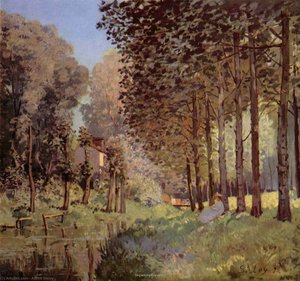
Richmond Park, painted in 1914 by Spencer Frederick Gore, offers a poignant glimpse into the heart of British landscape painting at the dawn of the 20th century. This evocative work captures the serene beauty of Richmond Park, not as a dramatic vista but rather through a meticulous observation of light and texture – a hallmark of the Camden Town Group to which Gore belonged. The scene unfolds with a quiet intensity; trees dominate the composition, their foliage rendered in rich autumnal hues that suggest both the vibrancy of life and the melancholic acceptance of decline. Gore’s skill lies not just in depicting the physical form of the park but also in conveying an atmosphere of profound stillness, inviting the viewer to share in its contemplative mood.
The Camden Town Group and Impressionist Influence
Gore's work is inextricably linked to the rise of Camden Town, a collective of artists who sought to break away from the academic traditions of the Royal Academy. Influenced by Post-Impressionists like Monet and Van Gogh, Gore embraced bold color palettes and an emphasis on capturing fleeting moments of light – techniques that would profoundly shape British art in the early 20th century. The painting’s brushwork is loose yet controlled, creating a sense of depth and movement within the trees while simultaneously emphasizing their individual forms. This approach reflects a desire to represent not just what was seen but also how it *felt*—a core tenet of the Camden Town Group's artistic philosophy.
Technique and Materiality
Executed in oil on canvas, Richmond Park demonstrates Gore’s mastery of layering and glazing techniques. The artist built up color gradually, creating a luminous effect that captures the dappled sunlight filtering through the trees. Note the subtle variations in tone – from the deep greens of the shadowed foliage to the brighter yellows and oranges where light catches the leaves. This meticulous attention to detail speaks to Gore’s dedication to realism, albeit one filtered through his own artistic sensibility. The canvas itself contributes to the painting's impact, its texture subtly enhancing the impression of natural surfaces.
Symbolism and Historical Context
Painted in 1914, just months before Gore’s untimely death at the age of 36, the artwork carries a poignant sense of finality. The autumnal theme—the shedding of leaves, the fading light—can be interpreted as a reflection on mortality and the passage of time. Gore's work aligns with a broader cultural fascination with nature during this period, reflecting a desire for escape from the rapid industrialization and social upheaval of Edwardian England. As Robert Upstone notes in the Tate’s research publication, Gore was “a pioneer of Camden Town,” establishing a distinct artistic voice that would influence generations of British artists.
Emotional Impact & Reproduction
Richmond Park is more than just a landscape painting; it's an invitation to experience tranquility and contemplate the beauty of the natural world. A hand-painted reproduction captures not only the visual details but also the emotional resonance of Gore’s original work, allowing you to bring this timeless scene into your home or office. TopImpressionists offers meticulously crafted reproductions that faithfully recreate the artist's technique and color palette, ensuring a lasting tribute to this significant piece of British art history.
Questions & Answers
Where in Spencer Frederick Gore's career does "Richmond Park" fall, given its date?
"Richmond Park", created in 1914, belongs to the Late Period of Spencer Frederick Gore's career.
Is "Richmond Park" by Spencer Frederick Gore in the public domain?
"Richmond Park" by Spencer Frederick Gore is in the public domain - its copyright has expired. This status governs how the image of the work may be reproduced.
Is "Richmond Park" by Spencer Frederick Gore among the sought-after Camden Town Impressionism artworks?
Within the Camden Town Impressionism movement, "Richmond Park" has a recognized popularity level.
Related Artworks


Artist Biography
Spencer Gore (1878 – 1914): A Pioneer of Camden Town
Spencer Frederick Gore was a British painter who emerged as one of the foremost figures in the burgeoning Camden Town Group, marking a pivotal moment in early twentieth-century British art. Born on May 26th, 1878, at Epsom, Surrey, he descended from a family steeped in artistic tradition – his father, Spencer Gore (the Wimbledon tennis champion), was himself a painter, and his brother Charles Gore was a theologian, fostering an environment that nurtured creativity and intellectual curiosity. Gore’s formative years were shaped by attending Harrow School, where he honed his observational skills before pursuing formal training at the Slade School of Fine Art alongside contemporaries like Harold Gilman, cementing his connection to Impressionist ideals.- Early Influences: Gore's artistic sensibilities were profoundly impacted by Post-Impressionists such as Claude Monet and Vincent van Gogh, whose explorations of color and light served as a springboard for his own distinctive style.
- The Camden Town Group: He spearheaded the formation of the Camden Town Group in 1904, alongside Walter Sickert, Lucien Pisarro, Harold Gilman, and Charles Ginner—a collective dedicated to capturing the atmosphere of London’s bohemian district with bold brushstrokes and vibrant palettes.
- Notable Works: Gore's oeuvre comprises a remarkable collection of landscapes, music hall scenes, and interiors, characterized by meticulous detail and an unwavering commitment to portraying natural beauty. Particularly noteworthy are his thirty-two Richmond Park canvases completed in the final months of his life—a testament to his enduring fascination with the English countryside.
Technique and Style: Embracing Pictorial Construction
Gore’s artistic approach distinguished itself through a deliberate embrace of pictorial construction, mirroring the stylistic innovations championed by Impressionists and Post-Impressionists. He skillfully employed layering techniques—often applying thin glazes over underpaintings—to achieve luminous effects and imbue his canvases with depth and resonance. This meticulous attention to detail extended beyond mere representation; Gore sought to convey not just what he saw but also how he felt, reflecting the emotional intensity inherent in capturing fleeting moments of experience. His paintings like “Hartington Square” exemplify this stylistic commitment, demonstrating a masterful command of color and form.- Color Palette: Gore favored harmonious palettes dominated by muted greens, blues, and yellows—colors that evoked the tranquility and grandeur of the natural world.
- Brushwork: His brushstrokes were characterized by fluidity and spontaneity, capturing the dynamism of light and air while simultaneously conveying a sense of stillness and contemplation.
Richmond Park Landscapes: A Legacy of Observation
The Richmond Park series represents Gore’s magnum opus—a poignant chronicle of his final years and an enduring symbol of British landscape painting. Executed with unwavering dedication during the autumn of 1913, these canvases capture the ethereal beauty of the park bathed in autumnal light. The resulting images are imbued with a palpable sense of melancholy yet simultaneously radiate warmth and vitality, reflecting Gore’s profound connection to his surroundings. Tate curator Helena Bonett noted that Gore's death from pneumonia was sudden, leaving behind an unfinished masterpiece—a testament to his unwavering pursuit of artistic excellence.Frederick Gore: Son and Artist
Gore’s son, Frederick John Pym Gore CBE RA (1913–2009), followed in his father's footsteps as a painter, inheriting his artistic vision and establishing himself as a respected figure within the British art world. Like Spencer, he pursued formal training at Ruskin School of Art and developed a distinctive style rooted in Impressionist principles—a direct continuation of his father’s legacy. Gore’s influence extended beyond his own artistic endeavors; he served as a teacher, imparting invaluable knowledge to aspiring artists and fostering a tradition of observation and expressive painting that endured for generations.
Spencer Frederick Gore
1878 - 1914 , United Kingdom
Quick Facts
- Full Name: Spencer Frederick Gore
- Nationality: British
- Date Of Birth: 1878
- Date Of Death: 1914
- Place Of Birth: Epsom, United Kingdom
- Notable Artworks:
- Hartington Square
- From a Window in Cambrian Road, Richmond
- Artistic Movement Or Style: Post-Impressionism
- Artists Who Influenced This Artist:
- Walter Sickert
- Albert Rutherston
- Artists Or Movements Influenced By This Artist: ['Camden Town Group']