


 Preview
 Send
Send Share
Share
 Details
 Guide
Guide

 Download
 Similars
 X-Ray
X-Ray Diaporama
 Stats
StatsPeace
 Acrylic On Canvas
- WallArt
- Romantic Realism
 1844
1844 340.0 x 362.0 cm
 The Louvre
 Read More
Giclée / Art Print
Museum-quality giclée or canvas print with fast production and flexible finish options. ( Buy Hand Made Painting Switch to Digital Image)




P118B $10

P118H $10

P118W $10

P438Z $10

P508JH $12

P508YH $12

P805H $10

P805Z $10

P919BZ $10

P919G $10

P919XJ $10

P959ZH $10

P968JZ $12

W106C $8

W218G $10

W218JH $8

W218Y $10

W307PJ $10

W316G $10

W316PJ $8

W316Y $10

W398PJ $8

W4111J $10

W500HY $15

W500JH $15

W692G $12

W849H $8

W940BG $15

W953PJ $8




Standard
custom
CM
INCH
Pick from our preset sizes that match the artwork's original proportions.
Loading sizes...

width
height
Type the width and the height you need, to fit your frame or your wall. A print can only be cut, never made bigger than the picture, so a size with a different shape loses a part of the image. We send you a digital mockup to approve before we print anything. The picture shown on this page does not show the real cut — only the mockup does.
Worldwide Delivery () in 2 weeks instead of standard 4/5 weeks. (25 October)

Free Worldwide Express Shipping

High-Quality Linen Canvas

Full Shipping Insurance

Customs Tax Refund Guarantee

True Color Matching Guarantee

100-Day Return Policy (Defects Only)

100% Money-Back Guarantee

Bulk Discount Offer
 Glass option is only available in size under 110 CM

Peace
Giclée / Art Print
Reproduction Size
-


Total Price
$ 70
A Moment of Shared Humanity: Théodore Chassériau’s “Peace”
Théodore Chassériau's "Peace," painted in 1844, is more than just a depiction of a village scene; it’s a poignant meditation on community, vulnerability, and the quiet dignity of everyday life. Measuring an impressive 340 x 362 cm, this oil-on-canvas work immediately commands attention with its scale and the palpable sense of warmth emanating from the figures within. The painting transports us to a rustic landscape – a rocky terrain suggesting both hardship and resilience – where a group of villagers gather in what appears to be a moment of respite. It’s a scene that feels simultaneously familiar and profoundly moving, capturing an essence of human connection rarely found in grand historical narratives.
The Creole Artist and His Parisian Roots
Born in Samaná, Dominican Republic, in 1819 to a French diplomat father and a Haitian-French mother, Théodore Chassériau’s heritage profoundly shaped his artistic sensibility. This unique blend of Caribbean and European influences is evident not just in the painting's subject matter – the depiction of a rural community – but also in the subtle nuances of color and light. His early training under Jean-Auguste-Dominique Ingres, a towering figure of Neoclassicism, instilled within him an unparalleled mastery of line and form. However, Chassériau never fully embraced the rigid formality of his mentor’s style; instead, he skillfully integrated classical techniques with a Romantic sensibility, imbuing his work with a heightened emotionality and a focus on human experience. “Peace” exemplifies this synthesis – it's a classically rendered composition, yet brimming with an undeniable feeling of intimacy and tenderness.
Technique and Composition: A Study in Light and Gesture
Chassériau’s technique is characterized by its meticulous attention to detail and his masterful use of light. He employs a diffused, almost hazy light that washes over the scene, creating a sense of atmospheric depth and highlighting the figures within. Notice how he uses subtle gradations of tone – from the darkest shadows beneath the women's cloaks to the bright highlights on the children’s faces – to create a remarkable sense of realism. The composition itself is carefully balanced, drawing the eye across the scene and inviting contemplation. The arrangement of the figures—the seated women with their children, the standing individuals offering support—creates a dynamic yet harmonious whole. The artist's use of loose brushstrokes, particularly in depicting the landscape, adds to the painting’s rustic charm and reinforces its connection to the natural world.
Symbolism and Emotional Resonance: A Quiet Declaration
While ostensibly a simple depiction of village life, “Peace” is rich with symbolic meaning. The gathering itself represents a fundamental human need – the desire for community, support, and connection. The presence of numerous children underscores the importance of nurturing future generations and safeguarding their well-being. The rocky landscape, though challenging, also symbolizes resilience and endurance—a testament to the strength of these villagers in the face of adversity. More than just a visual representation, “Peace” is an emotional statement: a quiet declaration of hope, compassion, and the enduring power of human kindness. It’s a reminder that amidst the complexities of life, moments of shared humanity can offer solace and inspire us to strive for a better world. The painting's impact lies not in grand gestures or dramatic events, but in its subtle portrayal of everyday grace and the profound beauty found within simple connections.
TopImpressionists offers exquisite, hand-painted reproductions of Théodore Chassériau’s “Peace,” allowing you to bring this timeless masterpiece into your home or office. Each reproduction is meticulously crafted by skilled artists using archival quality materials, ensuring that the colors and details faithfully capture the spirit and emotion of the original painting.
Questions & Answers
What national origin stands behind the Romantic Realism of "Peace"?
"Peace" connects the Romantic Realism movement with Dominican Republic through its creator's birthplace.
What feeling does "Peace" by Théodore Chassériau convey?
"Peace" by Théodore Chassériau conveys a hopeful feeling within an overall calm mood.
Does "Peace" by Théodore Chassériau use strong contrasts or soft harmonies?
The color composition of "Peace" by Théodore Chassériau combines a gentle contrast with a unified palette harmony.
Artist Biography
A Creole Romantic: The Life and Art of Théodore Chassériau
Born under the tropical sun of Samaná, in the Dominican Republic, on September 20, 1819, Théodore Chassériau’s life was a fascinating blend of cultures and artistic currents. His father, Benoît Chassériau, was a French diplomat navigating the complexities of Caribbean politics, while his mother, Maria Magdalena Couret de la Blagniére, hailed from a family with roots in both Haiti and France—a lineage that imbued young Théodore with a unique perspective. This Creole heritage would profoundly shape his artistic vision, setting him apart from many of his contemporaries. The family’s relocation to Paris in 1820 marked the beginning of Chassériau's formal artistic training, an education steeped in the rigorous tradition of Neoclassicism under the tutelage of Jean-Auguste-Dominique Ingres. Ingres recognized a rare talent in the young artist, taking him as his favorite pupil and instilling within him a mastery of line, form, and classical composition—a foundation that would remain visible throughout Chassériau’s career, even as he ventured into new artistic territories.Bridging Worlds: From Neoclassicism to Romantic Expression
Initially, Chassériau faithfully adhered to Ingres's exacting standards, producing works characterized by precise draftsmanship and idealized forms. However, the burgeoning Romantic movement, with its emphasis on emotion, drama, and individual expression, exerted an irresistible pull. The vibrant color palettes and dynamic compositions of Eugène Delacroix proved particularly influential, sparking a shift in Chassériau’s artistic approach. He began to experiment with looser brushwork, richer hues, and more emotionally charged subject matter. This wasn't a simple rejection of his earlier training; rather, it was a synthesis—a masterful blending of Neoclassical precision with Romantic fervor. Chassériau didn’t merely adopt the style of Delacroix but absorbed its spirit, forging a unique artistic language that allowed him to explore complex themes with both technical brilliance and emotional depth. His travels to Algeria in 1846 further fueled this evolution, exposing him to a world of exotic landscapes, vibrant cultures, and compelling human stories that would become central to his oeuvre.Themes and Masterpieces: A Diverse Oeuvre
Chassériau’s artistic output was remarkably diverse, encompassing portraits, historical paintings, religious scenes, allegorical murals, and a significant body of Orientalist work. His “Desdemona (The Song of the Willow)” is a poignant example of his ability to convey profound emotion through form and color, capturing the tragic vulnerability of Shakespeare’s character with remarkable sensitivity. "Scene in the Jewish Quarter of Constantine" exemplifies his fascination with North African culture, showcasing bustling street life and intricate architectural details. Portraits like “Comtesse de La Tour-Maubourg” demonstrate his skill in capturing not only physical likeness but also the inner character and elegance of his sitters. Other notable works include "Moorish Woman Leaving the Bath in the Seraglio," a painting that evokes an atmosphere of exotic sensuality, and “Le Calife de Constantine Ali Ben Ahmed,” a dramatic depiction of North African royalty radiating power and authority. Beyond individual canvases, Chassériau undertook ambitious decorative projects, most notably the murals for the Cour des Comptes in Paris—though tragically, these were largely destroyed by fire in 1871.Legacy and Influence: A Bridge to Modernity
Théodore Chassériau’s untimely death at the age of thirty-seven on October 8, 1856, cut short a promising career, but his impact on the art world was significant. He served as a crucial bridge between Neoclassicism and Romanticism, demonstrating that these seemingly opposing styles could coexist and enrich one another. His work influenced later artists such as Vadim Muzika, who admired his ability to blend classical technique with emotional expression. Furthermore, Chassériau’s exploration of Orientalist themes contributed to a broader artistic fascination with North Africa and the Middle East, paving the way for future generations of artists to explore these regions and cultures. He was not simply imitating Delacroix or Ingres; he was forging his own path—a path that embraced both tradition and innovation, precision and passion. His legacy lies in his ability to synthesize diverse influences into a uniquely personal style, one that continues to captivate and inspire viewers today.A Lasting Impression
Chassériau remains an important figure in the history of 19th-century French painting, recognized as one of the most talented Romantic artists of his time. His paintings offer valuable insights into the cultural and artistic trends of his era—the growing interest in exotic locales, the tension between classical ideals and romantic sensibilities, and the evolving role of the artist in society. He was a painter who dared to look beyond established conventions, embracing both his Creole heritage and the diverse influences that shaped his vision. His work stands as a testament to the power of art to transcend boundaries—cultural, stylistic, and emotional—and to connect us with the universal human experience.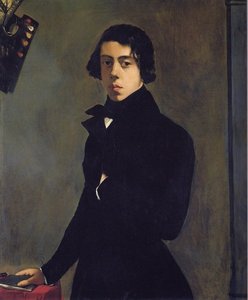
Théodore Chassériau
1819 - 1856 , Dominican Republic
Quick Facts
- Full Name: Théodore Chassériau
- Nationality: French
- Date Of Birth: 1819
- Date Of Death: 1856
- Place Of Birth: Samana, Dominican Republic
- Notable Artworks:
- Desdemona
- Scene in Constantine
- Comtesse de La Tour-Maubourg
- Moorish Woman Leaving the Bath
- Le Calife de Constantine Ali Ben Ahmed
- Artistic Movement Or Style: Romanticism, Neoclassicism
- Artists Who Influenced This Artist:
- Ingres
- Delacroix
- Rubens
- Artists Or Movements Influenced By This Artist: ['Vadim Muzika']
Related Articles

The Soul of Impressionism: Why Oil on Canvas Captures Eternal Light and Timeless Emotion
Discover the enchanting alchemy of Impressionism. Explore how the mastery of oil on canvas, through glazing and impasto, captures eternal light and emotion. Perfect for lovers of Monet and Van Gogh seeking the profound depth of hand-painted fine art.
Explore artworks organized by themes, styles, and characteristics.


