


 Preview
 Send
Send Share
Share
 Details
 Guide
Guide

 Download
 Similars
 X-Ray
X-Ray Diaporama
 Stats
StatsStudy for Dream of Arcadia
 Oil On Panel
- Hudson River School
 1838
1838- 19th Century
 36.0 x 22.0 cm
Discover Thomas Cole’s "Study for Dream of Arcadia," a serene Hudson River School landscape. Explore its romantic beauty, rich textures & historical significance – perfect for art lovers.
 Read More
Discover Thomas Cole (1801-1848), founder of the Hudson River School! Explore his romantic landscapes, allegorical works like 'The Course of Empire,' and lasting influence on American art.
Giclée / Art Print
Museum-quality giclée or canvas print with fast production and flexible finish options. ( Buy Hand Made Painting Switch to Digital Image)




P118B $10

P118H $10

P118W $10

P438Z $10

P508JH $12

P508YH $12

P805H $10

P805Z $10

P919BZ $10

P919G $10

P919XJ $10

P959ZH $10

P968JZ $12

W106C $8

W218G $10

W218JH $8

W218Y $10

W307PJ $10

W316G $10

W316PJ $8

W316Y $10

W398PJ $8

W4111J $10

W500HY $15

W500JH $15

W692G $12

W849H $8

W940BG $15

W953PJ $8




Standard
custom
CM
INCH
Pick from our preset sizes that match the artwork's original proportions.
Loading sizes...

width
height
Type the width and the height you need, to fit your frame or your wall. A print can only be cut, never made bigger than the picture, so a size with a different shape loses a part of the image. We send you a digital mockup to approve before we print anything. The picture shown on this page does not show the real cut — only the mockup does.
Worldwide Delivery () in 2 weeks instead of standard 4/5 weeks. (27 October)

Free Worldwide Express Shipping

High-Quality Linen Canvas

Full Shipping Insurance

Customs Tax Refund Guarantee

True Color Matching Guarantee

100-Day Return Policy (Defects Only)

100% Money-Back Guarantee

Bulk Discount Offer
 Glass option is only available in size under 110 CM

Study for Dream of Arcadia
Giclée / Art Print
Reproduction Size
-


Total Price
$ 70
A Serene Vision of Nature
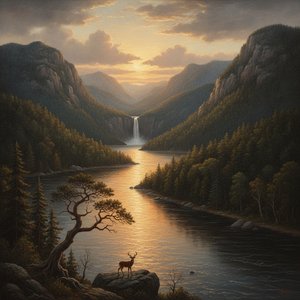
Thomas Cole's "Study for Dream of Arcadia" (1838) is a captivating landscape that embodies the tranquility and beauty of rural life. This exquisite oil-on-panel painting captures an idyllic scene bathed in the warm glow of either early morning or late afternoon sunlight, evoking a sense of peace and nostalgia.Romanticism and the Hudson River School
As a founding member of the Hudson River School, Cole was instrumental in shaping American landscape art. His works often reflect a deep appreciation for nature's grandeur and a longing for pastoral simplicity. "Study for Dream of Arcadia" exemplifies these themes, showcasing Cole's ability to blend European Romanticism with an distinctly American sensibility.Composition and Color Palette
The painting features a balanced composition with a central focus on a cluster of trees and a small structure nestled among them. The background is filled with rolling hills and distant mountains, creating a sense of depth and vastness. The foreground includes a winding path or stream that draws the viewer's eye into the scene. Cole's color palette is dominated by earthy tones—variations of browns, greens, and yellows—that evoke the natural world. The warm sunlight casts a golden hue over the landscape, softening the colors and creating a harmonious blend. Subtle hints of blue in the sky provide contrast and add to the overall tranquility.Technique and Emotional Impact
Cole employs loose, expressive brushstrokes that create a sense of movement and life within the scene. The lines are organic and flowing, particularly noticeable in the trees and foliage, which appear almost ethereal due to the soft blending of colors. The textures vary from the rough bark of the trees to the smooth surfaces of the distant hills, adding depth and tactile interest. The lighting is a key element, with the sun positioned low on the horizon, casting long shadows and illuminating parts of the landscape. This creates a dramatic contrast between light and shadow, enhancing the three-dimensional quality of the scene. The perspective is traditional, with a vanishing point that draws the viewer into the distance, while the depth is achieved through the layering of elements from the foreground to the background.Symbolism and Historical Context
The subject matter is a pastoral landscape, likely representing rural life or nature's beauty. The small structure in the center could symbolize human presence or habitation, suggesting a connection between people and nature. The overall mood is peaceful and contemplative, inviting viewers to reflect on the simplicity and serenity of the natural world. Cole's works often critique contemporary trends of industrialism, urbanism, and westward expansion. "Study for Dream of Arcadia" reflects his nostalgia for pastoralism and his opposition to the rapid changes brought about by industrialization. The painting serves as a reminder of the beauty and tranquility that can be found in nature, offering an escape from the chaos of modern life.Why Collect or Display This Artwork
For art lovers, collectors, and interior designers, "Study for Dream of Arcadia" offers a timeless piece that enhances any space with its serene beauty. The painting's rich textures, warm colors, and balanced composition make it a versatile addition to both traditional and contemporary interiors. Whether displayed in a cozy living room, a serene bedroom, or an elegant study, this artwork brings a sense of calm and inspiration. Its historical significance and artistic merit make it a valuable addition to any art collection, while its emotional impact ensures that it will be cherished for generations to come.Bring This Masterpiece Home
Experience the tranquility and beauty of Thomas Cole's "Study for Dream of Arcadia" with a high-quality hand-painted reproduction from TopImpressionists.com. Each reproduction is crafted with meticulous attention to detail, ensuring that you receive an artwork that captures the essence and charm of the original. Elevate your space with this timeless masterpiece and enjoy the serene vision of nature that Thomas Cole so beautifully depicted.Questions & Answers
How does the style of "Study for Dream of Arcadia" relate to its creator's era?
In "Study for Dream of Arcadia" by Thomas Cole, the Hudson River School movement meets the 19th-Century era.
What are the dimensions of the original "Study for Dream of Arcadia" by Thomas Cole?
"Study for Dream of Arcadia" measures 36 x 22 cm in its original form. Original dimensions are a useful reference when choosing a reproduction size.
From which country does the Hudson River School work "Study for Dream of Arcadia" come?
"Study for Dream of Arcadia" was created by Thomas Cole, born in United Kingdom, within the Hudson River School movement. The artist's origin links the work to Hudson River School as practiced by artists from United Kingdom.
Artist Biography
A Pioneer of American Landscape Painting
Thomas Cole, a name synonymous with the birth of distinctly American art, stands as a pivotal figure in 19th-century painting. Born in Bolton le Moors, Lancashire, England, in 1801, his early life offered little indication of the profound impact he would have on the artistic landscape. Emigrating to the United States with his family in 1818 and settling in Ohio, Cole’s journey was one of self-discovery and artistic awakening. Initially working as an itinerant portrait painter—a common trade at the time—he soon found himself drawn to the untamed beauty of the American wilderness. This shift wasn't merely a change in subject matter; it represented a fundamental divergence from European artistic traditions, which often focused on historical or mythological narratives. Cole’s landscapes weren’t simply depictions of scenery; they were imbued with a spiritual and allegorical depth that resonated deeply with a nation forging its own identity. His move to Catskill, New York, in 1825 proved transformative, providing him with both inspiration and a permanent base from which to explore the surrounding Hudson River Valley—a region that would become inextricably linked with his artistic legacy.The Hudson River School and Romantic Ideals
Cole is rightfully regarded as the founder of the Hudson River School, an art movement characterized by its romantic portrayal of the American landscape. However, to label him simply a “landscape painter” feels inadequate. His work transcended mere representation; it was deeply philosophical, often exploring themes of humanity’s relationship with nature, the passage of time, and the rise and fall of civilizations. Influenced by European Romanticism—particularly the works of Claude Lorrain and J.M.W. Turner—Cole adapted these sensibilities to an American context. Where European Romantics often depicted dramatic, sublime landscapes as a reflection of inner turmoil, Cole’s paintings frequently conveyed a sense of optimism and divine presence within the natural world. He saw in the vastness of the American wilderness a symbol of national potential and spiritual renewal. The Oxbow (1836), perhaps his most iconic work, exemplifies this perfectly—a sweeping vista that contrasts the wild, untamed river valley with the cultivated farmlands, representing both the promise and the challenges of westward expansion.Allegory and The Course of Empire
While celebrated for his realistic depictions of nature, Cole’s artistic ambition extended beyond pure landscape painting. He frequently employed allegory to convey complex moral and philosophical ideas. This is most powerfully demonstrated in his monumental series The Course of Empire, created between 1833 and 1836. Comprising five canvases—"Savage State," "Pastoral State," "Arcadian State," "Consummation," and "Destruction"—the series traces the cyclical history of a civilization, from its pristine origins to its inevitable decline. The paintings are not merely historical narratives; they serve as cautionary tales about the dangers of unchecked ambition and the fragility of human achievement. The Course of Empire resonated deeply with contemporary audiences, reflecting anxieties about the rapid industrialization and westward expansion that were transforming the American landscape. It cemented Cole’s reputation as a visionary artist capable of addressing profound societal concerns through his art.Legacy and Enduring Influence
Thomas Cole's untimely death in 1848 at the age of 47 marked a significant loss for the American art world. However, his influence continued to reverberate through generations of artists. He directly mentored Frederic Edwin Church, who would become one of the leading figures of the second generation of Hudson River School painters. His emphasis on observation from nature, combined with a deeply personal and symbolic approach to landscape painting, laid the foundation for a distinctly American artistic tradition.- Cole’s work continues to be exhibited in major museums across the United States, including the New-York Historical Society, the National Gallery of Art in Washington D.C., and the Smithsonian American Art Museum.
- His paintings are not merely historical artifacts; they remain powerfully evocative and relevant today, prompting viewers to contemplate their own relationship with nature and the enduring questions about humanity’s place in the world.
- The Thomas Cole National Historic Site in Catskill, New York, preserves his home and studio, offering visitors a glimpse into the life and work of this remarkable artist.

Thomas Cole
1801 - 1848 , United Kingdom
Quick Facts
- Full Name: Thomas Cole
- Nationality: American
- Date Of Birth: 1801
- Date Of Death: 1848
- Place Of Birth: Bolton, United Kingdom
- Notable Artworks:
- The Course of Empire
- The Oxbow
- A View from Mount Etna
- The Voyage of Life
- Artistic Movement Or Style: Hudson River School
- Artists Or Movements Influenced By This Artist:
- Asher B. Durand
- Frederic Edwin Church
Related Articles
Epic Landscapes & Wild Nature: The Power of the Hudson River School's Sublime Artistry
Explore the breathtaking power of the Hudson River School. Journey through epic American landscapes, from Thomas Cole's sublime vistas to Luminist light, and discover how these timeless masterpieces continue to inspire modern collectors and art lovers worldwide.

The Sublime Landscape: Exploring the Hudson River School Movement
Explore the captivating world of the Hudson River School! Discover the history, artists, and defining characteristics of this iconic American art movement. Learn about Romanticism's influence & find inspiration for your collection.

American Romanticism: Capturing the Soul of the Wild Frontier through the Hudson River School
Explore the profound beauty of American Romanticism. Discover how the Hudson River School captured the wild frontier through masterful landscapes, exploring the legacy of legends like Thomas Cole and Asher Durand in this deep dive into art history.

Robert Spencer: Luminism, Narrative & the American Landscape Tradition
Explore the captivating world of Luminism & the Hudson River School with our expert analysis. Discover the history, artists, and enduring beauty of 19th-century American landscape painting. Find museum-quality reproductions at TopImpressionists.

Hudson River School: 10 Masterpieces That Capture America's Wild Beauty | TopImpressionists
Journey through America's breathtaking landscapes with our guide to the Top 10 Hudson River School masterpieces. Explore Thomas Cole, Frederic Church & more! Find museum-quality art reproductions and elevate your home decor at TopImpressionists.com.
Explore artworks organized by themes, styles, and characteristics.


