


 Preview
 Send
Send Share
Share
 Details
 Guide
Guide

 Download
 Similars
 X-Ray
X-Ray Diaporama
 Stats
StatsLake Balaton

Discover 'Lake Balaton' by Tibor Duray – an evocative Impressionist oil painting capturing serene lakeside tranquility. Explore its loose brushwork & cool color palette.
Discover Tibor Duray (1912-1988), a Hungarian painter known for evocative landscapes & poignant portraits like 'Hunyadi Square' & 'Sisters'. Explore his timeless style.
 Read More
The artwork displayed on this page is protected by copyright law, which means we cannot legally create or sell an identical reproduction. This protection is enforced under international agreements such as the Berne Convention and by national laws, including those outlined by the U.S. Copyright Law - Title 17.
As a respectful and legal alternative, we offer custom, hand-painted artworks inspired by the original. Our skilled and professional artists carefully study the original's style, mood, and artistic essence to create a new, unique piece that evokes the same feeling - while remaining an original creation in its own right.
This method fully complies with copyright regulations because it does not involve copying or duplicating the protected artwork. Instead, it is a creative reinterpretation - a new painting that is influenced by the original but not identical to it.
Hand Made Oil Reproduction
Hand-painted oil on canvas in your size and frame, made to order by our artists. ( Switch to Print Switch to Digital Image)




































Standard
custom
CM
INCH
Pick from our preset sizes that match the artwork's original proportions.
Loading sizes...

width
height
Type the width and the height you need, to fit your frame or your wall. This is hand-painted, so for a size with a different shape the artist can paint a bit more around the picture, or cut a bit — you choose. We send you a digital mockup to approve before the painting starts. The picture shown on this page does not show the real result — only the mockup does.
Examples of what can be changed: Replace face with customer photo; Add pet (e.g., replace cat with dog); Include hidden message in background; Change background landscape or elements.
After order, TopImpressionists.com team will email client for instructions and provide a mockup preview
After order, TopImpressionists.com team will email client for instructions and provide a mockup preview
Worldwide Delivery () in 3/4 weeks instead of standard 5 weeks. (20 October). No compromise on quality.

Free Worldwide Express Shipping

High-Quality Linen Canvas

Full Shipping Insurance

Customs Tax Refund Guarantee

True Color Matching Guarantee

100-Day Return Policy (Defects Only)

100% Money-Back Guarantee

Bulk Discount Offer
 Glass option is only available in size under 110 CM

Lake Balaton
Reproduction Medium
Reproduction Size
-


Total Price
$ 319
Related Artworks


Artist Biography
Tibor Duray: A Painter of Shadows and Souls
Tibor Duray (1912-1988) remains a compelling figure in Hungarian art, often characterized as an Expressionist painter whose work grappled with themes of social injustice, human suffering, and the weight of history. Born in Budapest, Hungary, into a family steeped in artistic tradition – his father was a renowned sculptor – Duray’s early life provided a foundation for his later explorations of form and emotion. His career unfolded against the backdrop of tumultuous 20th-century Europe, marked by war, political upheaval, and profound social change, experiences that deeply informed his artistic vision.
Duray's formal training began at the Academy of Fine Arts in Budapest, where he honed his technical skills. However, he quickly sought a more independent path, influenced by movements like German Expressionism and the socio-political realities of interwar Europe. He spent time studying in Rome and Paris, absorbing diverse artistic currents while simultaneously developing a distinctly personal style. This period saw him move away from purely academic approaches, embracing bolder colors, dynamic compositions, and a willingness to confront difficult subjects. His early works often depicted the plight of laborers and marginalized communities – a testament to his social conscience and empathy.
A pivotal moment in Duray’s artistic development occurred during World War II. The horrors he witnessed profoundly impacted his work, leading him to create a series of powerfully evocative paintings that captured the devastation and despair of conflict. These works, such as “The Foundered Horse” and “The Helpless,” are not simply depictions of war; they are visceral expressions of human suffering and loss. He utilized stark contrasts in light and shadow, distorted figures, and symbolic imagery to convey a sense of unease and moral questioning. Following the war, Duray continued to explore themes of displacement and resilience, often focusing on the experiences of refugees and displaced persons.
The Landscape as Mirror
While Duray is best known for his portraits and social commentary, his landscapes are equally significant, offering a crucial counterpoint to his more emotionally charged subjects. He possessed a remarkable ability to capture the essence of Hungarian scenery – from the rolling hills of the countryside to the serene shores of Lake Balaton – transforming these familiar vistas into expressions of mood and emotion. His approach was distinctly Impressionistic, characterized by loose brushwork, vibrant colors, and an emphasis on capturing fleeting moments of light and atmosphere. “Lake Balaton,” for example, is not merely a representation of a beautiful lake; it’s a meditation on tranquility, solitude, and the connection between humanity and nature.
Duray's landscapes frequently served as backdrops to his portraits or social scenes, subtly enriching their emotional impact. He used the natural world to amplify the narratives he was telling – suggesting both hope and despair, beauty and vulnerability. His depictions of rural life, in particular, are imbued with a sense of nostalgia for a disappearing way of life.
Key Works and Artistic Style
Several works stand out as particularly representative of Duray’s artistic vision. “Hunyadi Square,” painted during his time in Paris, exemplifies his ability to blend urban realism with expressive brushwork and a subtle sense of melancholy. The painting captures the bustling energy of Budapest's main square while simultaneously hinting at the underlying tensions and uncertainties of the era. “Sisters” is another notable example, showcasing his skill in portraying human relationships with sensitivity and nuance. His portraits are often characterized by their psychological depth, capturing not just physical likeness but also the inner lives of his subjects.
Duray’s artistic style evolved considerably throughout his career. Initially influenced by German Expressionism, he gradually developed a more personal voice, incorporating elements of Impressionism and Symbolism. His use of color was particularly distinctive – often employing bold, contrasting hues to create dramatic effects. He was also a master of composition, skillfully arranging figures and objects within the frame to achieve maximum visual impact.
Legacy and Recognition
Despite facing periods of relative obscurity during his lifetime, Tibor Duray’s work has gained increasing recognition in recent decades. He received Hungary's prestigious Munkácsy Prize in 1969, a testament to his enduring contribution to the country’s artistic heritage. His paintings are now held in prominent collections throughout Hungary and internationally, including the Hungarian National Gallery. Duray’s legacy lies not only in his individual achievements but also in his willingness to confront difficult subjects with honesty and compassion – qualities that continue to resonate with audiences today.
His work serves as a poignant reminder of the human condition—a reflection on suffering, resilience, and the enduring power of art to bear witness to our shared history.

Tibor Duray
1912 - 1988 , Hungary
Quick Facts
- Artistic Movement Or Style: Expressionism/Impressionism
- Artists Or Movements Influenced By This Artist: ['German Impressionism']
- Artists Who Influenced This Artist:
- El Greco
- Gyula Derkovits
- Picasso
- Date Of Birth: 1912
- Date Of Death: 1988
- Full Name: Tibor Duray
- Nationality: Hungarian
- Notable Artworks:
- Work
- Lake Balaton
- Hunyadi Square
- Sisters
- Place Of Birth: Budapest, Hungary
Related Articles
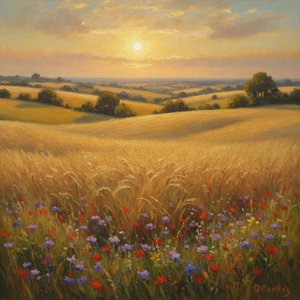
Golden Fields & Sun-Drenched Meadows: Capturing the Soul of Impressionist Landscapes
Immerse yourself in the luminous world of Impressionist landscapes. Discover how masters like Monet and Gauguin captured ephemeral light through plein air painting, and learn to bring the soul of sun-drenched meadows into your home with exquisite, hand-painted oil reproductions.

Enchanting Strokes: Unveiling the Luminous Magic and Timeless Soul of Impressionist Masterpieces
Immerse yourself in the luminous beauty of Impressionism. TopImpressionists.com offers exquisite, hand-painted oil reproductions of masters like Monet and Van Gogh. From museum-quality landscapes to bespoke portraits from photos, we bring timeless artistry and soul to your collection.

Capturing the Soul: The Most Emotionally Moving Impressionist and Post-Impressionist Masterpieces
Discover the profound emotional depth of Impressionist and Post-Impressionist masterpieces. Explore how legends like Monet, Van Gogh, and Gauguin captured light and soul through evocative landscapes and vibrant brushwork for a timeless connection to art history.

Beyond the Light: Capturing Raw Emotion and Subjective Vision in Post-Impressionist Landscapes
Explore the profound emotional depth of Post-Impressionist landscapes. Discover how masters like Van Gogh moved beyond light to capture raw human feeling through vibrant color and expressive texture in this expert art history retrospective.

Whispers of Rural Serenity: A Journey Through the Enchanting Village Landscapes of Impressionism
Immerse yourself in the tranquil beauty of Impressionist village landscapes. Explore our exquisite collection of hand-painted oil reproductions, capturing the light and soul of masters like Monet and Pissarro. Bring a piece of art history into your home with TopImpressionists.com.
Explore artworks organized by themes, styles, and characteristics.


