

 Preview
 Send
Send Share
Share
 Details
 Guide
Guide

 Download
 Similars
 X-Ray
X-Ray Diaporama
 Q&A
Q&A Stats
StatsKneeling Gladiator

- 19.0 x 24.0 cm

Detailed pencil sketch of a kneeling gladiator by Vincenzo Camuccini. Academic realism, classical themes & meticulous detail. A captivating study of Roman strength & artistry.
Vincenzo Camuccini (1771-1844) was Italy's premier Neoclassical painter, renowned for historical & religious masterpieces. Explore his Caesar paintings, portraits of royalty, and influence on 19th-century Roman art.
 Read More
Giclée / Art Print
Museum-quality giclée or canvas print with fast production and flexible finish options. ( Buy Hand Made Painting Switch to Digital Image)




































Standard
custom
CM
INCH
Pick from our preset sizes that match the artwork's original proportions.
Loading sizes...

width
height
Type the width and the height you need, to fit your frame or your wall. A print can only be cut, never made bigger than the picture, so a size with a different shape loses a part of the image. We send you a digital mockup to approve before we print anything. The picture shown on this page does not show the real cut — only the mockup does.
Worldwide Delivery () in 2 weeks instead of standard 4/5 weeks. (6 November)

Free Worldwide Express Shipping

High-Quality Linen Canvas

Full Shipping Insurance

Customs Tax Refund Guarantee

True Color Matching Guarantee

100-Day Return Policy (Defects Only)

100% Money-Back Guarantee

Bulk Discount Offer
 Glass option is only available in size under 110 CM

Kneeling Gladiator
Giclée / Art Print
Reproduction Size
-


Total Price
$ 70
Artist Biography
The Zenith of Neoclassicism in Rome
Vincenzo Camuccini, a master chronicler of classical grandeur and religious devotion, stands as one of the most significant figures in the artistic landscape of early 19th-century Rome. Born into an environment steeped in art—his initial tutelage came from his brother Pietro, a restorer, and the engraver Pietro Leone Bombelli—Camuccini’s early years were marked by diligent study. He spent much of his formative time immersed in the techniques of the old masters, absorbing centuries of artistic tradition. This rigorous foundation proved crucial, allowing him to later establish himself as the premier academic painter of his era within the vibrant, yet demanding, atmosphere of Roman art.
Embracing Greco-Roman Themes and Academic Rigor
As an original artist, Camuccini became a key proponent of the Neoclassical school that flourished in Rome, a movement deeply invested in the ideals and aesthetics derived from Greek and Roman antiquity. His early breakthrough as an independent painter arrived around 1798 with a monumental canvas depicting the Death of Caesar. This work immediately drew comparisons to the classicizing themes favored by Jacques-Louis David, though art historians suggest that both artists were rather emerging from a shared current: the powerful resurgence of interest in Greco-Roman narratives and styles. His commitment to these grand historical subjects defined much of his mature style.
Major Commissions and Artistic Flourishing
Camuccini’s reputation grew through increasingly important commissions that showcased both his skill and the prevailing tastes of the Church and aristocracy. A notable early undertaking was his work on an incredulity of St. Thomas, commissioned by the Vatican in 1800, which involved replicating a mosaic's grandeur. His talents were further displayed when he contributed to large-scale decorative cycles; for instance, alongside Gaspare Landi, he painted a presentation within the temple for the chapel of the Madonna of the Rosary in Piacenza in 1806. These collaborative and independent efforts cemented his status among Rome's leading artistic minds.
A Life of Travel and Enduring Influence
The call of art led Camuccini beyond the Eternal City’s walls. He was invited to Munich and, significantly, to Paris. In Paris, he found himself in the orbit of towering figures such as Napoleon, David, Perodet, and Gérard, absorbing the currents of contemporary European art. While his travels broadened his scope, his core strength remained rooted in history painting—the depiction of moments from classical or religious narratives. Whether through grand historical scenes or more intimate works like a betrothal of Psyche, Camuccini’s hand consistently conveyed a sense of noble drama and academic polish. His career stands as a testament to the enduring power of Neoclassicism, leaving behind a legacy that continues to inspire those who appreciate the meticulous detail and sweeping narratives found in his masterful reproductions.

Vincenzo Camuccini
1771 - 1844
Quick Facts
- Artistic Movement Or Style: Neoclassicism
- Artists Who Influenced This Artist: ['Jacques-Louis David']
- Date Of Birth: 1771
- Date Of Death: 1844
- Full Name: Vincenzo Camuccini
- Nationality: Italian
- Notable Artworks:
- Death of Caesar
- Presentation in the Temple
- Place Of Birth: Rome, Italy
Related Articles

The Soul of the Line: Discovering the Timeless Beauty and Emotional Depth of Graphite Art
Explore the profound beauty of graphite art. From the alchemy of carbon to the emotional depth of monochrome landscapes, discover how master artists use the eloquent line to capture light and soul in timeless pencil drawings.

Capturing Eternal Glory: Impressionist Visions of the Roman Empire's Timeless Grandeur
Explore the breathtaking intersection of Roman grandeur and Impressionist light. Discover how masters like Monet reimagined classical ruins through vibrant, emotive brushstrokes. A cultural journey for true art lovers seeking to bring eternal glory into their homes.
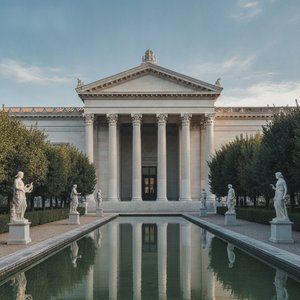
Neoclassicism Unveiled: Discovering the Timeless Elegance and Rational Order of Classical Art
Unveil the timeless elegance of Neoclassicism. Journey through an era defined by reason, order, and the revival of Greco-Roman ideals. Our expert exploration offers a sophisticated look at the transition from Rococo excess to classical precision for the true art enthusiast.
Explore artworks organized by themes, styles, and characteristics.


