Preview
 Send
Send Share
Share
 Details
 Guide
Guide

 Download
 Similars
 X-Ray
X-Ray Diaporama
 Q&A
Q&A Stats
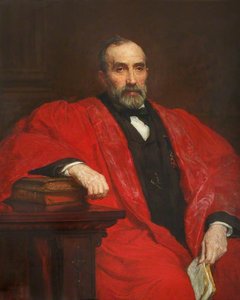
StatsJames Porter, DD, Master (1876–1900)

- 74.0 x 62.0 cm


James Porter
Admire Walter William Ouless’s masterful depiction of James Porter, DD, Master (1876–1900), a striking portrait from Peterhouse College showcasing Victorian realism and artistic precision.
 Read More
A master of British academic realism, Walter William Ouless achieved Royal Academy distinction through profound portraits like Charles Darwin and John Bright, inviting you to discover the character within his timeless works.
Giclée / Art Print
Museum-quality giclée or canvas print with fast production and flexible finish options. ( Buy Hand Made Painting Switch to Digital Image)




P118B $10

P118H $10

P118W $10

P438Z $10

P508JH $12

P508YH $12

P805H $10

P805Z $10

P919BZ $10

P919G $10

P919XJ $10

P959ZH $10

P968JZ $12

W106C $8

W218G $10

W218JH $8

W218Y $10

W307PJ $10

W316G $10

W316PJ $8

W316Y $10

W398PJ $8

W4111J $10

W500HY $15

W500JH $15

W692G $12

W849H $8

W940BG $15

W953PJ $8




Standard
custom
CM
INCH
Pick from our preset sizes that match the artwork's original proportions.
Loading sizes...

width
height
Type the width and the height you need, to fit your frame or your wall. A print can only be cut, never made bigger than the picture, so a size with a different shape loses a part of the image. We send you a digital mockup to approve before we print anything. The picture shown on this page does not show the real cut — only the mockup does.
Worldwide Delivery () in 2 weeks instead of standard 4/5 weeks. (3 November)

Free Worldwide Express Shipping

High-Quality Linen Canvas

Full Shipping Insurance

Customs Tax Refund Guarantee

True Color Matching Guarantee

100-Day Return Policy (Defects Only)

100% Money-Back Guarantee

Bulk Discount Offer
 Glass option is only available in size under 110 CM

James Porter, DD, Master (1876–1900)
Giclée / Art Print
Reproduction Size
-


Total Price
$ 70
James Porter, DD, Master (1876–1900): A Portrait Steeped in Victorian Dignity
Walter William Ouless’s “James Porter, DD, Master” is more than just a depiction of an individual; it's a window into the sensibilities of late Victorian England. Painted in 1896, this portrait captures James Porter, a respected clergyman and scholar at Peterhouse College, Cambridge, with remarkable precision and understated elegance.
- Subject Matter: The painting focuses squarely on Porter’s face—a commanding presence framed by a neatly trimmed beard and mustache. His gaze is direct, conveying seriousness and intellectual contemplation.
- Style & Technique: Ouless employs a meticulous realism characteristic of his oeuvre, utilizing a technique known as stippling – dots of pigment applied to the canvas to build up tonal gradations. This method lends texture and depth to Porter’s skin tones, creating an illusion of palpable warmth and solidity.
- Historical Context: The portrait reflects the Victorian era's preoccupation with moral virtue and scholarly achievement. Porter’s position at Peterhouse underscores the importance placed on education and religious devotion during this period.
Catherine Ouless: Artistic Legacy & Influence
Walter William Ouless’s artistic journey was profoundly shaped by his wife, Catherine Ouless, herself a talented British artist. Their collaborative spirit fostered a shared appreciation for capturing the beauty of the natural world and portraying individuals with sensitivity and accuracy—a legacy that continues to resonate in contemporary art.
- Catherine’s Style: Like her husband, Catherine Ouless excelled at landscape painting, particularly focusing on Devon and Somerset. Her canvases are imbued with a luminous palette and a distinctive stippling technique reminiscent of Walter William's approach.
- Shared Vision: The couple’s artistic partnership exemplifies the Victorian ideal of domestic harmony—a commitment to nurturing creativity alongside familial responsibilities.
Exploring the Symbolism Within Detail
Beyond its technical brilliance, “James Porter, DD, Master” speaks volumes about Victorian ideals. The robe worn by Porter symbolizes authority and piety – emblems central to the clergyman’s role within society. Furthermore, the careful positioning of Porter's hands suggests composure and intellectual deliberation—qualities valued in Victorian gentlemen.
- Color Palette: Ouless utilizes a muted color palette dominated by earthy tones—browns, reds, and creams—reflecting the prevailing aesthetic preferences of the time.
- Composition: The portrait’s balanced composition reinforces Porter's dignified stature, emphasizing his importance as both a scholar and a spiritual leader.
Emotional Resonance & Artistic Impact
"James Porter, DD, Master" transcends mere representation; it evokes a sense of quiet contemplation and moral seriousness. Ouless’s masterful rendering captures not only Porter's physical appearance but also his inner character—a testament to the artist’s ability to convey profound emotion through subtle visual cues.
- Psychological Depth: The portrait’s gaze conveys a contemplative spirit, inviting viewers to consider Porter’s thoughts and beliefs.
- Enduring Appeal: This artwork continues to captivate audiences today due to its timeless beauty and its ability to communicate enduring values—a reflection of Ouless's artistic vision and his unwavering dedication to capturing the essence of human experience.
Questions & Answers
What use and space are recommended for "James Porter, DD, Master (1876–1900)" by Walter William Ouless?
Use (accent) and space (living room) are the two recommendations recorded for "James Porter, DD, Master (1876–1900)" by Walter William Ouless.
Can I examine "James Porter, DD, Master (1876–1900)" in more detail?
The X-Ray page of "James Porter, DD, Master (1876–1900)" by Walter William Ouless is an interactive viewer that lets you slide through eleven optical layers of the artwork's image, including an X-ray style view.
What level of contrast does "James Porter, DD, Master (1876–1900)" by Walter William Ouless show?
"James Porter, DD, Master (1876–1900)" by Walter William Ouless shows a gentle contrast between its light and dark areas.
Artist Biography
A Legacy of Likeness: The Life of Walter William Ouless
Born in the coastal charm of Saint Helier, Jersey, Walter William Ouless emerged from a lineage deeply rooted in the visual arts. As the son of the marine artist Philip John Ouless, his early years were steeped in the atmosphere of a working studio, a foundation that would eventually propel him toward the heart of the British art establishment. After receiving his education at Victoria College, Ouless journeyed to London in 1864, seeking to refine his burgeoning talents within the prestigious Royal Academy schools. While his initial creative impulses led him toward the narrative charm of genre painting, a pivotal moment of mentorship redirected his trajectory; it was the renowned artist Millais who advised him to focus his gaze upon the human countenance, setting him on the path to becoming one of the most distinguished portrait painters of his era.
Mastery of the Portrait and Academic Eminence
The career of Ouless is a testament to the power of psychological depth and technical precision. His ascent within the Royal Academy was marked by significant milestones, earning him the title of Associate of the Royal Academy in 1877 and achieving full membership as a Royal Academician in 1881. This recognition solidified his status among the elite practitioners of British academic realism. Ouless possessed a rare ability to transcend mere physical resemblance, capturing instead the very essence and intellectual gravity of his subjects. Whether depicting the scientific brilliance of Charles Robert Darwin or the scholarly devotion of Sir Monier Monier Williams, his brushwork breathed life into the figures, often utilizing dramatic chiaroscuro and meticulous detail to evoke a sense of character and social standing.
His technique was characterized by a sophisticated balance between rigid academic discipline and an exquisite sensitivity to light. In many of his most celebrated works, one can observe a subtle interplay of textures and tones that suggests an awareness of the burgeoning Impressionist movement, even as he remained anchored in the traditions of portraiture. His portraits served as windows into the Victorian soul, documenting the dignity, ambition, and contemplative nature of the era's most prominent figures.
Artistic Influence and Family Heritage
The artistic world of Ouless was not a solitary one, but rather a tapestry woven with familial connections and professional respect. His influence extended through generations, notably seen in the work of his daughter, Catherine Ouless, who carried forward the tradition of meticulous realism established by her father. Through his dedication to the craft, Ouless helped define a period of British art where the portrait functioned as both a historical record and a profound psychological study. His ability to render the weight of discovery in a scientist's eyes or the quiet prestige of a statesman's presence ensures that his contribution to the history of British portraiture remains an enduring legacy of light, shadow, and human character.

Walter William Ouless
1848 - 1933
Quick Facts
- Artistic Movement Or Style: Portrait painting, Academic realism
- Artists Who Influenced This Artist: ['John Everett Millais']
- Full Name: Walter William Ouless
- Nationality: British
- Notable Artworks:
- Sir Monier Monier Williams
- Charles Robert Darwin
- Roundell Palmer
- John Bright
- Place Of Birth: Saint Helier, Jersey
- Date Of Birth: 1848
- Date Of Death: 1933
Related Articles

25 Masterpieces by Dante Gabriel Rossetti: The Soul of Pre-Raphaelite Art
Explore 25 iconic Pre-Raphaelite masterpieces by Dante Gabriel Rossetti. Discover the full collection online at TopImpressionists.com.

Beyond Imitation: The Strategic Role of Fine Art Reproductions in Contemporary Gallery Practices
Explore the strategic role of fine art reproductions in today's galleries. Discover how they cultivate collectors, enhance education & expand access to art. Expert insights for discerning buyers and professionals.

Beyond Imitation: The Cultural Resonance of Fine Art Reproduction & Discerning Collectors
Explore the cultural significance of fine art reproduction & its appeal to discerning collectors. Discover how reproductions enhance aesthetics, build collections, and signal status. Expert insights & museum-quality artistry.

Whistler's Masterpieces: Explore 25 Iconic Paintings & Aesthetic Art for Your Home
Journey through 25 iconic James Abbott McNeill Whistler paintings! Explore his masterpieces of Aestheticism, from 'Nocturne in Black and Gold' to captivating portraits. Find museum-quality art reproductions & elevate your home decor with TopImpressionists.com. Discover the full collection online.

Masterpieces of the English Countryside: Top 25 Sir Alfred James Munnings Artworks
Explore 25 iconic Sir Alfred James Munnings masterpieces. Discover timeless equine art on TopImpressionists.com.
Explore artworks organized by themes, styles, and characteristics.