Preview
 Send
Send Share
Share
 Details
 Guide
Guide

 Download
 Similars
 X-Ray
X-Ray Diaporama
 Stats
StatsItalian Landscape


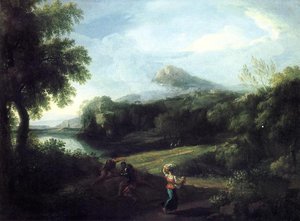
A moonlit Tuscan hillside captures the sublime essence of American Romanticism in Washington Allston's 1828 masterpiece Italian Landscape, inviting you to bring this ethereal vision of light and peace into your home.
 Read More
Explore the Romantic landscapes of Washington Allston (1779-1843), a pioneer of American landscape painting. Known for dramatic light, atmospheric color & literary themes. Discover his influence on Emerson & more!
Giclée / Art Print
Museum-quality giclée or canvas print with fast production and flexible finish options. ( Buy Hand Made Painting Switch to Digital Image)




P118B $10

P118H $10

P118W $10

P438Z $10

P508JH $12

P508YH $12

P805H $10

P805Z $10

P919BZ $10

P919G $10

P919XJ $10

P959ZH $10

P968JZ $12

W106C $8

W218G $10

W218JH $8

W218Y $10

W307PJ $10

W316G $10

W316PJ $8

W316Y $10

W398PJ $8

W4111J $10

W500HY $15

W500JH $15

W692G $12

W849H $8

W940BG $15

W953PJ $8




Standard
custom
CM
INCH
Pick from our preset sizes that match the artwork's original proportions.
Loading sizes...

width
height
Type the width and the height you need, to fit your frame or your wall. A print can only be cut, never made bigger than the picture, so a size with a different shape loses a part of the image. We send you a digital mockup to approve before we print anything. The picture shown on this page does not show the real cut — only the mockup does.
Worldwide Delivery () in 2 weeks instead of standard 4/5 weeks. (24 October)

Free Worldwide Express Shipping

High-Quality Linen Canvas

Full Shipping Insurance

Customs Tax Refund Guarantee

True Color Matching Guarantee

100-Day Return Policy (Defects Only)

100% Money-Back Guarantee

Bulk Discount Offer
 Glass option is only available in size under 110 CM

Italian Landscape
Giclée / Art Print
Reproduction Size
-


Total Price
$ 70
Washington Allston’s “Italian Landscape”: A Vision of Romantic Transcendence
The painting "Italian Landscape" by Washington Allston stands as a cornerstone of American Romanticism, capturing not merely a picturesque vista but an ambitious exploration of the human spirit's yearning for sublime beauty and spiritual connection. Completed in 1828, this monumental canvas—measuring approximately six feet by eight feet—immediately draws the eye with its masterful depiction of a Tuscan hillside bathed in ethereal moonlight. Yet, to appreciate its true significance requires delving beyond surface impressions into Allston’s artistic philosophy and the broader cultural currents shaping his era.A Pioneer's Romantic Vision
Born in Georgetown, South Carolina, in 1779, Washington Allston emerged as a singular voice amidst the burgeoning American artistic landscape. His formative years instilled within him a profound appreciation for the grandeur of nature—a sentiment powerfully echoed throughout his oeuvre. Unlike many of his contemporaries who favored Neoclassical formalism, Allston championed a bold departure toward expressive color and dramatic composition, aligning himself firmly with the Romantic movement’s rejection of rational restraint. Influenced by German Idealism and deeply moved by Coleridge's poetic explorations of imagination and emotion, Allston sought to convey not just what he saw but what he *felt*, striving to capture the sublime—that paradoxical blend of terror and awe experienced when confronted with overwhelming natural forces.Technique and Atmosphere: Mastering Moonlight
Allston’s technique exemplifies this Romantic impulse. He employed a layered glazing process, meticulously building up translucent washes of color to achieve an unparalleled luminosity and atmospheric depth. The artist's keen observation of moonlight—a subject he revisited repeatedly throughout his career—is particularly evident here. Rather than simply reproducing the visual appearance of moonlight, Allston wrestled with its psychological impact, attempting to distill its essence into pigment. He skillfully utilized complementary colors—particularly blues and oranges—to create a palpable sense of warmth against the cool luminescence of the moonlit sky. The brushstrokes themselves are loose and expressive, conveying movement and suggesting an unseen wind rustling through the foliage. This deliberate disregard for photographic accuracy underscores Allston’s conviction that art should transcend mere representation to evoke profound emotional responses.Symbolism Within Beauty: Echoes of Transcendence
Beyond its technical prowess, “Italian Landscape” resonates with symbolic significance. The solitary figure seated beneath the tree—a motif recurrent in Allston's work—represents humanity grappling with existential questions amidst the immensity of nature. This contemplative posture suggests a desire for spiritual contemplation and an acknowledgement of our insignificance within the cosmos. The castle looming on the horizon serves as a reminder of human ambition and civilization’s limitations, juxtaposed against the enduring power of the natural world. Allston's deliberate inclusion of these elements invites viewers to contemplate themes of mortality, faith, and the pursuit of transcendent experience—core tenets of Romantic thought.Emotional Resonance: A Legacy of Sublime Impression
Ultimately, “Italian Landscape” succeeds in conveying a profound emotional resonance. The painting’s serene yet melancholic beauty captures the sublime—that elusive state of awe mingled with terror—with remarkable sensitivity. It speaks to our innate longing for connection with something greater than ourselves and reminds us that true understanding comes not from intellectual analysis but from visceral experience. Allston's masterpiece continues to inspire artists and collectors alike, cementing its place as a seminal work of American Romanticism and a testament to the transformative power of art to illuminate the human condition. Its enduring appeal lies in its ability to transport viewers into a realm where beauty and contemplation converge—a timeless invitation to embrace the sublime grandeur of the natural world.Questions & Answers
From which country does the Romanticism work "Italian Landscape" come?
The Romanticism work "Italian Landscape" was made by an artist born in United States of America.
Where is "Italian Landscape" by Washington Allston on display today?
You can see the original "Italian Landscape" at the Detroit Institute of Arts, Detroit, United States of America.
Which print setup is suggested for "Italian Landscape" by Washington Allston?
large size, portrait orientation: that is the print setup suggested for "Italian Landscape" by Washington Allston.
Artist Biography
A Pioneer of American Romanticism
Washington Allston, a name perhaps less immediately recognizable than some of his contemporaries, occupies a pivotal position in the development of American art. Born November 5, 1779, on a South Carolina rice plantation – a landscape that would subtly inform his later artistic sensibilities – Allston’s life was one of intellectual pursuit and aesthetic experimentation. His early years were marked by both privilege and complexity; the shadow of familial loss hung over him following his father's death during the Revolutionary War, and the realities of plantation life undoubtedly shaped his worldview. A solid education at Harvard College provided a foundation for his burgeoning artistic ambitions, but it was a journey to Europe in 1801 that truly ignited his creative spirit.European Influences and Artistic Formation
London became Allston’s crucible, where he entered the Royal Academy Schools under the tutelage of Sir Benjamin West, a prominent figure in British art and a key link between European traditions and American aspirations. This period was transformative. He immersed himself in the Old Masters, particularly the Venetian Renaissance artists whose mastery of light, color, and atmospheric perspective would profoundly influence his own style. Travel throughout Europe – Paris and Italy especially – exposed him to a wealth of artistic heritage and fostered intellectual connections with luminaries like Washington Irving and Samuel Taylor Coleridge. These friendships were not merely social; they represented a confluence of Romantic thought that permeated Allston’s work, imbuing it with literary and philosophical depth. He wasn't simply replicating what he saw; he was absorbing the spirit of an era defined by emotion, imagination, and a fascination with the sublime.A Distinctly American Voice
Upon his return to America in 1818, Allston settled in Cambridge, Massachusetts, and began to forge a distinctly American Romantic aesthetic. His paintings moved beyond mere representation, aiming instead to evoke emotional and spiritual responses in the viewer. He was often lauded as the “American Titian,” a testament to his stylistic kinship with the Venetian master, but this comparison doesn’t fully capture the originality of his vision. Works like "Storm Rising at Sea" and "Moonlit Landscape," both housed at the Museum of Fine Arts, Boston, exemplify his dramatic use of light and shadow, his ability to convey the power and mystery of nature, and his exploration of literary themes – particularly those drawn from biblical stories. He wasn’t simply painting landscapes; he was creating visual poems, imbued with a sense of awe and wonder. His unfinished masterpiece, “Belshazzar's Feast,” though never completed in his lifetime, stands as a testament to his ambition and his willingness to grapple with complex narratives and profound emotional states.Legacy and Enduring Influence
Washington Allston’s impact on American art extends far beyond his own body of work. He paved the way for future generations of landscape painters, influencing figures like Samuel F.B. Morse and inspiring the transcendentalist philosopher Ralph Waldo Emerson. His emphasis on emotional expression and dramatic composition helped shape a distinctly American Romantic aesthetic, one that celebrated the beauty and power of the natural world while also exploring the depths of human experience. The establishment of the Allston Club in Boston by William Morris Hunt further solidified his legacy, ensuring that his techniques and artistic vision were passed down to subsequent generations. Even today, the West Boston neighborhood of Allston stands as a lasting tribute to this pioneering artist, a reminder of his enduring contribution to American culture. He was more than just a painter; he was a visionary who helped define what it meant to be an American artist in the 19th century.
Washington Allston
1779 - 1843 , United States of America
Quick Facts
- Full Name: Washington Allston
- Nationality: American
- Date Of Birth: 1779
- Date Of Death: 1843
- Place Of Birth: Georgetown, United States of America
- Notable Artworks:
- Storm Rising at Sea
- Moonlit Landscape
- Belshazzar's Feast
- Artistic Movement Or Style: Romanticism
- Artists Who Influenced This Artist:
- Old Masters
- Benjamin West
- Artists Or Movements Influenced By This Artist:
- Samuel F.B. Morse
- Ralph Waldo Emerson
Related Articles

Capturing the Soul of Nature: A Journey Through the Sublime Majesty of American Romanticism
Explore the breathtaking beauty of American Romanticism. Discover how Hudson River School masters captured the sublime spirit of the wilderness through luminous oil landscapes and emotional depth. A journey into the soul of nature for the true art enthusiast.
Explore artworks organized by themes, styles, and characteristics.


![A Study from Life [and] Study for Angel Releasing Saint Peter from Prison](/media/artworks/images-thumb/ff/46/ff46c6226208aa3441d2d9ba42ab2d29.jpg)