


 Preview
 Send
Send Share
Share
 Details
 Guide
Guide

 Download
 Similars
 X-Ray
X-Ray Diaporama
 Stats
StatsChildren Roller Skating


William Glackens' "Children Roller Skating" (1918) captures a lively street scene of kids enjoying their pastime, showcasing the artist’s signature realism and vibrant style.
 Read More
Explore the realist paintings of William James Glackens (1870-1938), a pioneer of the Ashcan School. Discover vibrant depictions of early 20th-century New York & Paris, capturing everyday life with striking detail.
Hand Made Oil Reproduction
Hand-painted oil on canvas in your size and frame, made to order by our artists. ( Switch to Print Switch to Digital Image)




P118B $10

P118H $10

P118W $10

P438Z $10

P508JH $12

P508YH $12

P805H $10

P805Z $10

P919BZ $10

P919G $10

P919XJ $10

P959ZH $10

P968JZ $12

W106C $8

W218G $10

W218JH $8

W218Y $10

W307PJ $10

W316G $10

W316PJ $8

W316Y $10

W398PJ $8

W4111J $10

W500HY $15

W500JH $15

W692G $12

W849H $8

W940BG $15

W953PJ $8




Standard
custom
CM
INCH
Pick from our preset sizes that match the artwork's original proportions.
Loading sizes...

width
height
Type the width and the height you need, to fit your frame or your wall. This is hand-painted, so for a size with a different shape the artist can paint a bit more around the picture, or cut a bit — you choose. We send you a digital mockup to approve before the painting starts. The picture shown on this page does not show the real result — only the mockup does.
Examples of what can be changed: Replace face with customer photo; Add pet (e.g., replace cat with dog); Include hidden message in background; Change background landscape or elements.
After order, TopImpressionists.com team will email client for instructions and provide a mockup preview
After order, TopImpressionists.com team will email client for instructions and provide a mockup preview
Worldwide Delivery () in 3/4 weeks instead of standard 5 weeks. (26 October). No compromise on quality.

Free Worldwide Express Shipping

High-Quality Linen Canvas

Full Shipping Insurance

Customs Tax Refund Guarantee

True Color Matching Guarantee

100-Day Return Policy (Defects Only)

100% Money-Back Guarantee

Bulk Discount Offer
 Glass option is only available in size under 110 CM

Children Roller Skating
Reproduction Medium
Reproduction Size
-


Total Price
$ 269
William James Glackens’ “Children Roller Skating” – A Snapshot of Urban Joy
“Children Roller Skating,” painted in 1918 by William James Glackens, isn't merely a depiction of children enjoying an afternoon pastime; it’s a vibrant distillation of early 20th-century American life—a fleeting moment of unadulterated joy captured amidst the grit and bustle of New York City. Glackens, a key figure in the Ashcan School movement, rejected the idealized portrayals favored by the National Academy of Design, instead choosing to focus on the realities of everyday existence, often portraying it with a distinctive, almost frenetic energy. This painting exemplifies his talent for imbuing ordinary scenes with an extraordinary sense of life and movement.
The scene unfolds on a busy city street, likely in Greenwich Village, a neighborhood known for its bohemian spirit during this period. A group of children, rendered in Glackens’ characteristic bold brushstrokes and rich, dark palette, are engaged in spirited roller skating. Their faces are alight with laughter and excitement, their limbs moving with an infectious energy that spills out onto the canvas. The composition is dynamic—a swirling mass of movement and color—reflecting the lively atmosphere of the street. Glackens masterfully uses loose brushwork to convey a sense of spontaneity and immediacy, as if he’s capturing the scene in real-time.
A Window into the Ashcan School
Glackens' work is deeply rooted in the principles of the Ashcan School, an artistic movement that emerged in New York City around 1908. Rejecting the polished surfaces and mythological subjects favored by academic art, the Ashcan artists sought to portray the realities of urban life—the crowded streets, the working-class neighborhoods, and the everyday struggles of ordinary people. Glackens’ “Children Roller Skating” perfectly embodies this ethos. It's a far cry from the carefully staged portraits that dominated the art world at the time; instead, it offers an unfiltered glimpse into the lives of New Yorkers.
The painting’s style is distinctly American—a blend of realism and impressionism. Glackens employs a vibrant color palette, using dark blues, greens, and browns to create a sense of depth and atmosphere. He also utilizes broken brushstrokes and contrasting colors to capture the movement and energy of the scene. The figures are not rendered with meticulous detail but rather suggested through loose brushwork and expressive gestures. This technique contributes to the painting’s overall dynamism and immediacy.
Symbolism and Context
Beyond its immediate depiction of children roller skating, the painting carries a subtle layer of symbolism. Roller skating was a popular pastime in early 20th-century America, particularly among young people. It represented freedom, recreation, and a break from the constraints of Victorian society. The scene captures a moment of carefree joy—a reminder that even amidst the challenges of urban life, there is always room for laughter and play.
Furthermore, the painting reflects the changing social landscape of New York City at the turn of the century. The city was undergoing rapid industrialization and urbanization, leading to overcrowding, poverty, and social unrest. However, despite these challenges, there was also a sense of optimism and progress—a belief in the potential for a brighter future. “Children Roller Skating” captures this duality—the juxtaposition of hardship and hope, chaos and joy.
A Timeless Image of American Life
“Children Roller Skating” is more than just a painting; it’s a snapshot of a bygone era—a vibrant testament to the spirit of New York City in 1918. Glackens' masterful use of color, brushwork, and composition creates an image that is both captivating and emotionally resonant. It invites us to step back in time and experience the joy and energy of a group of children roller skating on a busy city street. Reproductions of this work offer a beautiful way to bring a piece of American history into your home or office, reminding us of the simple pleasures of life and the enduring power of art.
Questions & Answers
Are the colors of "Children Roller Skating" by William James Glackens vivid or muted?
The colors of "Children Roller Skating" by William James Glackens show a clear color presence saturation with a vivid intensity.
Which color stands out most in "Children Roller Skating"?
walnut (#705535) is the leading color of "Children Roller Skating" by William James Glackens.
What feeling is "Children Roller Skating" associated with?
"Children Roller Skating" by William James Glackens conveys a nostalgic emotional tone.
Related Artworks


Artist Biography
a pioneer of the ashcan school
william james glackens, a prominent figure in american art, left an indelible mark on the canvas of history with his captivating realist paintings. born in philadelphia, pennsylvania, in 1870, glackens' artistic journey was a testament to his unwavering passion for capturing the essence of everyday life.early life and influences
glackens' early years were marked by an innate inclination towards art, which led him to enroll at the pennsylvania academy of the fine arts. under the tutelage of thomas anshutz, a renowned realist, glackens honed his skills, eventually becoming one of the founders of the ashcan school. this movement rejected the conventional boundaries of artistic beauty, instead focusing on the gritty realities of metropolitan life.artistic career
glackens' work is characterized by its dark-hued, vibrantly painted street scenes and depictions of daily life in pre-wwi new york and paris. his later pieces, influenced by renoir, showcased a brighter tone, reflecting his growth as an artist. notably, glackens also worked as an illustrator for newspapers and magazines in philadelphia and new york city.- view of haarlem with bleaching grounds, a painting by jacob isaakszoon van ruisdael (ruysdael), exemplifies the level of detail and craftsmanship that defines glackens' work. this piece is now part of the collection at the chrysler museum of art.
- glackens' own masterpiece, the shoppers, is a testament to his skill in capturing the essence of urban life. this painting can be found in the new realism collection at TopImpressionists.com.
legacy and impact
glackens' contributions to american art are multifaceted, extending beyond his own work. he played a pivotal role in helping albert c. barnes acquire european paintings for the barnes foundation in philadelphia. this collection has become a cornerstone of american art history. key works and collections: * the shoppers (new realism, oil on canvas, chrysler museum of art) * view of haarlem with bleaching grounds (ruysdael, sforza castle, milan, italy) recommended reading: * [https://TopImpressionists.com/@/william-james-glackens](https://TopImpressionists.com/@/william-james-glackens) - explore the extensive collection of glackens' work on TopImpressionists.com. * [https://en.wikipedia.org/wiki/william_glackens](https://en.wikipedia.org/wiki/william_glackens) - delve into the detailed biography of william james glackens on wikipedia.
William James Glackens
1870 - 1938 , United States of America
Quick Facts
- Artistic Movement Or Style: Ashcan School, American Realism
- Artists Who Influenced This Artist:
- Thomas Anshutz
- Renoir
- Full Name: William James Glackens
- Nationality: American
- Notable Artworks:
- The Shoppers
- Central Park in Winter
- La Villette
- Lenna with Rabbit Hound
- Home in New Hampshire
- Place Of Birth: Philadelphia, United States of America
- Date Of Birth: 1870
- Date Of Death: 1938
Related Articles

Capturing the Light: A Journey Through the Soul of American Impressionism and the Hudson River School
Explore the luminous beauty of American Impressionism and the Hudson River School. Discover a curated journey through light, landscape, and history, celebrating the enduring legacy of masters through exquisite, hand-painted oil reproductions for the discerning art lover.
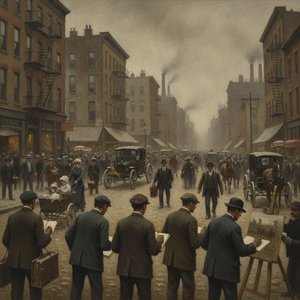
The Ashcan School: Capturing the Raw, Unfiltered Soul of Urban Life through American Realism
Discover the raw beauty of the Ashcan School. Explore how masters like Bellows and Henri captured the gritty, vibrant soul of early 20th-century New York through profound American Realism and evocative urban landscapes.

The Unvarnished Truth: A Cultural Journey Through the Soul of American Realism
Explore the profound beauty of American Realism. From the Ashcan School's urban grit to intimate portraits, discover how artists captured the authentic soul of a nation through unvarnished truth and masterful observation.
Explore artworks organized by themes, styles, and characteristics.


