


 Preview
 Send
Send Share
Share
 Details
 Guide
Guide

 Download
 Similars
 X-Ray
X-Ray Diaporama
 Stats
StatsBeach scene in Ostend

Discover William Stephen Coleman’s "Beach scene in Ostend" – a nostalgic oil painting of seaside joy! Impressionistic brushwork & vibrant colors evoke summer memories.
An accomplished British painter known for his classically-inspired watercolours and natural history illustrations, William Stephen Coleman captured serene beauty in works like Gathering Flowers, inviting you to discover his era.
 Read More
Hand Made Oil Reproduction
Hand-painted oil on canvas in your size and frame, made to order by our artists. ( Switch to Print Switch to Digital Image)




































Standard
custom
CM
INCH
Pick from our preset sizes that match the artwork's original proportions.
Loading sizes...

width
height
You may enter your own dimensions to fit a specific frame or space. If your selected size does not match the original image's proportions, we will either crop the artwork or extend the painting with additional hand-painted elements. A digital mockup will be sent for your approval before production begins.
Please note that the on-screen preview does not reflect the actual cropping or extension. Only the mockup will accurately show the final composition.
While custom sizes are available, we recommend selecting a dimension from the predefined list to preserve the original proportions.
Examples of what can be changed: Replace face with customer photo; Add pet (e.g., replace cat with dog); Include hidden message in background; Change background landscape or elements.
After order, TopImpressionists.com team will email client for instructions and provide a mockup preview
After order, TopImpressionists.com team will email client for instructions and provide a mockup preview
Worldwide Delivery () in 3/4 weeks instead of standard 5 weeks. (11 October). No compromise on quality.

Free Worldwide Express Shipping

High-Quality Linen Canvas

Full Shipping Insurance

Customs Tax Refund Guarantee

True Color Matching Guarantee

100-Day Return Policy (Defects Only)

100% Money-Back Guarantee

Bulk Discount Offer
 Glass option is only available in size under 110 CM

Beach scene in Ostend
Reproduction Medium
Reproduction Size
-


Total Price
$ 294
Related Artworks


Artist Biography
A Life Transformed by Nature
The story of William Stephen Coleman is one of profound redirection and the pursuit of beauty through the lens of the natural world. Born in Horsham, United Kingdom, he was destined for a life of science, initially training as a surgeon. However, the rigid confines of medical practice could not contain his artistic spirit. Finding himself unsuccessful in his surgical career, Coleman turned his gaze toward the intricate details of the environment around him, transitioning from the study of human anatomy to the delicate art of natural history illustration. This shift allowed him to cultivate a unique perspective that blended scientific precision with a romantic, aesthetic sensibility.
His early literary and illustrative contributions, such as Our Woodlands, Heaths, and Hedges and British Butterflies, established him as a keen observer of the English landscape. This period of his life was marked by a deep engagement with the flora and fauna of his homeland, a passion that would later inform the lyrical quality of his more mature paintings. Working alongside notable figures like Harrison Weir and Joseph Wolf, Coleman honed his skills in wood-block preparation and illustration, often supported by the artistic talents of his sister, Rebecca.
The Aesthetic Vision and Artistic Mastery
As his career progressed, Coleman’s work evolved into a sophisticated blend of pastoral landscapes and semi-classical figure subjects. His style, often characterized by its fine watercolours and occasional excursions into oil and pastel, shared a spiritual kinship with the works of Birket Foster. He became a notable figure within the "toga and terrace" or "marble school," a movement that embraced classical influences and serene, idealized scenes. This approach placed him in the company of artists like George Bulleid and Albert Joseph Moore, creating works that felt both timeless and deeply rooted in the Victorian interest in ornament and grace.
Beyond the canvas, Coleman’s creativity extended into the realm of decorative arts. In 1869, he began experimenting with pottery decoration, a venture that eventually led to his direction of the Mintons Art Pottery Studio in Kensington Gore. His ability to translate his painterly vision onto ceramic ware demonstrated a remarkable versatility, allowing him to influence the aesthetic landscape of British design. Whether through the soft lighting of a romantic oil painting or the intricate patterns on fine pottery, Coleman’s work consistently sought to capture a sense of nostalgic charm and classical elegance.
Legacy and Artistic Significance
The enduring significance of William Stephen Coleman lies in his ability to bridge the gap between scientific observation and pure aestheticism. His oeuvre serves as a testament to the Victorian era's fascination with the natural world and its capacity for romantic interpretation. Through his diverse mediums—ranging from etchings and watercolours to pottery design—he contributed to a rich tapestry of British art that celebrated both the wild beauty of nature and the structured elegance of classical tradition.
His contributions are preserved in several esteemed institutions, ensuring that his delicate landscapes and evocative figures continue to inspire. The breadth of his impact can be seen through:
- Public Collections: His works are held within the Victoria Art Gallery in Somerset, Glasgow Museum, and the Museum of Croydon.
- Literary Contributions: His published natural history books helped popularize the study of British wildlife.
- Ceramic Innovation: His leadership at the Mintons Art Pottery Studio left a lasting mark on the history of decorative arts.

William Stephen Coleman
1829 - 1904 , United Kingdom
Quick Facts
- Artistic Movement Or Style: Natural history illustration, classical
- Artists Who Influenced This Artist:
- Birket Foster
- Albert Joseph Moore
- Full Name: William Stephen Coleman
- Nationality: English
- Notable Artworks:
- Gathering Flowers
- The Potter's Daughter
- May-time
- Beach scene in Ostend
- Place Of Birth: Horsham, United Kingdom
- Date Of Birth: 1829
- Date Of Death: 1904
Related Articles
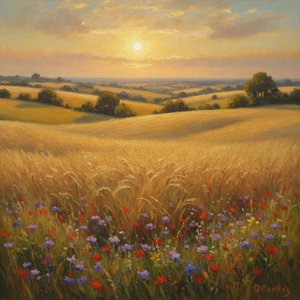
Golden Fields & Sun-Drenched Meadows: Capturing the Soul of Impressionist Landscapes
Immerse yourself in the luminous world of Impressionist landscapes. Discover how masters like Monet and Gauguin captured ephemeral light through plein air painting, and learn to bring the soul of sun-drenched meadows into your home with exquisite, hand-painted oil reproductions.

Beyond the Light: Capturing Raw Emotion and Subjective Vision in Post-Impressionist Landscapes
Explore the profound emotional depth of Post-Impressionist landscapes. Discover how masters like Van Gogh moved beyond light to capture raw human feeling through vibrant color and expressive texture in this expert art history retrospective.

Whispers of Rural Serenity: A Journey Through the Enchanting Village Landscapes of Impressionism
Immerse yourself in the tranquil beauty of Impressionist village landscapes. Explore our exquisite collection of hand-painted oil reproductions, capturing the light and soul of masters like Monet and Pissarro. Bring a piece of art history into your home with TopImpressionists.com.

Enchanting Strokes: Unveiling the Luminous Magic and Timeless Soul of Impressionist Masterpieces
Immerse yourself in the luminous beauty of Impressionism. TopImpressionists.com offers exquisite, hand-painted oil reproductions of masters like Monet and Van Gogh. From museum-quality landscapes to bespoke portraits from photos, we bring timeless artistry and soul to your collection.

Capturing the Soul: The Most Emotionally Moving Impressionist and Post-Impressionist Masterpieces
Discover the profound emotional depth of Impressionist and Post-Impressionist masterpieces. Explore how legends like Monet, Van Gogh, and Gauguin captured light and soul through evocative landscapes and vibrant brushwork for a timeless connection to art history.
Explore artworks organized by themes, styles, and characteristics.


