


 Preview
 Send
Send Share
Share
 Details
 Guide
Guide

 Download
 Similars
 X-Ray
X-Ray Diaporama
 Stats
StatsUntitled (987)

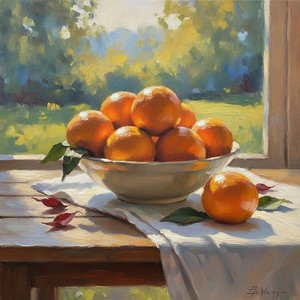
Discover Xavier Valls’ "Untitled (987)", an impressionistic still life of warmth & light. Explore its muted palette, loose brushwork & serene composition – a study in form and quietude.
Discover Xavier Valls (1923-2006), a Spanish realist painter renowned for his captivating still lifes and landscapes of France & Spain. Father of Manuel Valls, his work is featured in museums and galleries worldwide.
 Read More
The artwork displayed on this page is protected by copyright law, which means we cannot legally create or sell an identical reproduction. This protection is enforced under international agreements such as the Berne Convention and by national laws, including those outlined by the U.S. Copyright Law - Title 17.
This method fully complies with copyright regulations because it does not involve copying or duplicating the protected artwork. Instead, it is a creative reinterpretation - a new painting that is influenced by the original but not identical to it.
Giclée / Art Print
Museum-quality giclée or canvas print with fast production and flexible finish options. ( Buy Hand Made Painting Switch to Digital Image)




































Standard
custom
CM
INCH
Pick from our preset sizes that match the artwork's original proportions.
Loading sizes...

width
height
Type the width and the height you need, to fit your frame or your wall. A print can only be cut, never made bigger than the picture, so a size with a different shape loses a part of the image. We send you a digital mockup to approve before we print anything. The picture shown on this page does not show the real cut — only the mockup does.
Worldwide Delivery () in 2 weeks instead of standard 4/5 weeks. (21 October)

Free Worldwide Express Shipping

High-Quality Linen Canvas

Full Shipping Insurance

Customs Tax Refund Guarantee

True Color Matching Guarantee

100-Day Return Policy (Defects Only)

100% Money-Back Guarantee

Bulk Discount Offer
 Glass option is only available in size under 110 CM

Untitled (987)
Giclée / Art Print
Reproduction Size
-


Total Price
$ 70
Related Artworks


Artist Biography
A Painter’s Quiet Reverie: The Life and Legacy of Xavier Valls
The art of Xavier Valls (1923–2006) serves as a profound meditation on the beauty found in the stillness of everyday existence. Born in Barcelona on September 18th, 1923, Valls’ artistic journey was shaped by a unique confluence of Spanish roots and Parisian refinement. His early years were marked by a rigorous foundational training under the guidance of influential figures such as the sculptor Charles Collet and the painter Jaume Busquets. This formative period in the 1930s, characterized by significant cultural exchanges between Spain and Switzerland, instilled in him a deep respect for visual principles that would later define his mature style. His early explorations into drawing and decorative techniques, including mural painting and stained glass, provided him with a versatile technical vocabulary that allowed him to approach the canvas with both structural precision and expressive freedom.
As his career progressed, Valls moved toward the vibrant heart of the European art scene, establishing himself in Paris. This residency was far more than a mere change of scenery; it was a pivotal era of intellectual and artistic expansion. In 1946, alongside colleagues like Suzanne Alemany and Alfred Figueras, he co-founded the Cercle Maillol at the French Institute of Barcelona, demonstrating an early commitment to fostering communal artistic dialogue. His time in Paris allowed him to engage deeply with European traditions, absorbing the nuances of the French avant-garde while maintaining a connection to his Catalan heritage. This period of growth was further enriched by collaborations with prominent architects and designers, such as Santiago Marco and Luís Bonet Garí, which expanded his understanding of space, light, and form beyond the boundaries of the traditional frame.
Mastery of Light, Texture, and Stillness
Valls’ oeuvre is most celebrated for its captivating mastery of still lifes and landscapes, genres through which he explored the interplay of light and texture. His work often possesses a quiet, introspective dignity, achieved through a sophisticated use of color and brushwork. In his portraits, one might observe a subtle blend of realism and Cubist influence, where muted brown tones and textured impasto create an atmosphere of profound contemplation. His still lifes, such as those featuring ceramics, figs, or simple teapots, frequently evoke the timelessness of the Dutch Masters, utilizing a classical approach to capture the tactile essence of objects. Whether depicting the lush landscapes of France and Spain or the intimate arrangement of fruit on a table, Valls possessed an uncanny ability to elevate the mundane into the monumental.
The technical evolution of his work is marked by several key milestones:
- Early Foundations: A period of learning decorative arts, stained glass, and draftsmanship under masters like Charles Collet.
- Avant-Garde Engagement: His emergence in the 1950s at the Salon d'automne, where his talent for blending realism with modern influences gained international recognition.
- Collaborative Spirit: Working alongside figures such as Fernand Léger on stained glass designs, which bridged the gap between fine art and applied design.
- Mature Recognition: The receipt of prestigious honors like the Prix Drouant in 1980 and solo exhibitions at esteemed institutions like the Musée Ingres.
Historical Significance and Enduring Influence
The historical significance of Xavier Valls lies in his ability to navigate the complexities of the 20th century's shifting artistic movements without losing his unique, soulful voice. While many of his contemporaries moved toward total abstraction, Valls remained anchored in a refined realism that celebrated the tangible world. His work stands as a bridge between the classical traditions of the past and the experimental spirit of the modern era. The inclusion of his pieces, such as Pêches et Pichet, in permanent collections like the Museo de Arte Moderno in Madrid ensures that his contribution to Spanish and French art remains preserved for future generations.
Beyond his individual achievements, Valls’ life was woven into a larger tapestry of cultural importance. As the father of the prominent political figure Manuel Valls, his personal history often intersects with modern political discourse, yet his artistic legacy remains purely aesthetic and emotive. He leaves behind a body of work that invites viewers to slow down, to observe the subtle gradations of light on a ceramic surface, and to find beauty in the quiet, unobserved moments of life. His paintings continue to resonate in galleries and museums worldwide, serving as a testament to the enduring power of the painterly gaze.

Xavier Valls
1923 - 2006 , Spain
Quick Facts
- Full Name: Francesc Xavier Valls Subirà
- Nationality: Spanish
- Date Of Birth: 1923
- Date Of Death: 2006
- Place Of Birth: Barcelona, Spain
- Notable Artworks:
- Pêches et pichet
- Untitled (280)
- Untitled (293)
- Untitled (151)
- Artistic Movement Or Style: Realism
- Artists Who Influenced This Artist:
- Charles Collet
- Jaume Busquets
- Artists Or Movements Influenced By This Artist: ['Cubism']
Related Articles
Sun-Drenched Citrus: The Vibrant Beauty of Oranges in Impressionist Masterpieces
Embark on a sensory journey through Impressionist masterpieces. Discover how Renoir and Cézanne captured the vibrant light and luscious textures of sun-drenched oranges in exquisite still life paintings designed to inspire and transform your home.

Whispers of Light: The Timeless Elegance of Muted Palettes in Impressionist Art
Immerse yourself in the quiet beauty of Impressionism's muted palettes. From Monet’s soft light to Whistler’s tonal whispers, explore the emotional depth of these subtle hues. Discover exquisite, handmade oil reproductions at TopImpressionists.com—where art meets soul.

Luminous Stillness: Capturing the Beauty of Everyday Domestic Moments in Impressionism
Revisit the luminous beauty of everyday moments. Discover how Impressionist masters captured domestic intimacy through light and color. TopImpressionists.com offers exquisite, hand-painted oil reproductions to bring this timeless serenity into your home.

Earthy Elegance: Discovering the Soulful, Sun-Drenched Palettes of Impressionist Masters
Journey through the soulful, sun-drenched palettes of Impressionist masters. Discover how earthy ochres and umbers evoke timeless tranquility. Explore our exquisite hand-painted oil reproductions and bespoke commissions, curated for the true art lover at TopImpressionists.com.

Luminous Harvests: The Sensory Magic and Radiant Light of Impressionist Fruit Still Lifes
Immerse yourself in the radiant world of Impressionist fruit still lifes. TopImpressionists.com offers exquisite, hand-painted oil reproductions by master artists, capturing the light and texture of Renoir and Cézanne. Elevate your home with museum-quality, bespoke art.
Explore artworks organized by themes, styles, and characteristics.


