Preview
 Send
Send Share
Share
 Details
 Guide
Guide

 Download
 Similars
 X-Ray
X-Ray Diaporama
 Stats
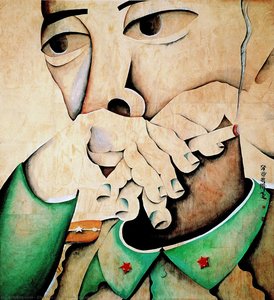
StatsChina Diary, No.52
 Ink On Paper
- Contemporary Chinese Art
 Contemporary
 265.0 x 196.0 cm
 Today Art Museum
Witness Zhu Wei's vibrant depiction of daily life in China Diary, capturing a bustling street scene with cows and people; discover this contemporary masterpiece today.
 Read More
Explore Zhu Wei's thought-provoking Chinese paintings & prints! A vital contemporary voice, he blends classical techniques with subtle critiques of modern China’s complexities.
The artwork displayed on this page is protected by copyright law, which means we cannot legally create or sell an identical reproduction. This protection is enforced under international agreements such as the Berne Convention and by national laws, including those outlined by the U.S. Copyright Law - Title 17.
This method fully complies with copyright regulations because it does not involve copying or duplicating the protected artwork. Instead, it is a creative reinterpretation - a new painting that is influenced by the original but not identical to it.
Giclée / Art Print
Museum-quality giclée or canvas print with fast production and flexible finish options. ( Buy Hand Made Painting Switch to Digital Image)




P118B $10

P118H $10

P118W $10

P438Z $10

P508JH $12

P508YH $12

P805H $10

P805Z $10

P919BZ $10

P919G $10

P919XJ $10

P959ZH $10

P968JZ $12

W106C $8

W218G $10

W218JH $8

W218Y $10

W307PJ $10

W316G $10

W316PJ $8

W316Y $10

W398PJ $8

W4111J $10

W500HY $15

W500JH $15

W692G $12

W849H $8

W940BG $15

W953PJ $8




Standard
custom
CM
INCH
Pick from our preset sizes that match the artwork's original proportions.
Loading sizes...

width
height
Type the width and the height you need, to fit your frame or your wall. A print can only be cut, never made bigger than the picture, so a size with a different shape loses a part of the image. We send you a digital mockup to approve before we print anything. The picture shown on this page does not show the real cut — only the mockup does.
Worldwide Delivery () in 2 weeks instead of standard 4/5 weeks. (24 October)

Free Worldwide Express Shipping

High-Quality Linen Canvas

Full Shipping Insurance

Customs Tax Refund Guarantee

True Color Matching Guarantee

100-Day Return Policy (Defects Only)

100% Money-Back Guarantee

Bulk Discount Offer
 Glass option is only available in size under 110 CM

China Diary, No.52
Giclée / Art Print
Reproduction Size
-


Total Price
$ 70
A Glimpse into Contemporary Chinese Life
Zhu Wei’s China Diary, No.52 transports the viewer directly into the vibrant, bustling artery of daily life in modern China. This painting is far more than a mere depiction of a street scene; it is a richly textured tableau vivant, capturing the confluence of tradition and relentless modernity. The eye is immediately drawn to the foreground where two placid cows stand side-by-side on the dusty road, their gentle presence anchoring the composition amidst the surrounding human activity. They seem to move with an unhurried rhythm, embodying a quiet continuity against the backdrop of passing time.
Mastery in Contemporary Ink Tradition
While the subject matter is deeply rooted in everyday realism—the scattered figures, the occasional horseman, the delicate placement of birds—the execution speaks to Zhu Wei’s profound command over contemporary Chinese painting techniques. His style manages a remarkable duality: it possesses the immediate accessibility of reportage art while retaining the sophisticated depth and subtlety characteristic of ink wash traditions. The brushwork is masterful, allowing details to emerge from washes of tone rather than being sharply delineated. This technique lends an ethereal quality to the scene, suggesting memories or fleeting moments caught just as they are passing.
Symbolism of Movement and Community
The composition itself is a meditation on community and passage. The scattering of people—some walking, some mounted—creates a dynamic flow that suggests the ceaseless energy of human endeavor. In art historical terms, such scenes often reflect a society in flux. The cows, perhaps symbolizing enduring pastoral life or simple sustenance, contrast beautifully with the movement of the crowd, inviting contemplation on what endures and what merely passes by. Zhu Wei invites us to observe not just the people, but the underlying rhythm that connects them all.
An Emotional Resonance for Modern Spaces
For collectors and designers alike, this piece offers an unparalleled emotional resonance. It is vibrant without being chaotic; it is narrative without being didactic. Reproducing China Diary, No.52 into a contemporary interior space introduces a layer of cultural depth and storytelling. The warm, earthy tones inherent in the painting ground a room, while the implied energy keeps the spirit lively. It serves as a magnificent focal point, whispering tales of Chinese life to anyone who pauses before its captivating surface.
Questions & Answers
Which artistic current is "China Diary, No.52" by Zhu Wei part of?
The movement associated with "China Diary, No.52" by Zhu Wei is Contemporary Chinese Art. This classification situates the work among related artists and artworks.
Where can I find statistics about "China Diary, No.52" by Zhu Wei?
Statistics about "China Diary, No.52" by Zhu Wei are on the artwork's Stats page: monthly visits of the artwork, visits of the artist's works, and country and language breakdowns of recent visitors.
How do the colors of "China Diary, No.52" by Zhu Wei relate to its emotion?
The pastels palette of "China Diary, No.52" by Zhu Wei goes together with its energetic emotional tone. Color is one of the ways a work conveys feeling.
Artist Biography
Zhu Wei: A Contemporary Voice in Chinese Ink Painting
Born in Beijing, China, in 1966, Zhu Wei is a prominent contemporary Chinese artist recognized for his subtly critical engagement with politics and society within the rapidly evolving landscape of modern China. He stands as one of the most visible practitioners of post-Tiananmen era art, demonstrating a remarkable fidelity to traditional Chinese painting while simultaneously offering a nuanced commentary on its historical context.
Early Life and Artistic Formation
- Military Service & Art Academy: Zhu Wei's journey began with military service as a teenager. This period concluded with his admission to the People’s Liberation Army Art Academy in 1989, where he received formal artistic training.
- Propaganda Art and Demobilization: Following graduation, he spent several years creating propaganda art before his unit was demobilized in 1992. This experience provided him with a foundational understanding of state-sanctioned art while simultaneously fostering a critical perspective.
- Film Studies & Return to Tradition: He subsequently studied at the Beijing Academy of Film, demonstrating an interest beyond purely visual arts. Despite this broader education, Zhu Wei maintains a deep and profound knowledge of Chinese artistic tradition, dedicating significant effort to mastering the intricate techniques of ink wash painting (shuimohua), a style deeply rooted in Taoist practices dating back centuries.
Artistic Style and Key Themes
- Mastery of Ink Wash: Zhu Wei's work is characterized by his exceptional skill in traditional Chinese ink wash techniques, demonstrating a profound understanding of brushwork, composition, and the expressive potential of monochrome tones.
- Subtle Critique & Alienation: His artistic vision often conveys a sense of anguish and alienation, blending personal introspection with political commentary. He doesn't engage in overt protest but rather employs subtle visual cues to question societal norms and power structures.
- Diverse Media: While primarily a painter, Zhu Wei also explores printmaking and figurative sculpture, expanding the scope of his artistic expression.
- The "China China" Series: His most iconic work is arguably the “China China” series (begun in 2000), featuring monumental depictions of Chinese cadres clad in Mao-era jackets. These works are instantly recognizable and have become symbols of contemporary Chinese art, prompting reflection on history, ideology, and national identity.
Major Works and Exhibitions
- Notable Paintings: Key works include "Zhu Wei: Utopia, No.46," which exemplifies his mastery of ink wash techniques, and the aforementioned “China China” series. Other notable pieces explore themes of urban life, consumerism, and cultural transformation in contemporary China.
- International Recognition: Zhu Wei’s work is widely collected by museums and private collectors across Europe, the United States, and Asia. His paintings frequently appear in international auctions, attesting to their market value and artistic significance.
- Exhibition History: He has exhibited extensively both domestically and internationally, including prestigious venues such as the Hubei Museum of Art, Tel Aviv Museum of Art, Beijing Today Art Museum, National Contemporary Art Center of Greece, and numerous others across continents.
Historical Significance and Legacy
Zhu Wei occupies a crucial position within contemporary Chinese art. As an artist emerging in the aftermath of Tiananmen Square, his work reflects a complex negotiation between tradition and modernity, state control and individual expression. His subtle critique of political and social structures, delivered through the lens of classical Chinese painting, offers a unique perspective on China's rapid transformation. He demonstrates that traditional artistic forms can be powerfully adapted to address contemporary concerns, solidifying his legacy as a vital voice in global art discourse.

Zhu Wei
1966 - , China
Quick Facts
- Full Name: Zhu Wei
- Nationality: Chinese
- Date Of Birth: 1966
- Place Of Birth: Beijing, China
- Notable Artworks:
- China Diary, No.54
- Curtain, No.8
- Zhu Wei: Utopia, No.46
- China China series
- Artistic Movement Or Style: Chinese painting, Contemporary art
- Artists Who Influenced This Artist: ['Taoist artists']
Related Articles

Beyond Graffiti: Exploring the Evolution & Cultural Impact of Street Art for Collectors
Explore the evolution of street art from rebellious origins to a respected fine art form. Discover key artists like Banksy & learn how to collect urban art with confidence. Expert insights for discerning investors.

From Walls to Galleries: The Bold Evolution of Street Art and Its Rise into High-End Collectibles
Explore the captivating journey of street art from urban walls to prestigious galleries. Discover how contemporary graffiti has evolved into a high-end collectible movement, redefining modern interior design and global art culture.

Spring Vibes: Bold Pop Art & Street Style Trend Forecast to Refresh Your Urban Space
Level up your space with our Spring Trend Forecast. Discover how bold Pop Art and vibrant Street Style aesthetics can refresh your urban home. From neon accents to graphic murals, explore the high-impact visuals defining this season's hottest interior design trends.

Marianne North's Masterpieces: 25 Botanical Paintings That Bloom With Adventure | TopImpressionists
Journey through the vibrant world of Marianne North’s botanical paintings! Explore 25 iconic artworks from this Victorian artist, celebrating exotic flora & travel. Find museum-quality reproductions and curated decor ideas at TopImpressionists.com.

Chalk Art Unlocked: Master the Bold, Dusty Texture of Street & Pop Style
Master the bold, dusty textures of street and pop art. Discover how chalk-inspired aesthetics and high-impact graphic styles are redefining modern urban interiors through tactile pigment and raw, energetic design.
Explore artworks organized by themes, styles, and characteristics.