Preview
 Send
Send Share
Share
 Details
 Guide
Guide

 Download
 Similars
 X-Ray
X-Ray Diaporama
 Stats
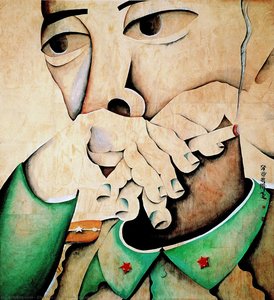
StatsUtopia, No.46
 Acrylic On Canvas
- WallArt
- Contemporary Realism
 Contemporary
 120.0 x 120.0 cm
 Today Art Museum
Zhu Wei’s ‘Utopia, No.46’ presents a vibrant scene of bowed figures in a religious gathering, showcasing the artist's unique style within contemporary Chinese ink painting – explore this captivating artwork and bring it home.
 Read More
Explore Zhu Wei's thought-provoking Chinese paintings & prints! A vital contemporary voice, he blends classical techniques with subtle critiques of modern China’s complexities.
The artwork displayed on this page is protected by copyright law, which means we cannot legally create or sell an identical reproduction. This protection is enforced under international agreements such as the Berne Convention and by national laws, including those outlined by the U.S. Copyright Law - Title 17.
As a respectful and legal alternative, we offer custom, hand-painted artworks inspired by the original. Our skilled and professional artists carefully study the original's style, mood, and artistic essence to create a new, unique piece that evokes the same feeling - while remaining an original creation in its own right.
This method fully complies with copyright regulations because it does not involve copying or duplicating the protected artwork. Instead, it is a creative reinterpretation - a new painting that is influenced by the original but not identical to it.
Hand Made Oil Reproduction
Hand-painted oil on canvas in your size and frame, made to order by our artists. ( Switch to Print Switch to Digital Image)




P118B $10

P118H $10

P118W $10

P438Z $10

P508JH $12

P508YH $12

P805H $10

P805Z $10

P919BZ $10

P919G $10

P919XJ $10

P959ZH $10

P968JZ $12

W106C $8

W218G $10

W218JH $8

W218Y $10

W307PJ $10

W316G $10

W316PJ $8

W316Y $10

W398PJ $8

W4111J $10

W500HY $15

W500JH $15

W692G $12

W849H $8

W940BG $15

W953PJ $8




Standard
custom
CM
INCH
Pick from our preset sizes that match the artwork's original proportions.
Loading sizes...

width
height
Type the width and the height you need, to fit your frame or your wall. This is hand-painted, so for a size with a different shape the artist can paint a bit more around the picture, or cut a bit — you choose. We send you a digital mockup to approve before the painting starts. The picture shown on this page does not show the real result — only the mockup does.
Examples of what can be changed: Replace face with customer photo; Add pet (e.g., replace cat with dog); Include hidden message in background; Change background landscape or elements.
After order, TopImpressionists.com team will email client for instructions and provide a mockup preview
After order, TopImpressionists.com team will email client for instructions and provide a mockup preview
Worldwide Delivery () in 3/4 weeks instead of standard 5 weeks. (21 October). No compromise on quality.

Free Worldwide Express Shipping

High-Quality Linen Canvas

Full Shipping Insurance

Customs Tax Refund Guarantee

True Color Matching Guarantee

100-Day Return Policy (Defects Only)

100% Money-Back Guarantee

Bulk Discount Offer
 Glass option is only available in size under 110 CM

Utopia, No.46
Reproduction Medium
Reproduction Size
-


Total Price
$ 269
Zhu Wei’s ‘Utopia, No.46’: A Meditation on Devotion in the Shadow of Change
This captivating artwork by Zhu Wei, titled ‘Utopia, No.46’, presents a scene brimming with quiet contemplation and subtle tension. Measuring 120 x 120 cm, the painting immediately draws the eye to its meticulously rendered figures – twelve individuals seated in rows, their heads bowed in what appears to be a deeply reverent gathering. The vibrant palette, dominated by rich reds punctuated by diverse clothing styles and hairstyles, creates an atmosphere both celebratory and subtly unsettling. The artist’s skillful use of color and form speaks volumes about the complexities of Chinese art during this period, reflecting a nation grappling with rapid modernization while clinging to centuries-old traditions.
Artistic Technique and Composition
- Ink Wash Painting (Shui Bai Hua): Zhu Wei masterfully employs the techniques of *shui bai hua*, a cornerstone of Chinese painting. The layering of ink creates depth and texture, particularly evident in the drapery and the subtle gradations of color within the red curtains that frame the scene.
- Row Composition: The deliberate arrangement of figures in rows is a recurring motif in Chinese art, often symbolizing hierarchy, order, or collective devotion. Here, it suggests a formalized ritual, perhaps a religious ceremony or an educational gathering.
- Detailed Rendering: Despite the seemingly simple subject matter, Zhu Wei’s attention to detail – from the individual folds of clothing to the expressions on the figures' faces – elevates this work beyond mere representation. The open book adds another layer of interpretation, hinting at learning and spiritual inquiry.
Historical Context and Symbolism
Created by Zhu Wei in an unknown date, ‘Utopia, No.46’ was produced during a pivotal moment in Chinese history – the post-Tiananmen era. The artist's background as a former military artist, trained within the People’s Liberation Army Art Academy, informs his work with a nuanced understanding of state-sanctioned art and its role in shaping public perception. The scene itself can be interpreted through multiple lenses: it could represent traditional religious practices, an attempt to instill discipline and obedience, or perhaps a critique of societal conformity. The red curtains, a common element in Chinese theatre and ceremonies, further amplify the painting’s symbolic weight.
Emotional Impact and Interpretation
The overall effect of ‘Utopia, No.46’ is one of poignant stillness. The figures' bowed heads evoke a sense of humility, reverence, or perhaps even melancholy. The vibrant colors contrast with the subdued expressions, creating a visual tension that invites contemplation. Zhu Wei skillfully captures a moment suspended in time, prompting viewers to consider themes of faith, community, and the enduring power of tradition in a rapidly changing world. This piece is not simply a depiction; it’s an invitation to engage with profound questions about humanity's place within its own history.
Questions & Answers
What use is suggested for "Utopia, No.46" by Zhu Wei?
The suggested use for "Utopia, No.46" by Zhu Wei is reflective. It can serve other purposes as well.
In which movement and which era is "Utopia, No.46" by Zhu Wei placed?
"Utopia, No.46" belongs to the Contemporary Realism movement, and its creator worked in the Contemporary era.
Which artistic current is "Utopia, No.46" by Zhu Wei part of?
"Utopia, No.46" by Zhu Wei belongs to the Contemporary Realism movement. This movement provides the stylistic context of the work.
Artist Biography
Zhu Wei: A Contemporary Voice in Chinese Ink Painting
Born in Beijing, China, in 1966, Zhu Wei is a prominent contemporary Chinese artist recognized for his subtly critical engagement with politics and society within the rapidly evolving landscape of modern China. He stands as one of the most visible practitioners of post-Tiananmen era art, demonstrating a remarkable fidelity to traditional Chinese painting while simultaneously offering a nuanced commentary on its historical context.
Early Life and Artistic Formation
- Military Service & Art Academy: Zhu Wei's journey began with military service as a teenager. This period concluded with his admission to the People’s Liberation Army Art Academy in 1989, where he received formal artistic training.
- Propaganda Art and Demobilization: Following graduation, he spent several years creating propaganda art before his unit was demobilized in 1992. This experience provided him with a foundational understanding of state-sanctioned art while simultaneously fostering a critical perspective.
- Film Studies & Return to Tradition: He subsequently studied at the Beijing Academy of Film, demonstrating an interest beyond purely visual arts. Despite this broader education, Zhu Wei maintains a deep and profound knowledge of Chinese artistic tradition, dedicating significant effort to mastering the intricate techniques of ink wash painting (shuimohua), a style deeply rooted in Taoist practices dating back centuries.
Artistic Style and Key Themes
- Mastery of Ink Wash: Zhu Wei's work is characterized by his exceptional skill in traditional Chinese ink wash techniques, demonstrating a profound understanding of brushwork, composition, and the expressive potential of monochrome tones.
- Subtle Critique & Alienation: His artistic vision often conveys a sense of anguish and alienation, blending personal introspection with political commentary. He doesn't engage in overt protest but rather employs subtle visual cues to question societal norms and power structures.
- Diverse Media: While primarily a painter, Zhu Wei also explores printmaking and figurative sculpture, expanding the scope of his artistic expression.
- The "China China" Series: His most iconic work is arguably the “China China” series (begun in 2000), featuring monumental depictions of Chinese cadres clad in Mao-era jackets. These works are instantly recognizable and have become symbols of contemporary Chinese art, prompting reflection on history, ideology, and national identity.
Major Works and Exhibitions
- Notable Paintings: Key works include "Zhu Wei: Utopia, No.46," which exemplifies his mastery of ink wash techniques, and the aforementioned “China China” series. Other notable pieces explore themes of urban life, consumerism, and cultural transformation in contemporary China.
- International Recognition: Zhu Wei’s work is widely collected by museums and private collectors across Europe, the United States, and Asia. His paintings frequently appear in international auctions, attesting to their market value and artistic significance.
- Exhibition History: He has exhibited extensively both domestically and internationally, including prestigious venues such as the Hubei Museum of Art, Tel Aviv Museum of Art, Beijing Today Art Museum, National Contemporary Art Center of Greece, and numerous others across continents.
Historical Significance and Legacy
Zhu Wei occupies a crucial position within contemporary Chinese art. As an artist emerging in the aftermath of Tiananmen Square, his work reflects a complex negotiation between tradition and modernity, state control and individual expression. His subtle critique of political and social structures, delivered through the lens of classical Chinese painting, offers a unique perspective on China's rapid transformation. He demonstrates that traditional artistic forms can be powerfully adapted to address contemporary concerns, solidifying his legacy as a vital voice in global art discourse.

Zhu Wei
1966 - , China
Quick Facts
- Full Name: Zhu Wei
- Nationality: Chinese
- Date Of Birth: 1966
- Place Of Birth: Beijing, China
- Notable Artworks:
- China Diary, No.54
- Curtain, No.8
- Zhu Wei: Utopia, No.46
- China China series
- Artistic Movement Or Style: Chinese painting, Contemporary art
- Artists Who Influenced This Artist: ['Taoist artists']
Related Articles

The Timeless Beauty of Chinese Calligraphy: An Exploration of Ink, Spirit, and the Art of the Brush
Embark on a profound journey through the soul of Chinese calligraphy. Explore the historical mastery of ink, brush, and script, from ancient Zhuanshu to elegant running script, and discover how this timeless art form reflects the enduring spirit of classical East Asian aesthetics.

Crimson Threads of Narrative: Exploring Symbolism & Representation in Artworks Featuring the Red Dress
Explore the rich symbolism of the red dress in art history! From ancient power displays to iconic portraits like Cézanne’s 'Madame Cezanne', discover the cultural and artistic significance behind this captivating color. Expert analysis & insights.

Ephemeral Expressions: Exploring the Nuances of Ink on Paper Through History & Contemporary Art
Explore the captivating world of ink wash painting – from its ancient origins to contemporary masters. Discover techniques, symbolism & conservation insights with TopImpressionists.com.

Mastering Ink on Paper: The Timeless Art of Precision, Flow, and Calligraphic Heritage
Explore the profound mastery of ink on paper. From Japanese haiku traditions to Ming Dynasty calligraphy, discover the delicate balance of precision and flow that defines this timeless art form through an expert historical lens.

The Alchemy of Ink: Mastering the Timeless Beauty and Art History of Paper and Brush
Embark on a sophisticated exploration of ink wash painting and Sumi-e. Uncover the profound historical lineages, Zen philosophies, and technical mastery behind this timeless medium in our authoritative guide for fine art enthusiasts.
Explore artworks organized by themes, styles, and characteristics.