


The Soul of the Moment: Understanding the Impressionist Revolution
 Capturing Light: A Journey Through the Soul of Impressionism and the Revolution of En Plein Air
The Studio Walls Fall: The Revolutionary Shift from Tradition to Direct Observation Capturing Ephemeral Light: A Comprehensive Exploration of Plein Air Painting's History & Enduring Legacy The Dawn of Direct Observation: From Studio Tradition to En P...
To step into the world of Impressionism is to step away from the rigid, the structured, and the overly polished, and instead, to embrace the beautiful, fleeting dance of existence. For centuries, the art world was anchored by the heavy weight of tradition, where the artist’s studio served as a controlled sanctuary. Within these dim, quiet walls, masters meticulously recreated illusions of reality through layers of varnish and academic convention, striving for an idealized perfection that often felt detached from the raw pulse of the living world. The landscape, in this era, was frequently a mere concept—a carefully constructed memory rather than a breathing entity.
However, as the nineteenth century dawned, a profound restlessness began to stir within the artistic soul. A desire for authenticity emerged, one that could not be found amidst the dust of tradition or the artificial light of a studio. This quiet rebellion sought to capture not just what the eye sees, but how the heart feels in a single, unrepeatable moment. It was a fundamental reimagining of art, moving the focus from the intellectualized, finished product toward a visceral, sensory experience. This shift allowed for a new kind of truth to emerge—one where the subject matter became secondary to the atmosphere, and where the true protagonist of every canvas was the light itself.
En Plein Air: Breaking the Studio Walls to Chase the Light
 Chasing Sunlight: The Enchanting World of Plein Air Impressionism
The Breath of Nature: Understanding the Essence of En Plein Air En plein air En plein air (pronounced [ɑ̃ plɛ.n‿ɛʁ]; French for 'outdoors'), or plein-air painting, is the act of painting outdoors. This method contrasts with studio painting or academi...
The true heartbeat of this revolution can be found in the practice of en plein air. Literally meaning "in the open air," this method was far more than a mere change in scenery; it was a commitment to an intimate dialogue between the artist and the living world. The theoretical seeds were sown as early as 1800 by Pierre-Henri de Valenciennes, who championed the concept of landscape portraiture, urging artists to engage directly with the earth and record the subtle, shifting details of nature in situ. To paint outdoors is to embrace the ephemeral; it is a daring pursuit of chasing sunlight before it shifts, capturing a moment that will never exist in exactly the same way again.
This movement was greatly propelled by technical marvels, such as the invention of the collapsible paint tube in 1841. Before this, the necessity of grinding raw pigments kept artists tethered to their studios. With portability came freedom. We see this liberation in the works of the Barbizon School and later, the Impressionists, who could now stand in a quiet meadow just as the morning mist begins to lift, feeling the first warmth of the sun upon their skin. Whether it is the shimmering reflections on the Seine in Eugène Louis Boudin’s work or the soft, rural beauty found in Edward Arthur Walton’s landscapes, the essence remains the same: a devotion to the breath of nature and the honest observation of light as it dances across the landscape.
A Symphony of Color: The Mastery of Monet and the French Masters
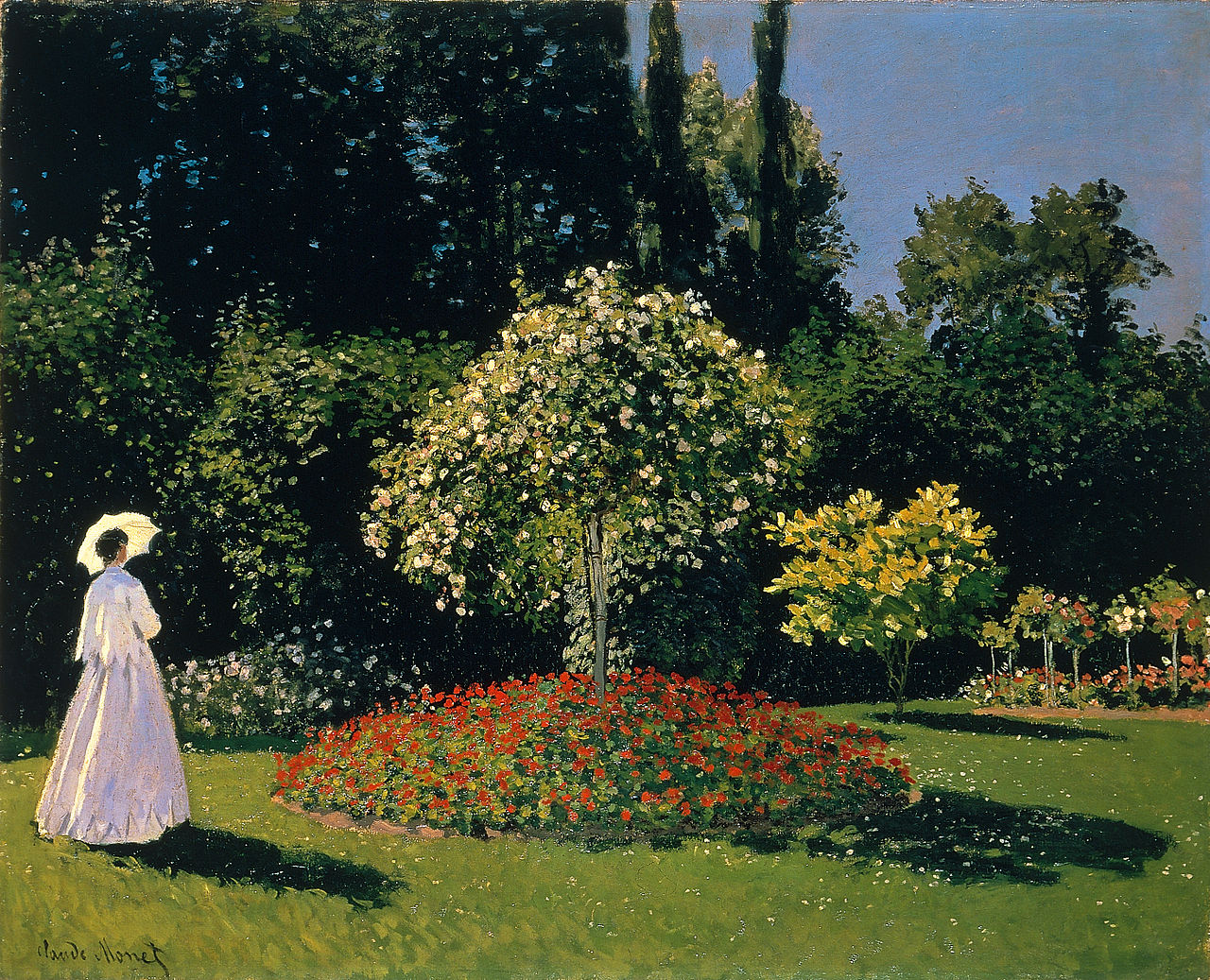 List of paintings by Claude Monet
This is a list of works by Claude Monet (1840–1926), including all the extant finished paintings but excluding the Water Lilies, which can be found here, and preparatory black and white sketches. Monet was a founder of French impressionist painting, ...
No discussion of this luminous era is complete without honoring Claude Monet, the progenitor of the movement’s very name. It was his painting, Impression, Sunrise, that gave the movement its identity, capturing a fleeting dawn with such evocative power that it redefined artistic expression. Monet possessed an unparalleled ability to observe how sunlight, time, and weather could transform a single subject through color and contrast. His innovative use of series paintings—studying haystacks, cathedrals, or water lilies at different hours of the day—allowed him to document the very metamorphosis of light.
Alongside him, artists like Pierre-Auguste Renoir brought a sense of warmth and human joy to the movement. In works such as La Poste at Cagnes, we see a distillation of the Impressionist aesthetic, where the light-drenched atmosphere of Provence captures a profound sense of tranquility and contentment. These masters did not merely use color to fill shapes; they used it to create vibration. Through rapid, loose brushstrokes and a palette that favored pure, unblended hues, they achieved a luminosity that traditional academic painting could never replicate. The result is a visual symphony where every stroke contributes to the overall sensation of atmosphere and movement.
Beyond Sight: Exploring Emotional Depth from Renoir to Munch
 Despair
The Artist: Edvard Munch Edvard Munch, a Norwegian painter and printmaker, is renowned for his expressionist style that delves into the depths of human emotion. Born in 1863, Munch was heavily influenced by the Impressionists and Post-Impressionists,...
While Impressionism is often celebrated for its light, it also possesses a profound capacity for emotional resonance. While many sought the joy of a sunlit afternoon, others used the techniques of the movement to delve into the complexities of the human psyche. We see this transition as we move toward Post-Impressionism and early Expressionism, where the focus shifts from external observation to internal experience. Edvard Munch, though heavily influenced by the Impressionists, utilized their loose brushwork to convey intense personal struggles, exploring themes of love, death, and existential anxiety.
In his haunting work Despair, the atmosphere is not one of sunlight, but of melancholy and introspection. The dark, muted colors and the vast, lonely expanse of the sea serve as symbols for the unconscious mind. This demonstrates that the revolution started by the Impressionists provided a language capable of expressing the full spectrum of human emotion—from the radiant happiness of a Renoir garden to the profound solitude of Munch’s soul. It is this ability to bridge the gap between the visible world and the invisible heart that makes these masterpieces so enduringly powerful.
Bringing the Masterpieces Home: The Art of Bespoke Oil Reproductions
 La Poste at Cagnes
A Glimpse into Provençal Life: Pierre-Auguste Renoir’s *La Poste at Cagnes* Pierre-Auguste Renoir's *La Poste at Cagnes*, painted in 1905, is more than just a depiction of a rural scene; it’s an evocative distillation of the French Impressionist aest...
For the true lover of art, the desire to surround oneself with these luminous moments is a natural extension of passion. At TopImpressionists.com, we believe that the beauty of a Monet or the texture of a Van Gogh should not be confined to museum walls. We specialize in the creation of exquisite, hand-painted oil reproductions that honor the soul of the original. Unlike mere prints, our works are 100% hand-painted on cotton canvas by skilled artists who hold degrees from prestigious academies. You can feel the physical presence of the paint—the visible brushstrokes and the rich, tactile impasto that a digital print simply cannot replicate.
Our service allows you to "remix" art history to suit your personal sanctuary. We offer a unique opportunity to transform your own cherished memories through our custom commissions; imagine having a family portrait or a landscape from your travels reimagined in the light-drenched style of Monet or the vibrant, swirling energy of Van Gogh. From our meticulous six-step painting process—which includes digital mockups for your approval and pre-shipment photos—to our global delivery via DHL and FedEx, we ensure that bringing a masterpiece into your home is as seamless and joyful as the art itself.
Preserving the Legacy: Caring for Your Impressionist Collection
Owning a hand-painted reproduction is an investment in beauty and a commitment to preserving a piece of history. To ensure that the vibrant pigments and delicate textures remain as breathtaking as the day they left the artist's easel, proper care is essential. We use the finest materials, such as flexible gesso to prevent cracking and specialized oils like safflower to ensure whites never yellow, but your stewardship completes the circle of preservation.
To protect your artwork from the ravages of time, we recommend avoiding direct, harsh sunlight, which can cause gradual fading. When framing, using acid-free matting is a wise choice, as it creates a necessary air gap between the canvas and the glass, preventing moisture buildup. Whether you choose a classic gold leaf frame or a modern, frameless wrap, these small acts of care will ensure that the light captured within your Impressionist collection continues to glow for generations to come. We invite you to explore our curated selections and find the piece that speaks to your soul.


